A game built around a sudden command
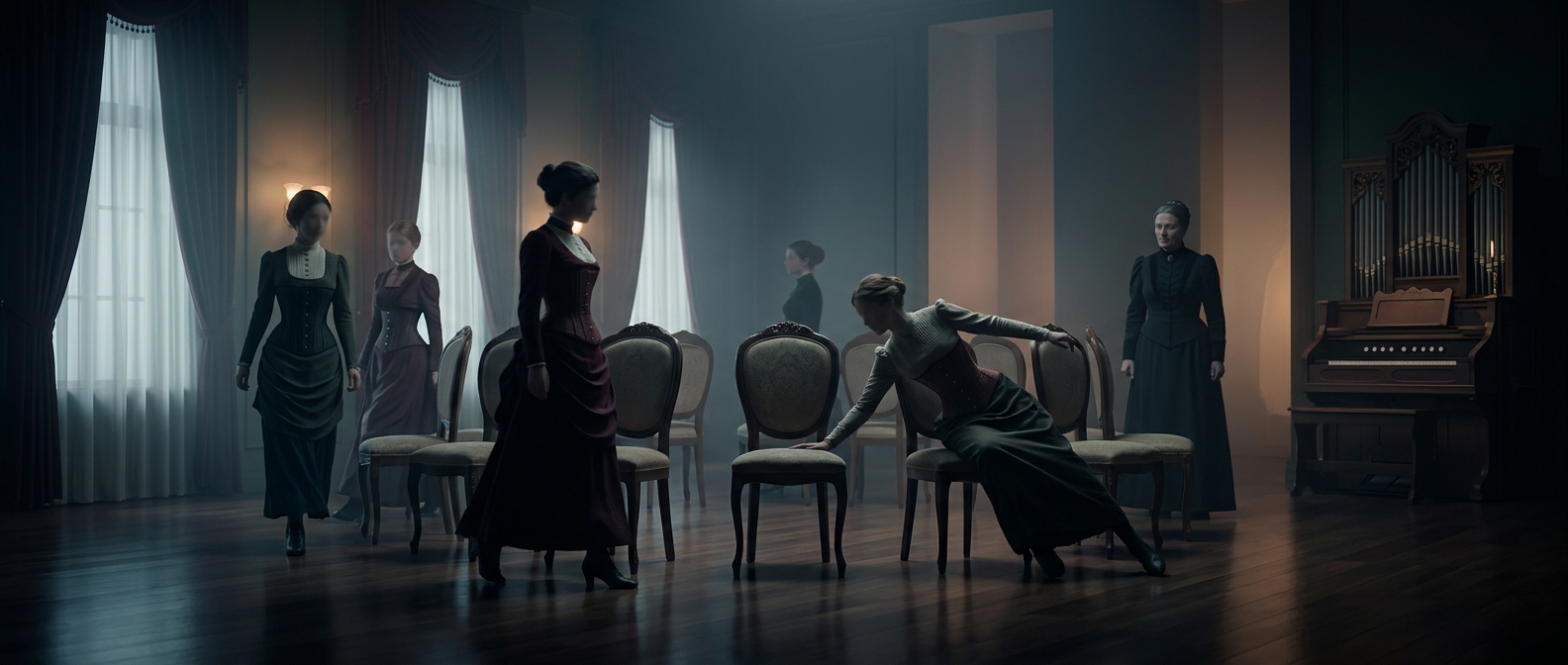
Musical chairs turns listening into a physical test. Children circle a row of chairs while music plays; when it stops, each must react at once and find a seat. One chair is removed each round, so someone is left standing and the game continues without them.
That abrupt switch—from moving freely to stopping immediately—made the game a simple exercise in responding to an adult-controlled signal. In the Victorian setting described here, its educational point was not just to follow the music, but to accept that the signal set the rules and that a child could lose without arguing the outcome.
Losing was part of the lesson
The shrinking number of chairs made elimination unavoidable. A child could be quick and still lose; there was no appeal once everyone else had sat down. That structure gave adults a way to make obedience and composure visible in a low-stakes contest: stop when told, follow the rule, and rejoin the game after being excluded.
The same design explains why musical chairs can feel thrilling and unfair at once. The music creates anticipation, but the decisive moment belongs to whoever stops it. For a child, the last beat is not merely a cue to sit—it is a reminder that the person running the game controls when play ends and who gets to stay in.