Why a Twister mat has to resist more than simple wear
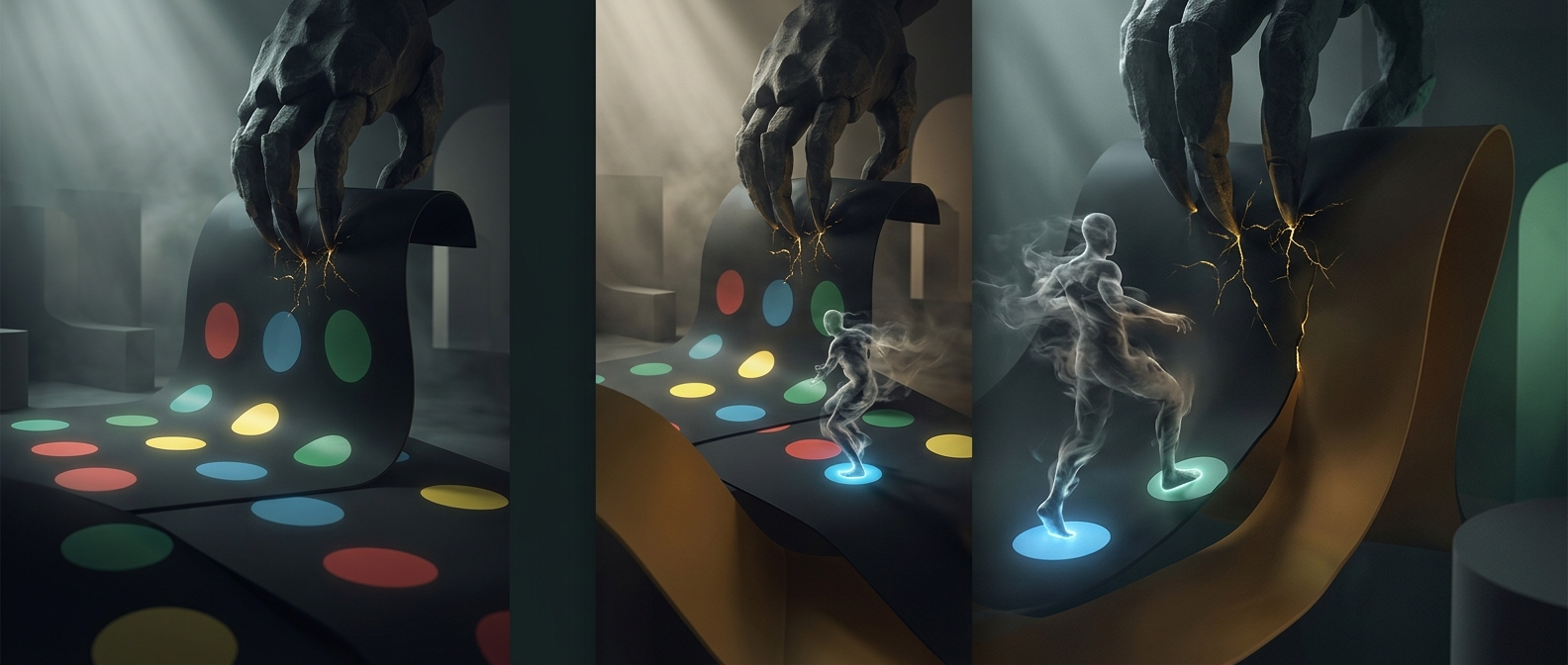
A player’s knee or elbow presses on a small patch of the mat, then shifts as the player reaches for a colored circle. That movement creates friction and pulling at the same time. If the vinyl splits, a small tear can grow with each new stretch and scuff, making the mat harder to use and less durable.
Tear resistance matters because it helps the sheet withstand that repeated tugging without opening into a larger rip. It is different from merely having a surface that looks tough: the material must hold together as players load it, slide against it, and change position.
The material has to stay flexible
A mat that resisted movement by being rigid would not work well on the floor. The useful balance is a flexible sheet that can bend and lie flat, yet withstand the concentrated friction and pulling of elbows and knees. That combination lets the mat endure an active game without needing players to treat every reach as delicate.
In practical terms, the design supports the game’s central physical challenge: players can stretch, pivot, and shift their weight across the mat, while the vinyl is made to resist tearing under those repeated movements.