How tiny dimples change the way a card moves
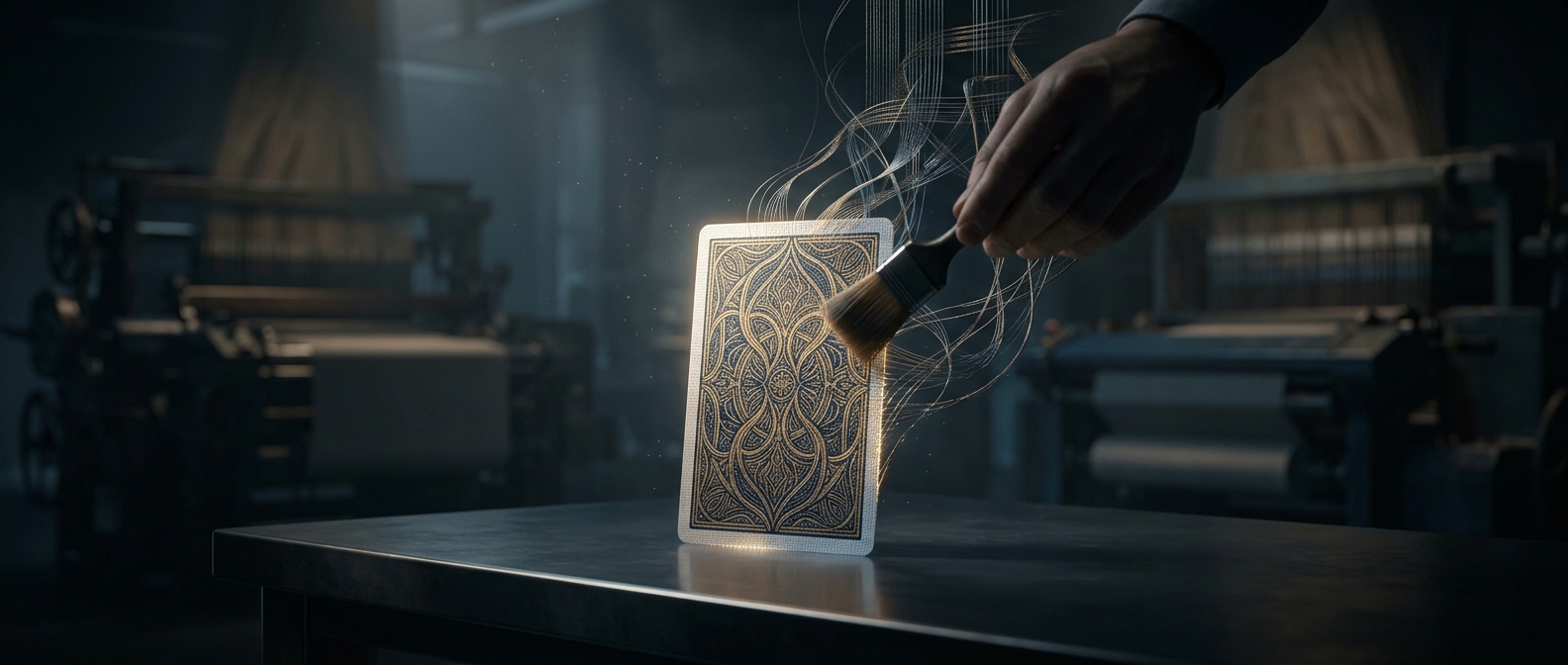
A playing card’s surface is not always perfectly smooth. Its finish can contain a fine pattern of shallow dimples—small depressions that reduce how much of one card’s surface presses directly against another. As cards slide, the tiny gaps help air move between them, limiting sticking and drag. That makes a deck easier to spread, deal, and handle smoothly.
The effect depends on texture, not just appearance. A card can look ordinary while its surface pattern changes how it feels in the hand and how readily it slides against the next card.
Why copying the texture matters
Counterfeiters who reproduce the dimples are copying more than a decorative detail. Matching the surface can make a fake deck behave more like the genuine one during ordinary handling, reducing one clue that might otherwise give it away. Producing a similar pattern requires recreating minute surface features, rather than merely printing the card’s visible design.
That does not make every copy indistinguishable: card stock, coating, stiffness, and other details also affect handling. But the dimples show why a tiny manufacturing feature can matter at the table: it helps govern the card’s movement, and reproducing it can help a counterfeit feel more convincing.