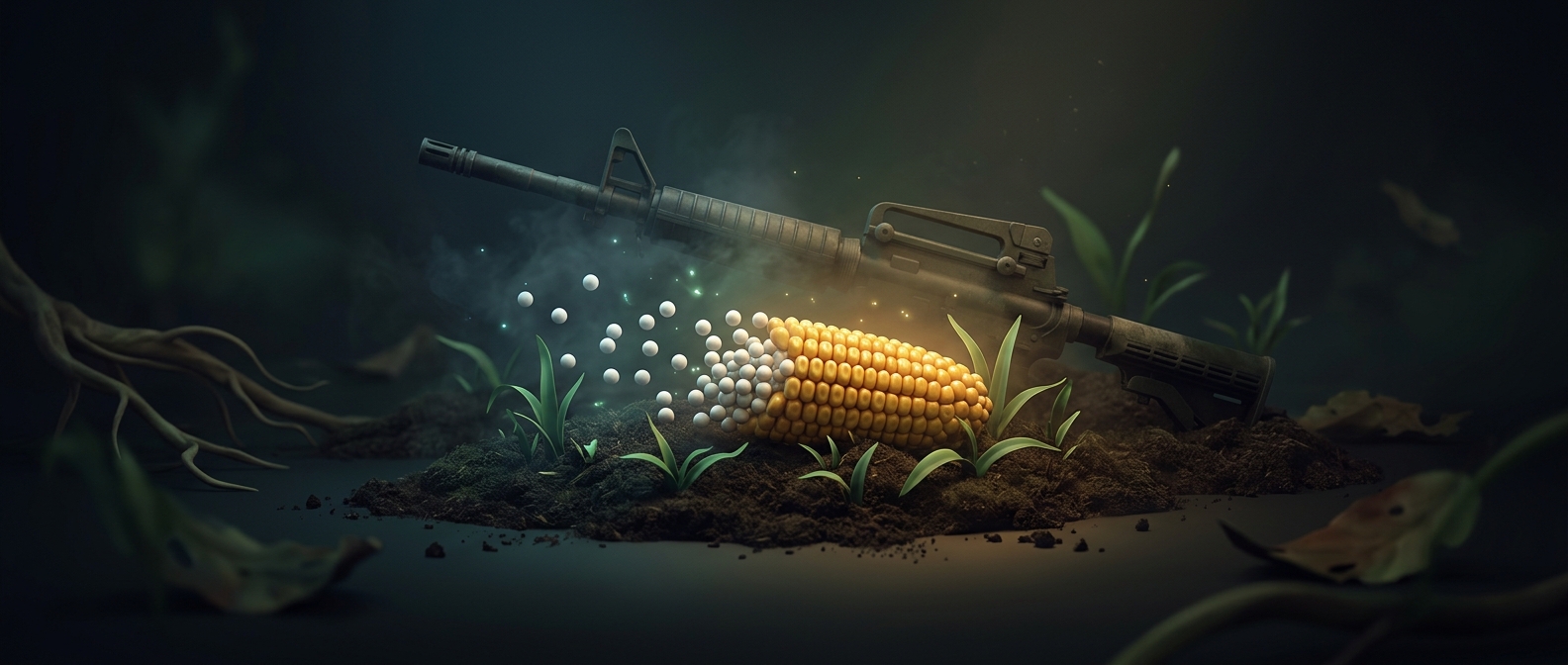
From Corn Starch to a Round of BBs
Some airsoft pellets are made from polylactic acid, or PLA—a plastic produced using plant sugars. In one common route, starch from corn is broken down into sugars, which are fermented into lactic acid. That chemical building block is then joined into long chains to make the plastic, which can be molded into small, spherical pellets. The finished BB is not simply compressed corn; it is a manufactured polymer whose starting material may come from a crop.
A Material Has to Work in the Game
For a pellet, being plant-derived is not enough. It still has to be round and consistent so it feeds through an airsoft gun and travels predictably. Makers therefore have to balance the material’s environmental appeal with the practical demands of molding, handling, and shooting tiny plastic spheres. “Biodegradable” also does not mean a pellet vanishes as soon as it lands: breakdown depends on conditions, and a corn-based origin alone does not tell you how quickly it will decompose in a particular place.
That tradeoff is why a pellet can look like ordinary plastic—and behave like ammunition in the game—while beginning with an agricultural ingredient. The vegetable connection is in the material’s supply chain, not in its appearance.