From tagging tools to a game of stealth
A marker built for work already had the ingredients of a new kind of contest: it could launch a visible paint-filled pellet far enough to mark a target without anyone needing to walk up to it. The challenge was to use that tool against opponents who could move, hide, and shoot back.
In the early game, players relied on the Nel-Spot 007, a CO₂-powered marker originally made for tagging trees and livestock. It was a practical tool, not a purpose-built sports gun: the compressed gas propelled each pellet, while the bright mark showed whether a shot had landed. That made the action easy to judge in a way that a silent game of pursuit might not be.
The marker shaped the rules
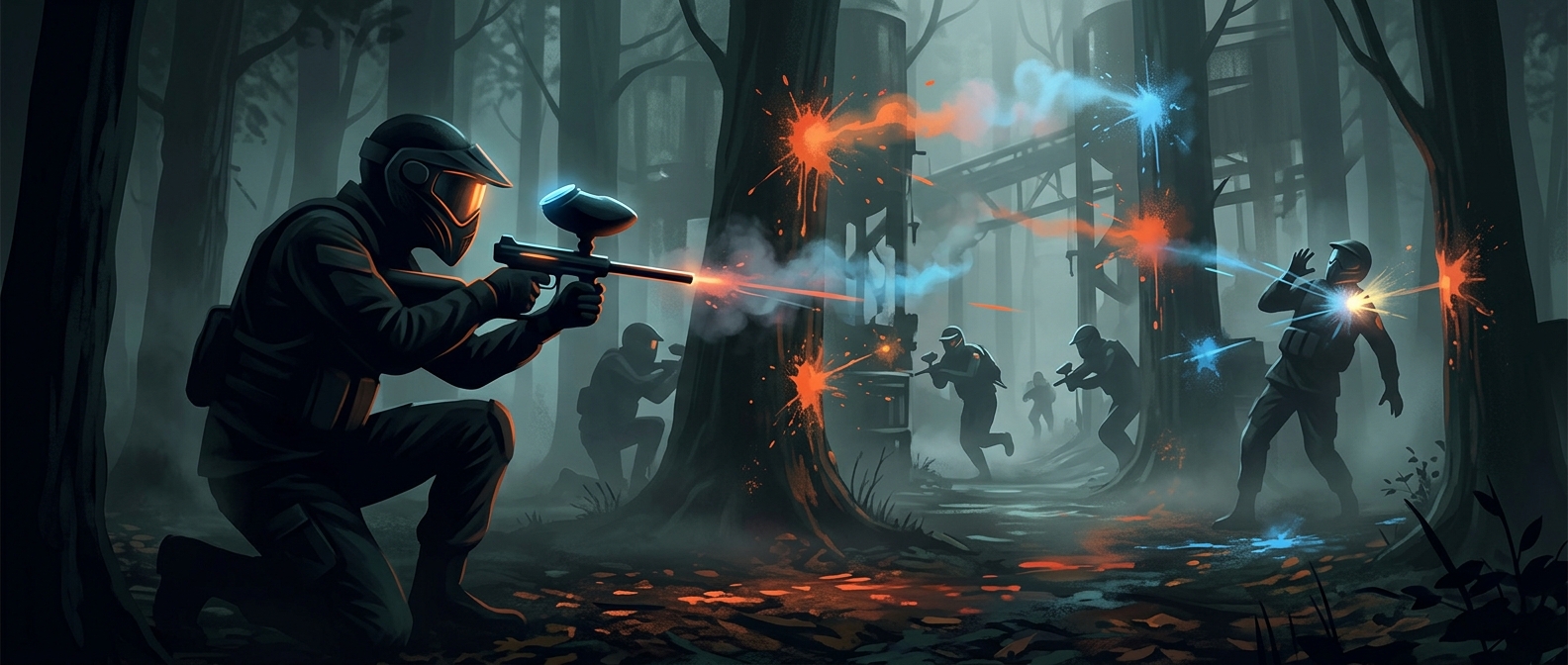
Because players could be hit from a distance, the game rewarded reading the terrain as much as aiming. Trees and other cover became tactical resources: a player who crossed open ground risked being marked, while a hidden player could wait for a clear shot. The marker’s limited supply of paintballs also made every shot a choice rather than an endless stream of fire.
The original equipment imposed real limits. Early markers were comparatively cumbersome and slow to reload, so the game was less like modern rapid-fire play and more like a cautious hunt. Those constraints helped make concealment, patience, and movement central to the experience.
The clever change was not inventing a new weapon, but changing what counted as a target. A tool designed to leave a mark on a distant tree could now settle, visibly, whether a player had been caught.