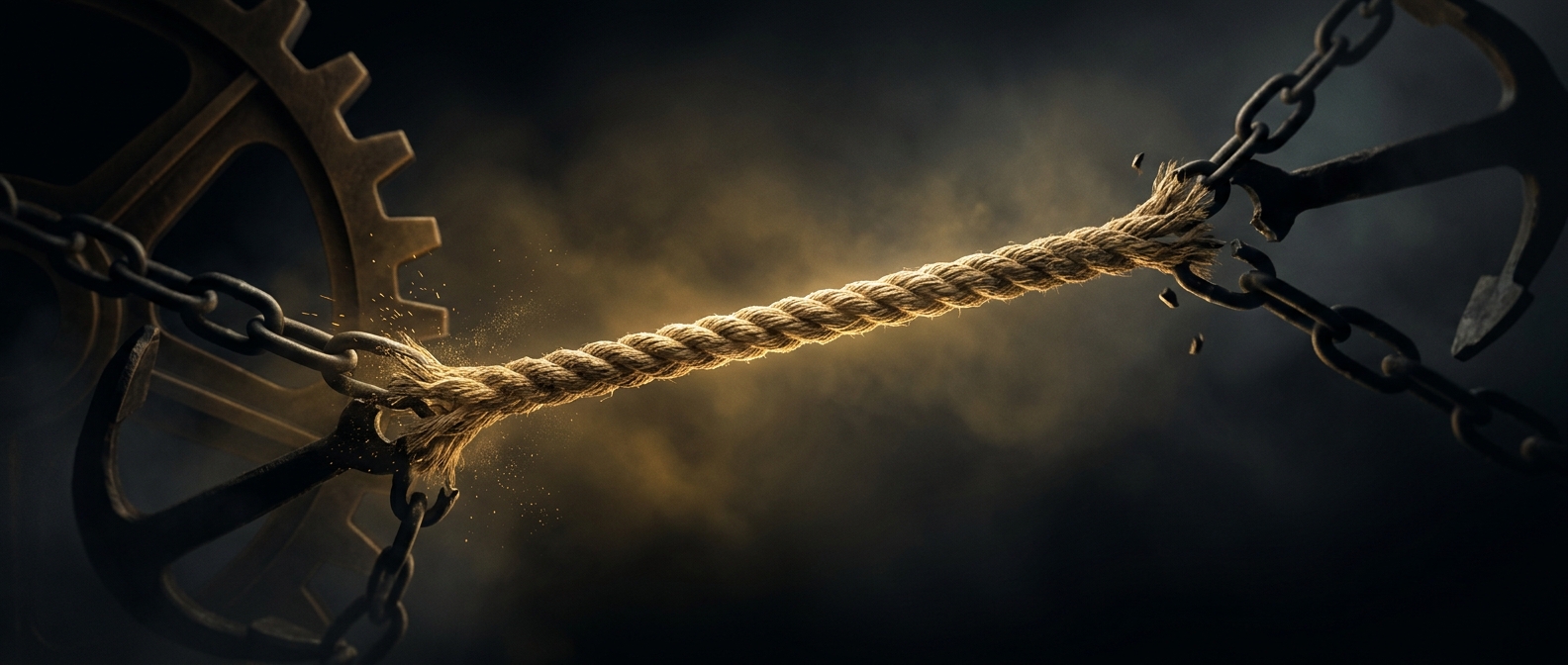
Why Manila Rope Can Outlast a Tug-of-War Grip
Manila rope is made from abaca, a plant fiber whose long strands can be twisted together into thicker yarns and then laid into rope. That construction lets the pull travel through many fibers at once instead of concentrating on a single strand. The rope can therefore take a substantial load before its fibers begin to break.
The key property is tensile strength: how much pulling force a material can withstand before it fails. In a tug-of-war, the teams’ force runs along the rope, while each person’s hands resist that pull at a small contact area. If the rope shifts through a grip, rubbing can heat and abrade the skin, causing a friction burn even while the rope remains intact.
The Rope Is Strong, Not Unbreakable
A rope’s performance depends on its condition and how the force is applied. Worn or damaged fibers, a sharp bend, or an unusually concentrated strain can weaken it. But with a sound Manila rope and a pull spread across its length, the rope may withstand the contest while people’s hands become the first obvious casualty. That is why a tug-of-war can end with sore, scraped palms rather than a dramatic snap.