Cork Turns a Hard Collision Into a Scoring Stop
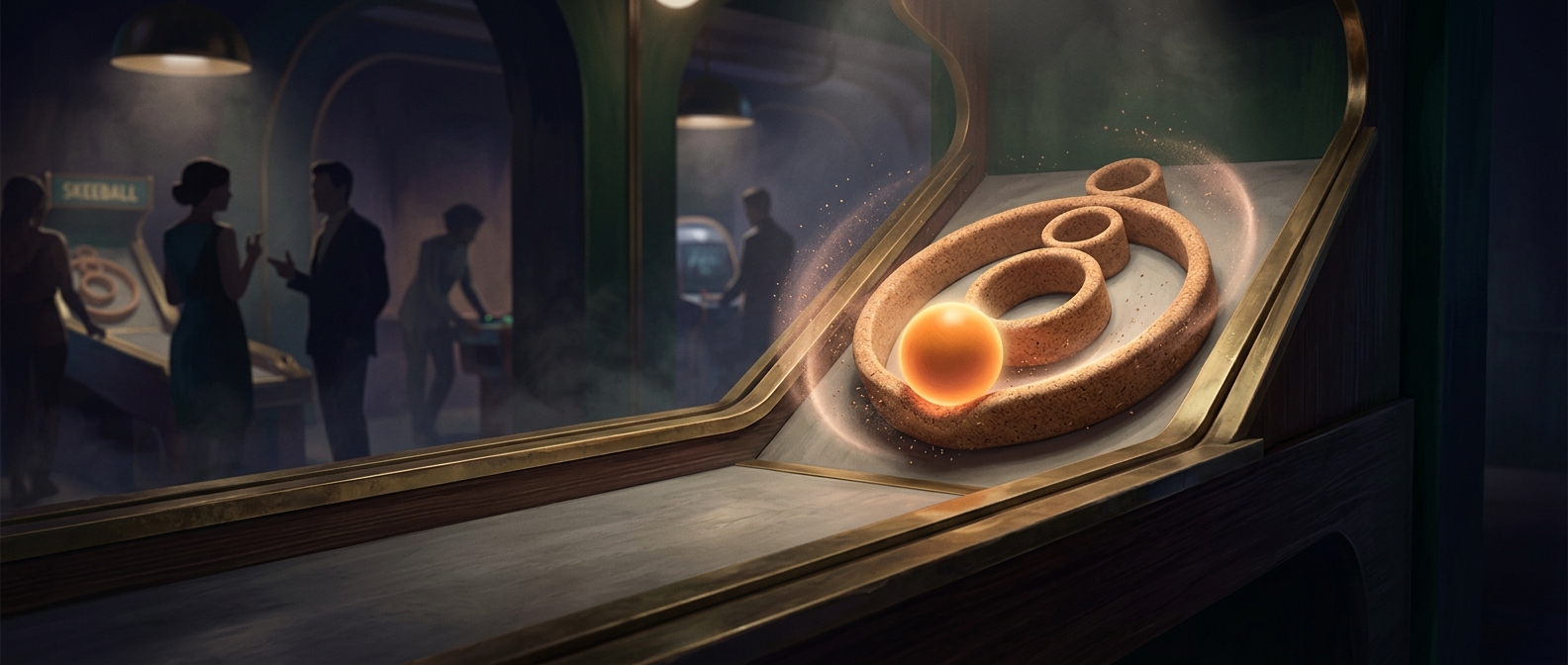
A skeeball ball reaches a ring with enough speed to make a bare, rigid edge act like a spring: the ball can rebound instead of dropping into the target. Cork changes that collision. Its tiny, air-filled cells compress under pressure, briefly deforming as the ball hits and reducing the energy available for a sharp bounce.
The result is not simply a softer sound. By cushioning the contact, the lining helps keep a ball that has reached a ring from being thrown back toward the player. That makes the target behave more like a catch than a hard rim.
A Small Material Choice Shapes the Game
Skeeball depends on a clear outcome: the ball either misses the scoring area or settles into one of its rings. A lively rebound can blur that distinction, turning a successful shot into an accidental return. Cork helps make the landing more predictable, so the player’s aim and the ball’s path—not an abrupt ricochet—decide where it ends up.
That thin lining is part of the game’s feel: it lets a fast-rolling ball meet a scoring ring without the ring immediately sending it back into play.