What a riffle shuffle does to a card
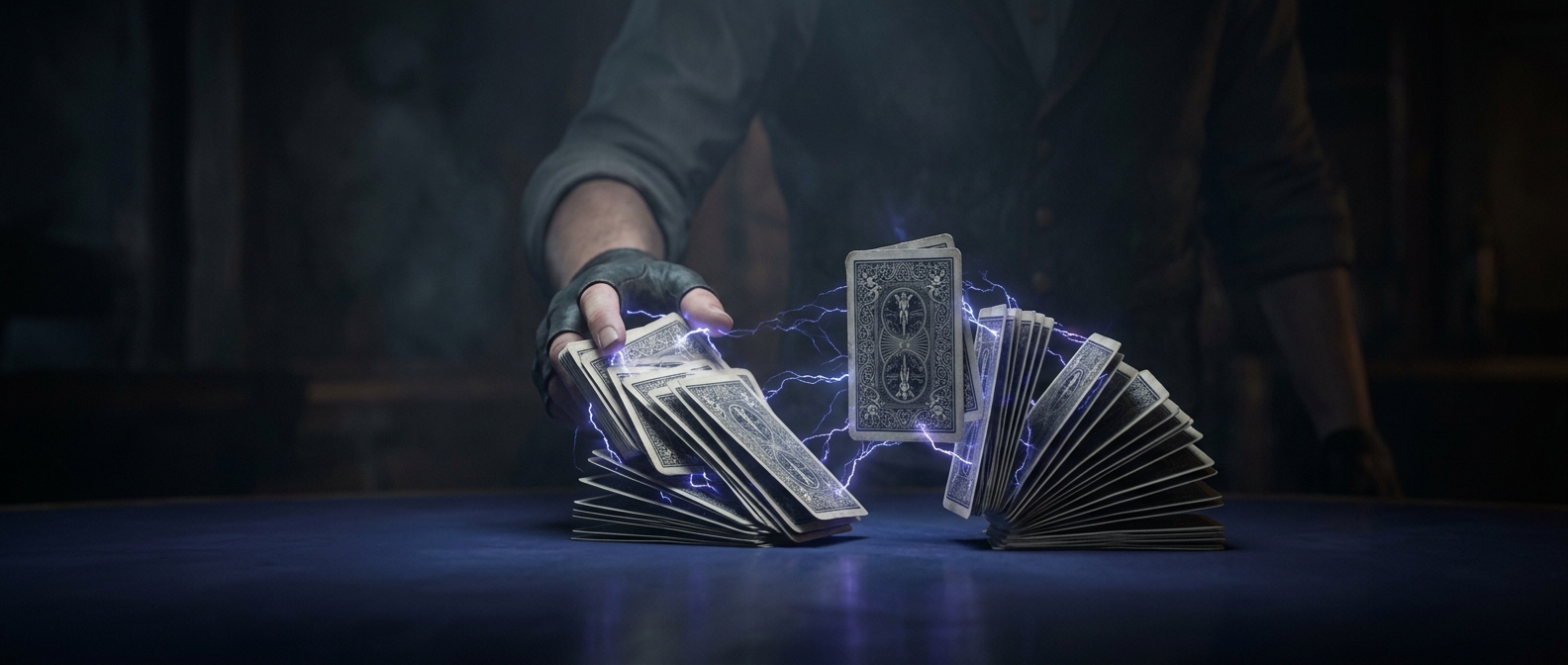
In a riffle shuffle, each half of the deck is bent into an arch, then the cards are released in quick succession so they interleave. That bend puts the card’s layered pasteboard under stress: one face is stretched while the other is compressed. The card springs back, but its paper fibers and the bonds holding them together have still flexed.
Small bends add up
A single shuffle usually does little visible harm. Repeating the same motion makes the fibers and their bonds less able to resist bending. The layers can gradually lose some of their stiffness, and a card may begin to keep a slight curve instead of snapping flat. Its edges and corners also take wear from handling and contact with the table.
That change affects play as well as appearance. A softened card may bend more easily during the next shuffle, while a curved or worn card can feel and behave differently from the rest of the deck. Riffle shuffling is quick and effective, but each release is another flex in the cards’ working life.