Why Bare Cards Stick Together
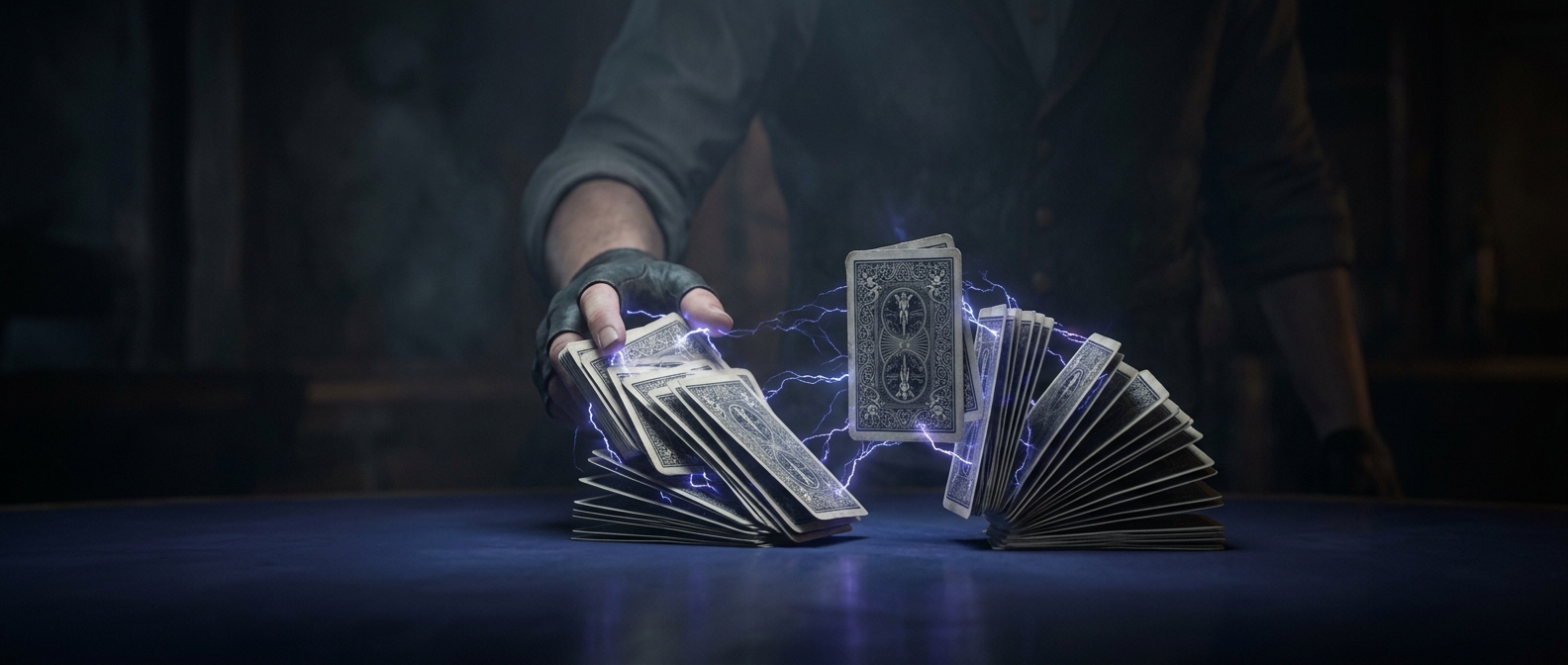
When a deck is shuffled or dealt, neighboring cards repeatedly touch and slide past one another. That contact can move tiny amounts of electric charge between their surfaces. When the cards separate, they may be left with different electrical charges; even cards with similar charges can attract if the charge shifts around within them. The resulting electrostatic force is small, but a thin paper card has very little weight to overcome it.
Dry Air Lets the Charge Linger
Humidity changes the effect. In damp air, a thin film of moisture on surfaces helps electrical charge leak away. Dry air provides less of that path, so charge can persist on the cards. Paper coatings and handling also affect how readily charge builds up, which is why one deck may cling more than another.
A charged card can tug on its neighbor before the dealer has cleanly separated the two. Instead of sliding apart, the pair lifts or travels together, disrupting the deal. This is especially noticeable with un-sleeved cards: sleeves add another surface and may change how the cards contact, but they do not guarantee that static will disappear.
The practical consequence is that a deck’s behavior can change with the room as well as with the cards. In dry conditions, a small electrical effect can turn a smooth deal into a stubborn little stack.