A chariot’s path survives in the rook
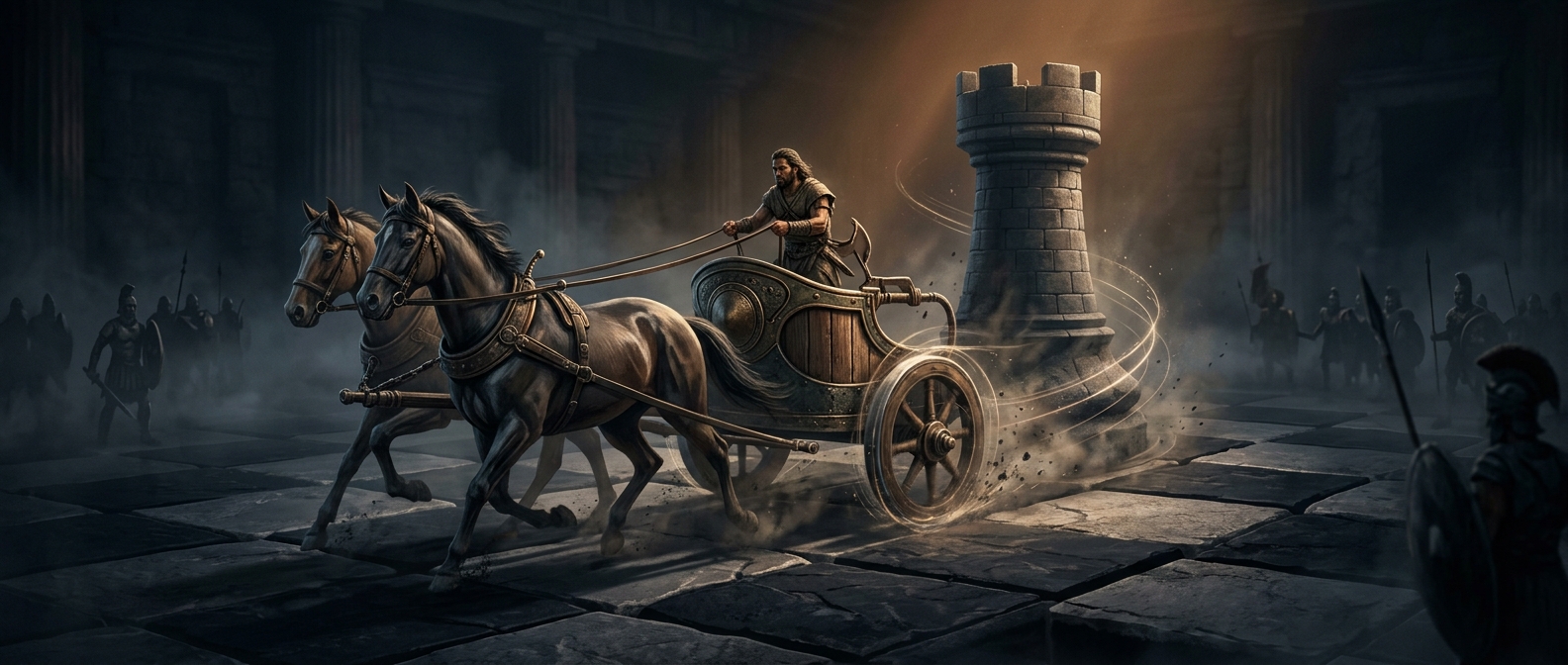
The rook’s straight-line movement makes sense as a remnant of an older battlefield image. In chaturanga, an early Indian chess ancestor, the pieces represented parts of an army. One was the ratha—a chariot. On a square board, its charge could be represented as a piece traveling in straight lines rather than turning freely or weaving between opponents.
That movement became one of the game’s durable rules: the modern rook can travel any number of unobstructed squares along a rank or file, the board’s horizontal and vertical lines. It cannot move diagonally, a restriction that fits the image of a chariot advancing along a direct route.
The piece changed shape, not its job
As chess traveled beyond India and its rules and names changed, the chariot was no longer necessarily pictured as one. The game’s pieces were adapted to new languages and visual conventions; in the familiar European set, the rook looks more like a tower than a vehicle. But its distinctive straight-line move remained.
That is why the rook’s name and appearance can feel disconnected from its movement. The board preserves a trace of an older way of imagining the piece: what now looks like a stone fortress once stood for a chariot in an army on the move.