From a Supporting Piece to the Board’s Powerhouse
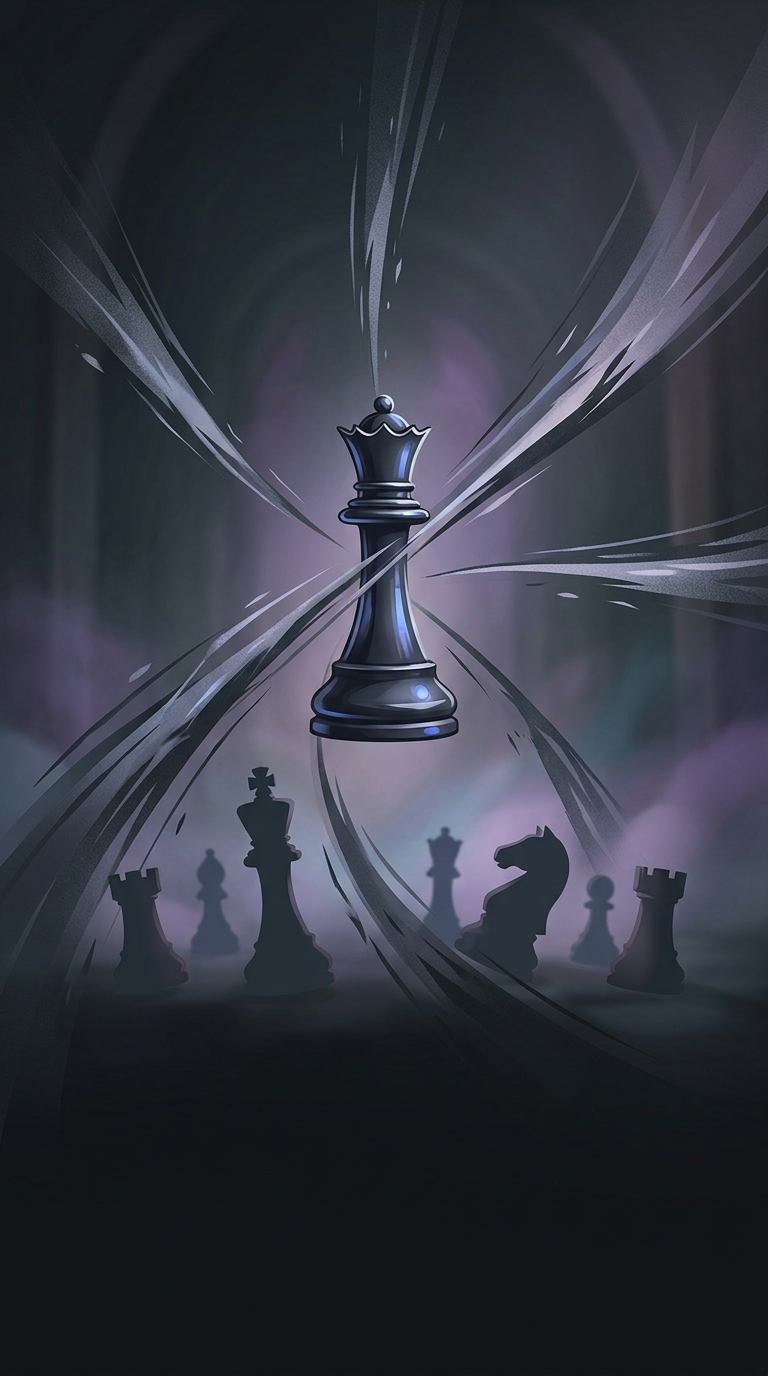
Before the late-15th-century change, the queen—called the fers in older European chess—could move only one square diagonally. She was useful for guarding nearby squares, but could not sweep across the board or launch an attack from far away. The new queen’s movement made her a long-range attacker, changing not just her strength but how quickly threats could build.
Why Range Changed the Tactics
A piece that travels across an open row, column, or diagonal can threaten targets many squares away. The queen can also combine those directions: from one position she may attack a king along a diagonal while threatening a rook down a file. Such forks, attacks on two or more targets at once, force the opponent to choose what to save.
That reach made it harder to treat the king as safe behind a few defenders. A queen could arrive rapidly near the enemy king, while a rook or bishop helped cover its escape squares. Players had to watch for distant threats earlier and coordinate their pieces more carefully; an apparently quiet position could turn dangerous in a single move.
A Faster Game, Not a Bigger Board
The board’s dimensions did not need to change for chess to feel different. The queen’s new mobility compressed the time between building an attack and delivering a decisive threat. This helped shape the more tactical style associated with modern chess: the same squares now supported combinations that the older, short-stepping queen could not create.
The striking consequence is that a single movement rule altered the game’s rhythm. A queen no longer merely accompanied the king; she could make the whole board feel small.