Why Capablanca wanted to change the board
José Raúl Capablanca, a world champion renowned for his positional skill, worried that as elite players mastered standard chess, their games would increasingly end in draws. The concern was not simply that a draw was dull: if both sides could reliably neutralize the other, the familiar pieces and 64-square board might offer too few fresh ways to press for a win.
His answer was to enlarge the battlefield. In Capablanca Chess, the board has 10 files and eight ranks, and each side gains two powerful hybrid pieces. The added space matters: without it, the stronger armies would crowd one another from the opening moves.
Two pieces combine familiar powers
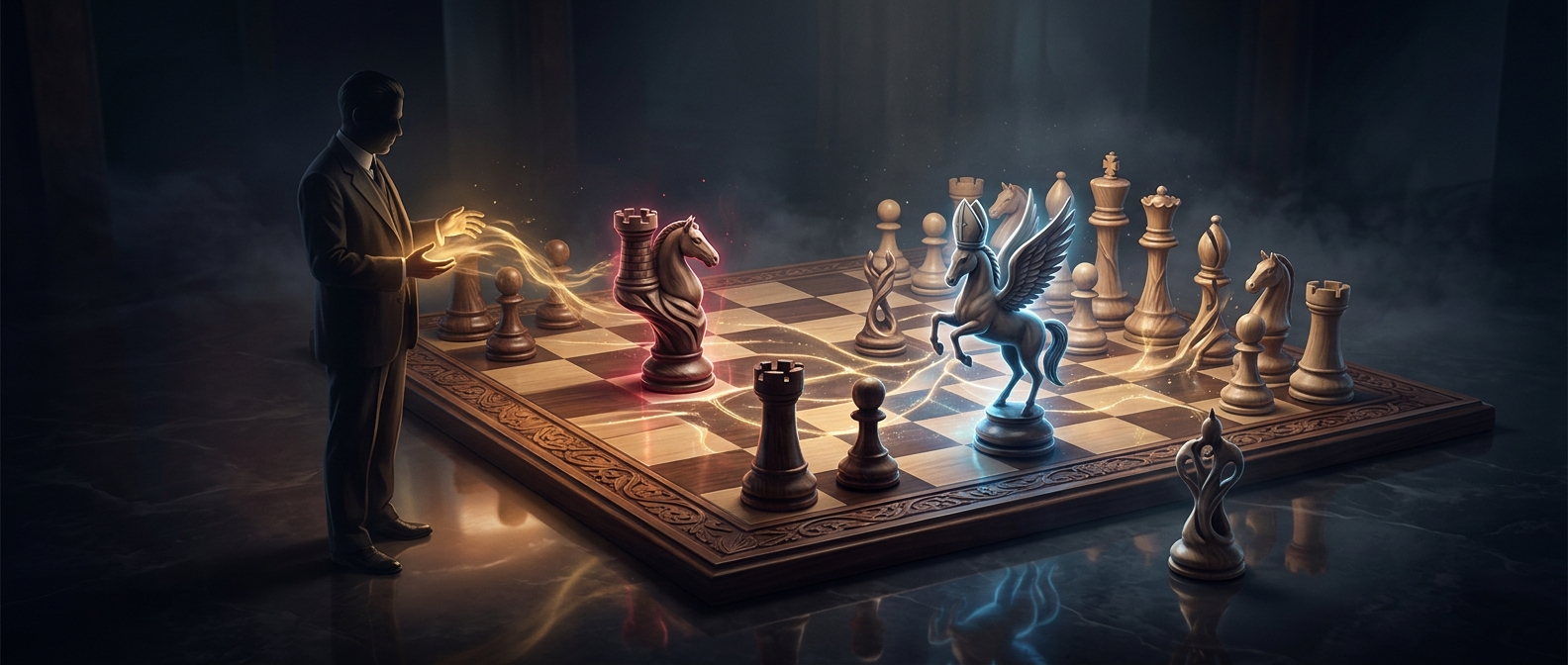
The Archbishop can move as either a bishop or a knight. It can slide diagonally across open squares, but it can also jump over intervening pieces to reach a knight’s destination. The Chancellor combines a rook’s straight-line movement with the knight’s jump.
That mix changes what it means for a square to be safe. A defender may block a bishop’s diagonal or a rook’s file, but a knight-style jump can bypass the blockade. Conversely, the hybrid pieces can cover more kinds of threats, making attacks harder to meet with a single defensive plan.
More possibilities, not a guaranteed win
The extra powers create new tactical patterns and make it harder to settle into the familiar defensive routines of standard chess. But no piece can force a decisive result by itself: players can still make mistakes, defend accurately, or agree to a draw. Capablanca’s design was an attempt to make the game’s strategic landscape broader—and a passive, draw-seeking approach less comfortable.
The practical consequence is visible from the start: players must account for attacks that can arrive both along a line and by a jump, so positions that look securely blocked in ordinary chess may no longer be secure.