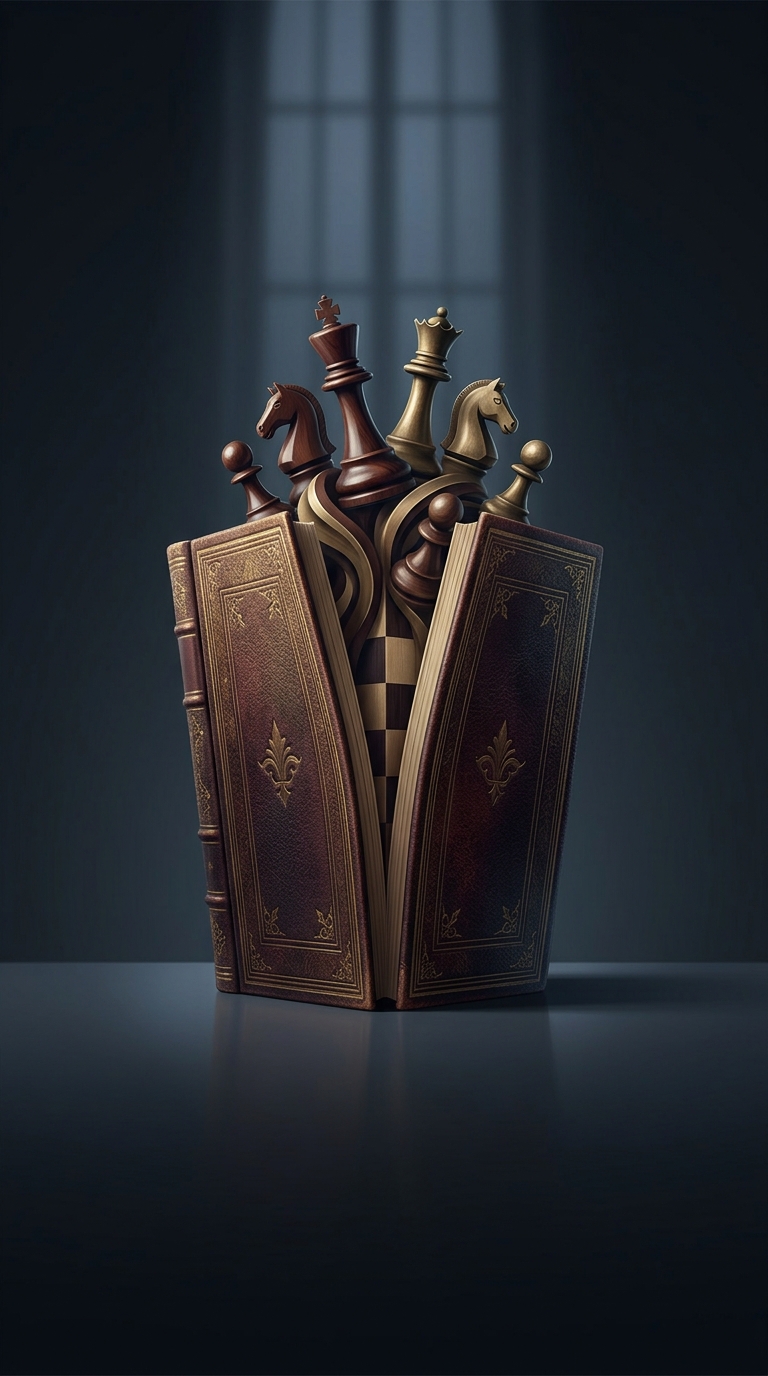
A Chessboard Designed to Disappear
The story of the folding chessboard begins with a practical problem: how could a player keep a game close at hand without making it obvious? In the familiar tale, a 12th-century priest, barred by his superiors from gaming, used a board that folded shut and could pass for a pair of books on a shelf.
The trick was in the hinge. A crease down the middle let the board close face-to-face, protecting its playing surface and reducing it to a compact bundle. The book-like shape turned a gaming object into something that looked ordinary among other belongings—a design that made the board useful even when it was not being played on.
A Clever Story, Not a Secure Origin
The priest anecdote gives the design a memorable motive, but the tale does not establish who first made a folding board or exactly when. Its appeal is easy to see: it links a simple piece of construction to a recognizable problem of secrecy. The board’s fold is real; the tidy origin story is harder to verify.
That distinction matters because folding boards solve an everyday problem whether or not the legend is true. They are easier to carry and store than rigid boards, and the same hinge that makes them portable also lets them close over the squares. The story’s lasting image is more specific than “chess played in secret”: a game that could be packed away until the room—and the shelf—looked ordinary again.