Why a Jack Rarely Lies Flat
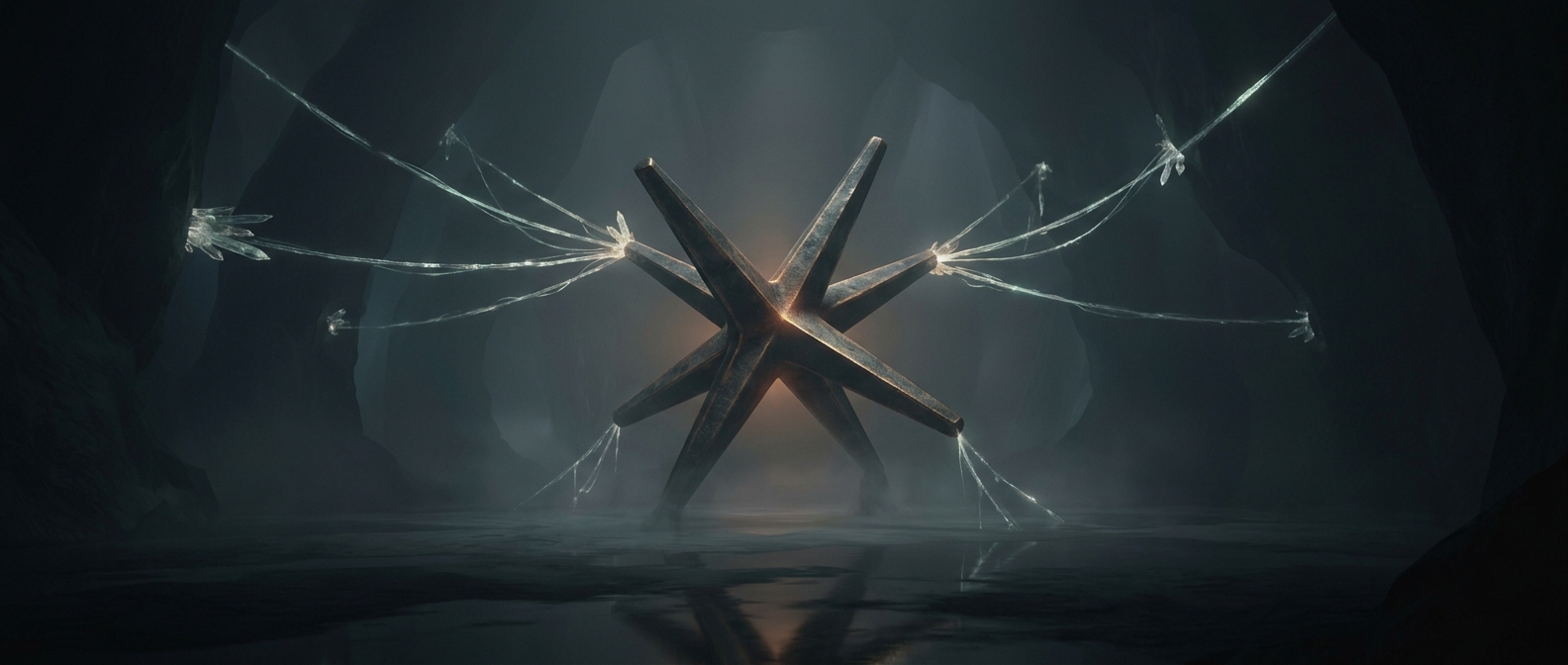
A metal jack is built around a small center with prongs projecting in different directions. Unlike a coin, it has no broad, flat side that can settle neatly against the floor. When it falls, only a few points touch the ground; the other prongs extend away from those contact points. Because the six arms point in varied directions, an upward-facing spike is a common result of the many ways the jack can come to rest.
The shape does not guarantee that a spike will point straight up every time. A jack can land tilted, balanced on several points, or with one arm angled upward. The important feature is that its prongs make a flat, fully settled position unlikely.
A Shape That Makes the Game Less Predictable
That uneven landing is part of what gives jacks its physical character. Players scatter the pieces and retrieve them in stages, often while a small ball is tossed and caught. Each jack has to be pinched up quickly, and its awkward, pointed form makes it less like picking up a smooth token than grabbing a piece with edges and gaps.
The same geometry also explains the familiar hazard underfoot: a point can meet the sole before the rest of the jack does, concentrating pressure into a small area. A toy designed to tumble into varied positions is therefore both easy to spot on the floor—and unpleasant to step on.