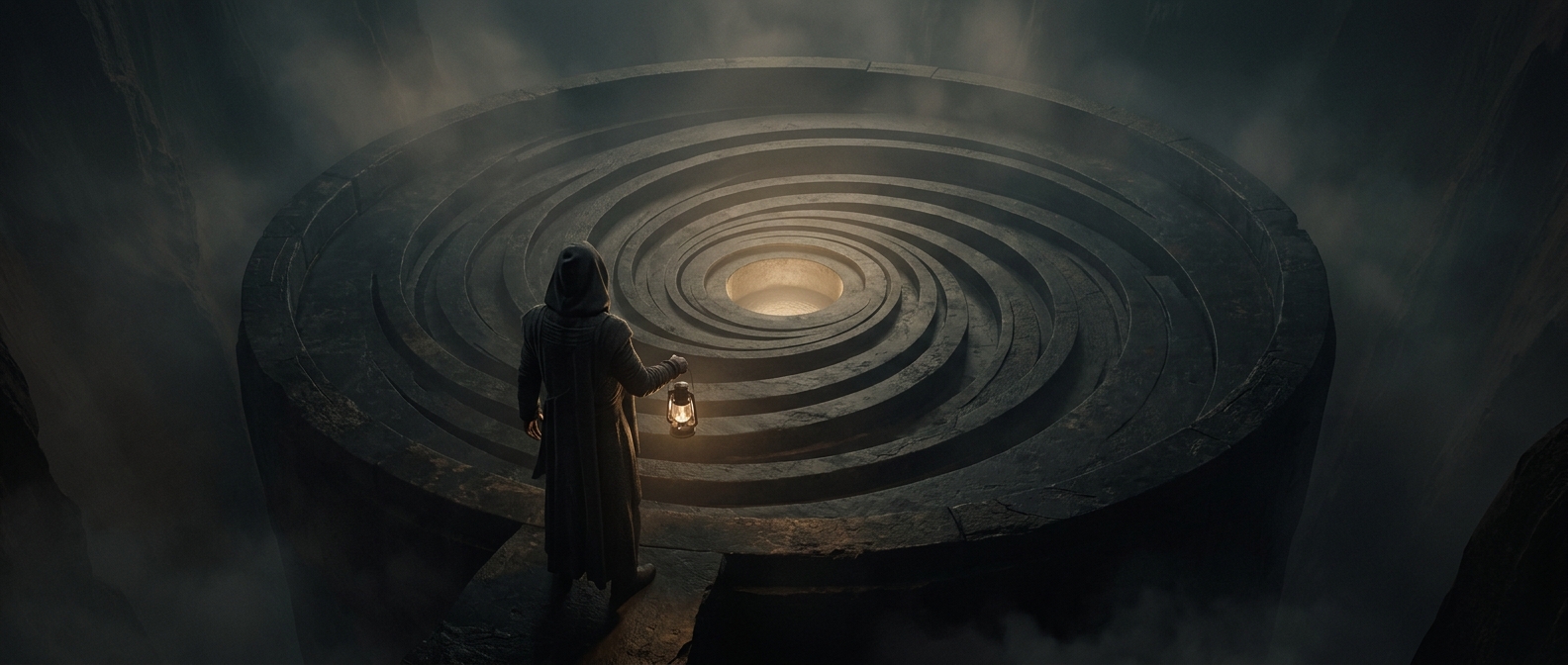
Why a spiral feels like a natural search plan
In hide-and-seek, the seeker usually starts from a familiar point: the room where the count ended, the yard’s gate, or the middle of a play area. Moving outward in loops turns that starting point into a rough map. Each pass reaches places a little farther away, so the searcher is less likely to rush straight to an obvious hiding place and overlook nearby corners.
The pattern also gives the searcher a simple next move: keep circling, then widen the circle. That is easier to follow than trying to remember an unplanned zigzag across the whole area.
Why the loops overlap
A real hiding place rarely sits on a clear, flat grid. Furniture blocks sightlines, bushes create pockets, and a searcher may need to step aside to check behind or beneath something. Those detours bend the route and can bring the seeker past a spot already checked. The spiral is therefore a guide for covering ground, not a guarantee that every patch is searched exactly once.
A seeker may also repeat a check because seeing a hiding place is not the same as seeing what is inside it. A coat hanging in a closet, for example, can conceal someone on the first glance and invite a closer look later. In a game, repeated checks can be sensible when the first view was hurried or blocked.
A pattern, not a perfect algorithm
The useful idea is to make the search progressively broader while staying aware of what has already been inspected. A tight spiral can work in an open space, but walls and obstacles may make separate passes along edges or through distinct rooms more practical. Either way, the seeker is trading a little overlap for a lower chance of leaving an unexplored pocket—and that tradeoff is what makes the pattern useful.