Why a 20-sided die has no “special” face
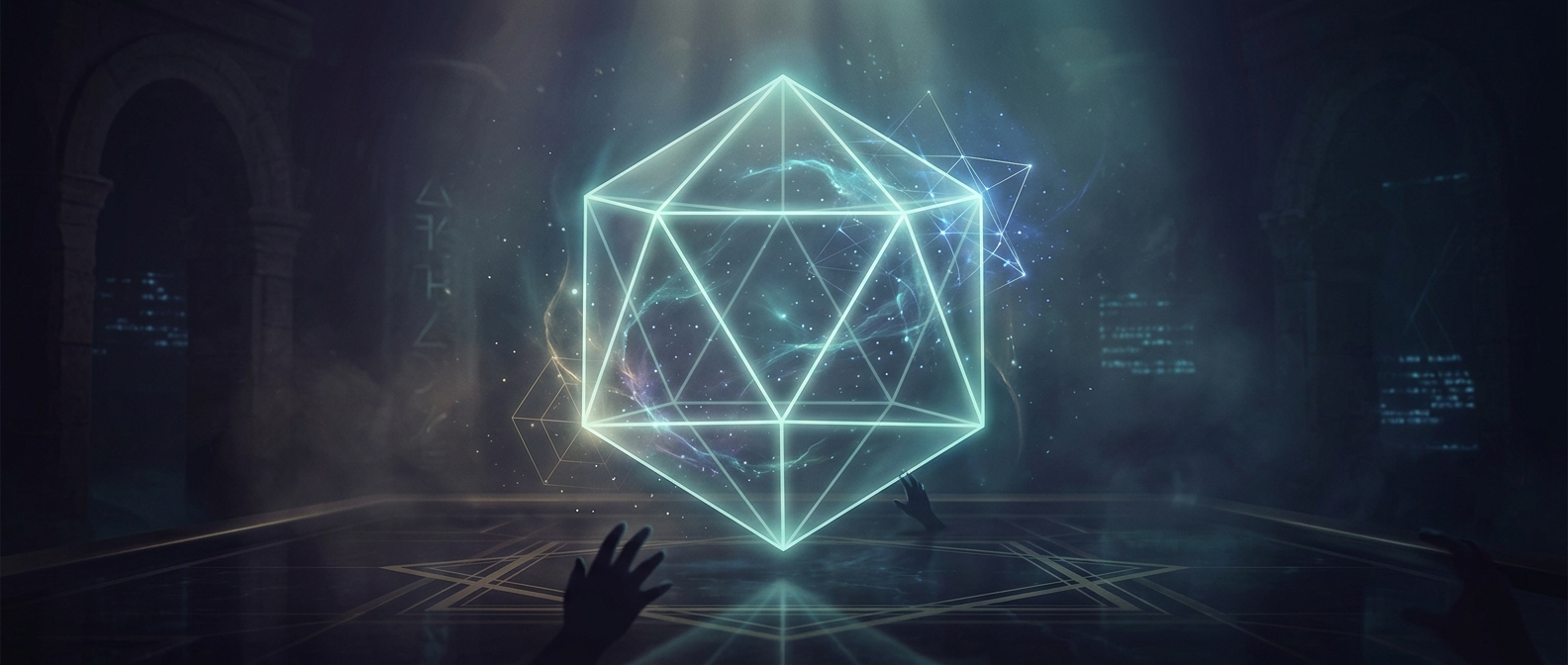
A regular icosahedron is built from identical triangular faces arranged with the same symmetry throughout. That symmetry matters when the die rolls: no face is geometrically favored simply because it is larger or shaped differently. The familiar d20 is therefore more than a ball covered in numbered panels; its numbers sit on a single, precisely regular solid.
From geometry to a roll
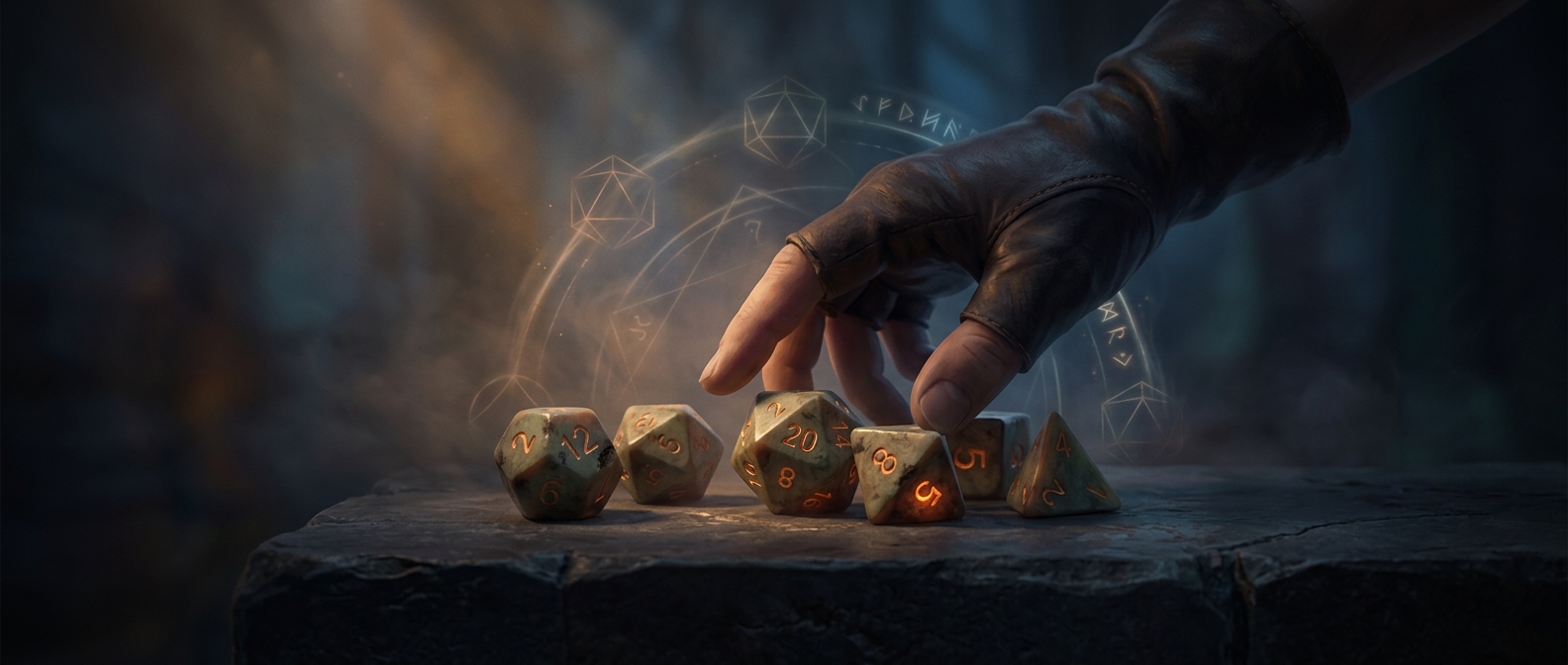
When the die lands, one triangular face rests against the table while the others tilt upward. Because the faces have matching shapes and positions in the solid, each can serve as the landing face. The die’s symmetry is what makes the design suitable for a game of chance, where players want the physical object—not an obvious structural flaw—to determine the result.
That does not mean every real-world roll is guaranteed to be perfectly random: manufacturing differences and the way a die is thrown can affect outcomes. But the icosahedron gives the d20 a balanced geometric foundation. Its 20 matching faces let a compact object present 20 distinct results without giving any one result a built-in geometric advantage.