Why a natural 20 feels like a clean victory
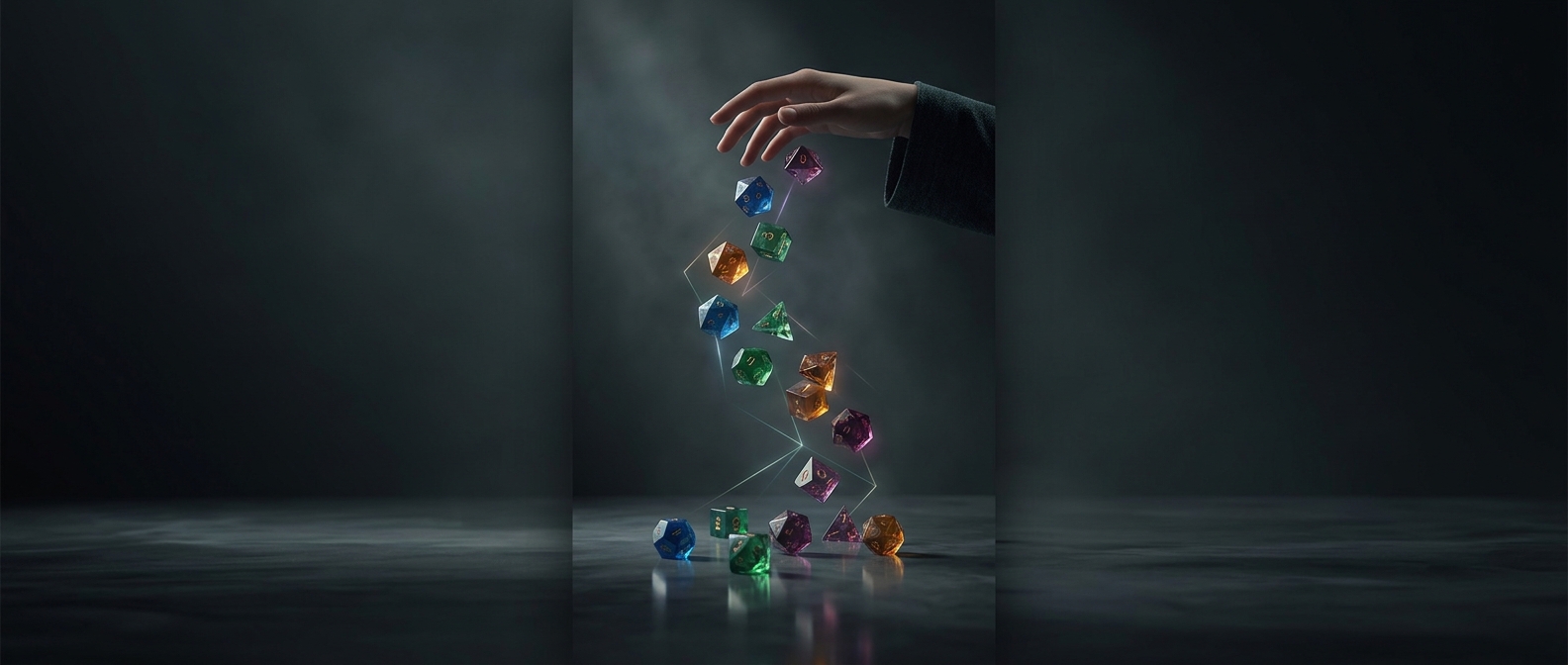
A twenty-sided die makes success visible. It tumbles, slows, and lands on a face everyone can read. In many role-playing games, rolling a 20 is treated as an especially strong result, so one small object can settle a tense moment in an instant. The result is concrete: the attempt worked, the table sees it, and play can move forward.
That clarity is a design advantage. A career accomplishment usually unfolds through many steps, depends on other people, and may not come with a single moment when success is unmistakable. A die roll compresses uncertainty into a brief scene with a clear ending.
The game turns suspense into feedback
Before the roll, players know what is at stake but not how the attempt will go. The die creates a short pause in which several outcomes feel possible. When it lands, the game immediately answers the question. That quick loop—uncertainty, action, result—is satisfying because the player does not have to wait long to see what their choice produced.
The roll also gives the result a physical form. A character’s success is not just described by a game master; it arrives as a number everyone can watch appear. The die does not make the outcome more meaningful on its own, but it makes the moment easy to share.
A small result can carry a big story
A natural 20 is memorable partly because it is rare enough to stand out, yet familiar enough that players understand its significance. Rules vary, and a 20 does not always mean the same thing in every game. But when the table treats it as a standout success, the number becomes a compact signal: the risky attempt paid off.
That is the difference from a distant achievement. A career milestone may matter more in the long run, but a die roll offers an immediate, public ending to suspense—and a result the whole table can celebrate together.