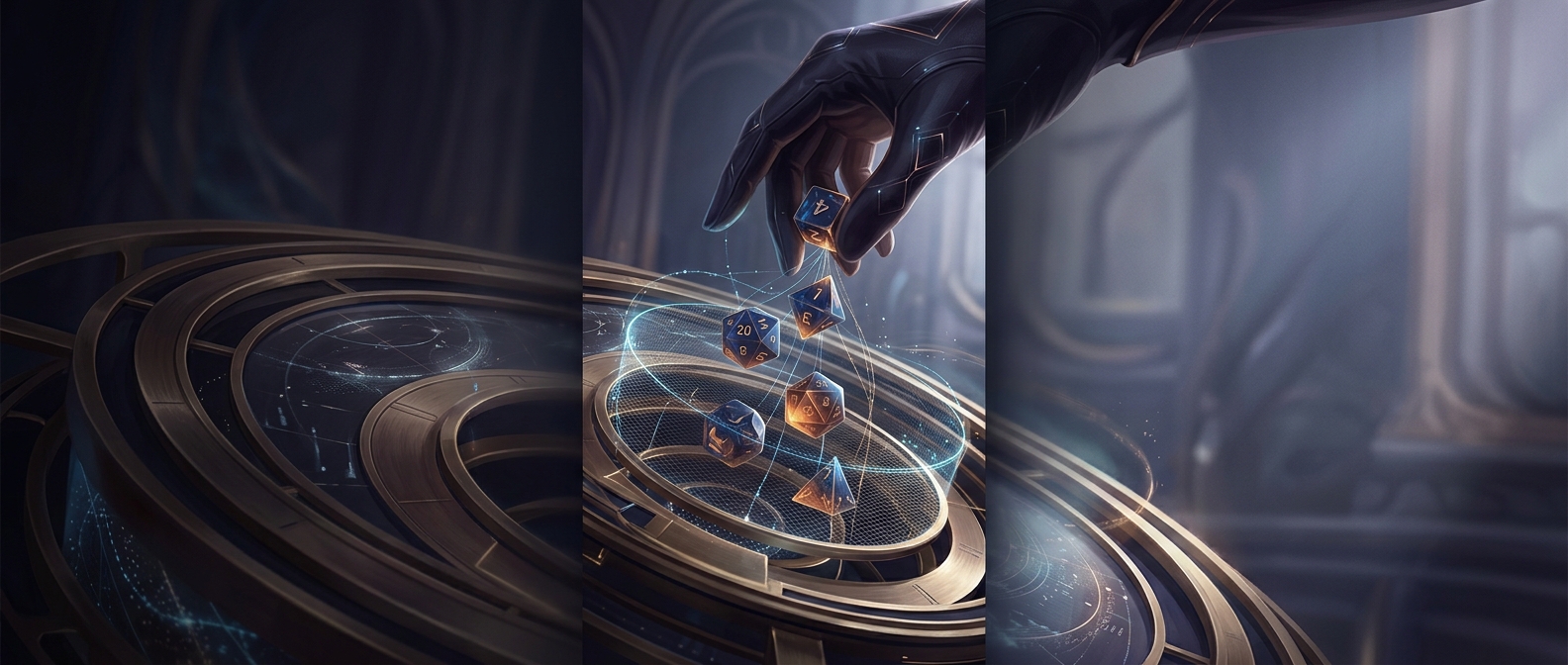
A Roll Starts Before the Die Lands
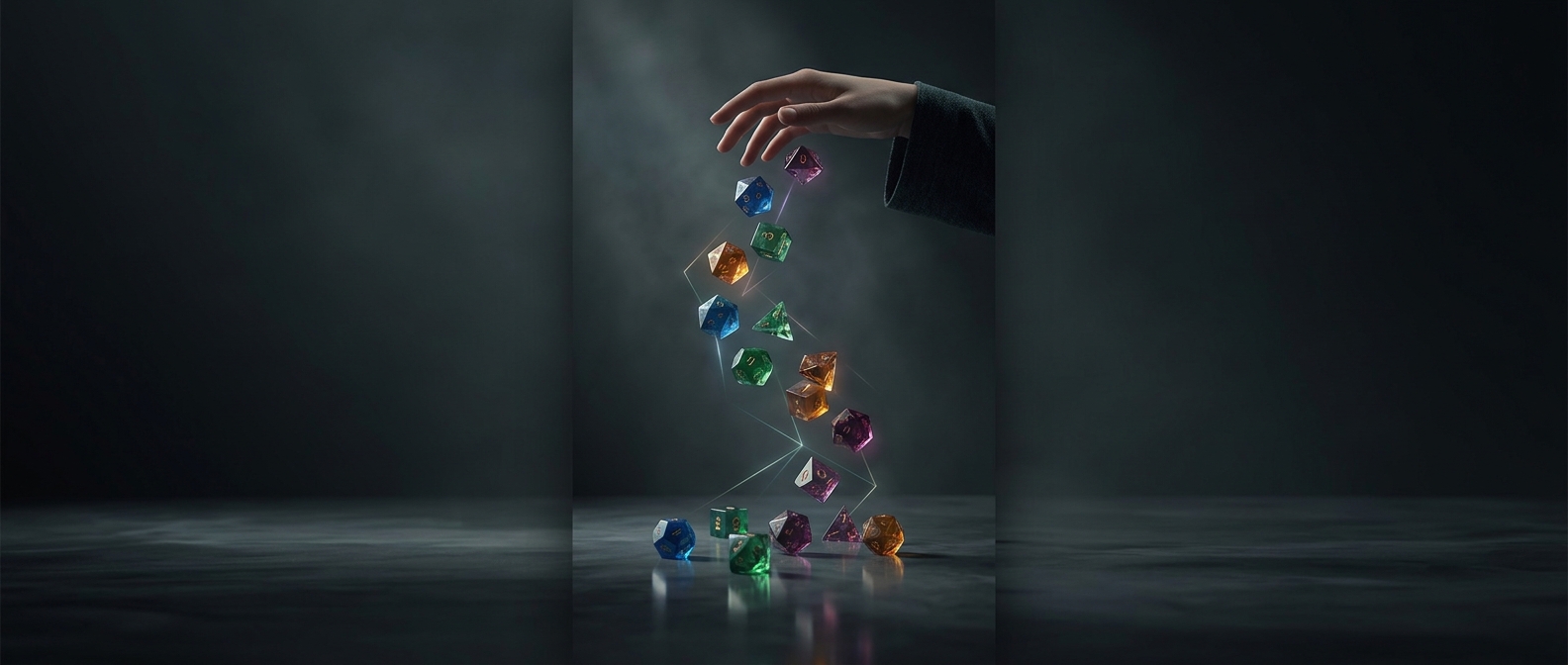
A die does not choose a face in midair. Its path begins with the way it is held and released: its starting orientation, direction, speed, and spin all affect which faces are likely to end up on top. A gentle tumble from a nearly fixed position can favor different outcomes from a hard throw that sends the die bouncing across a table.
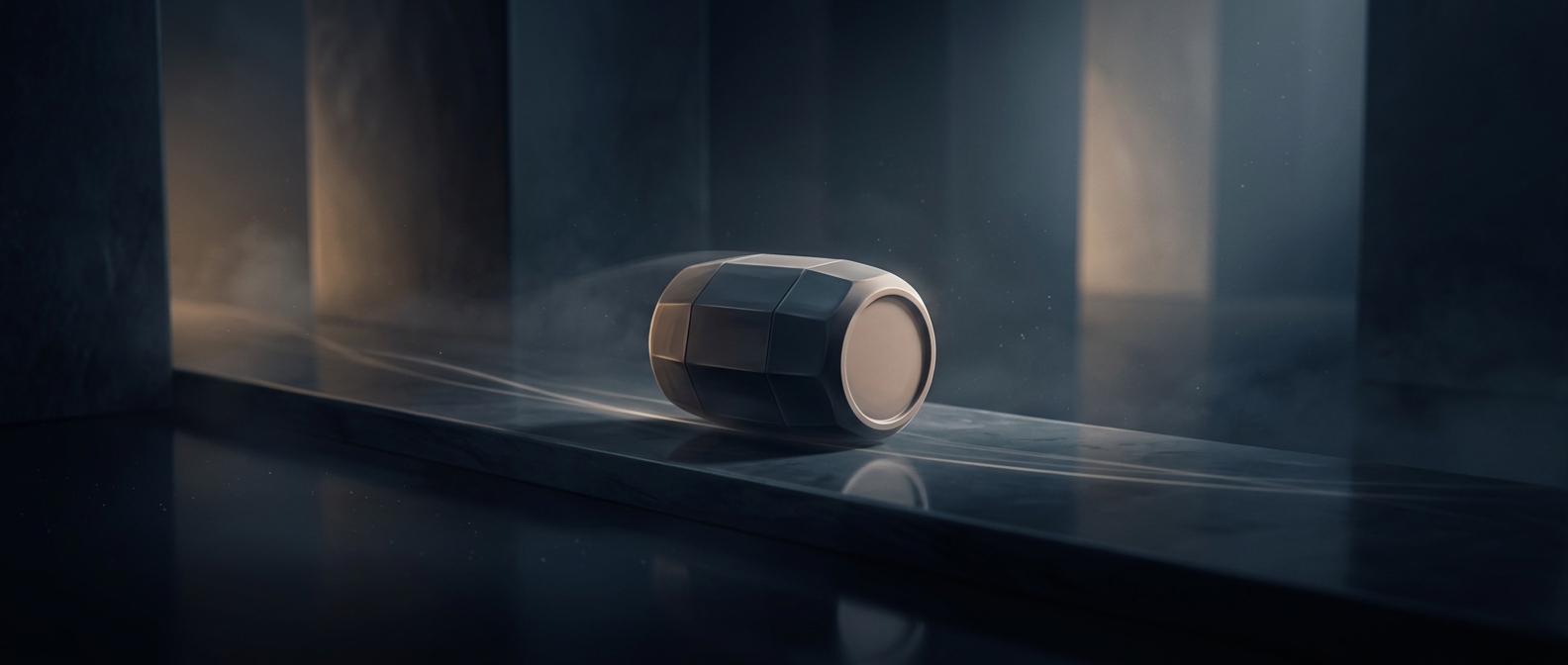
Each collision—with the surface, a wall, or another die—changes the die’s rotation and direction. As friction and impacts drain its motion, it eventually settles. In principle, if every detail of the throw and the die’s interactions were known precisely, the final face could be calculated. In practice, tiny differences in grip, release, bounce, or surface can change the sequence of collisions, making the result extremely hard to predict.
Unpredictable Is Not the Same as Perfectly Random
That sensitivity is why an ordinary human roll can work well as a random choice in a game, even though it is not perfectly random in a strict physical sense. A player may have habits, and an unusually controlled or gentle roll may produce a bias. The die itself can matter too: uneven weight or slightly imperfect faces can make some outcomes more likely.
For ordinary play, a vigorous roll across a broad, level surface helps reduce the influence of the starting position by creating many unpredictable bounces. The practical lesson is simple: the die’s face is settled by physics, but the throw makes that physics difficult to forecast.