Why Neon Helps a Polyhedral Die Read Quickly
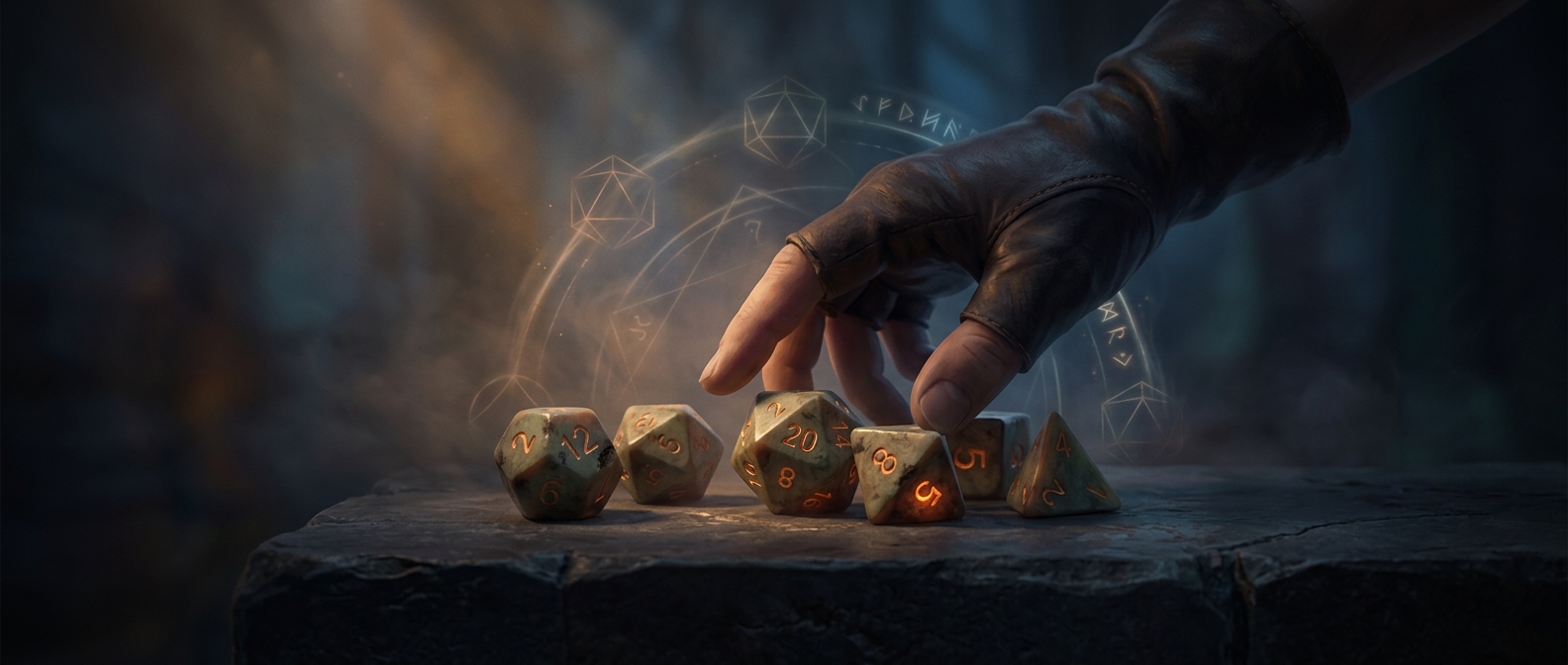
A polyhedral die presents a small, angled face rather than a broad, flat display. After it stops rolling, the player has to locate the upward-facing number among several nearby faces, often while the game is moving. Bright colors make the die itself easier to pick out on a table, and a strong difference between the face color and its printed numerals helps the value stand out.
That contrast matters because quick reading is a visual task: the eye must separate a number from its background before the player can interpret it. Neon hues can provide a vivid field for dark markings, or make the die easy to distinguish from other pieces. The exact effect depends on the ink, lighting, and surface beneath it; brightness by itself does not guarantee legibility.
Visibility Is Part of Play
In a tabletop game, a roll is only useful once everyone can tell what it says. Clear, conspicuous dice reduce the pause after a throw—especially when several dice are scattered together or a result needs to be checked across the table. Their sharp color is therefore more than decoration: it helps turn a tiny, tilted face into a result the group can recognize at a glance.