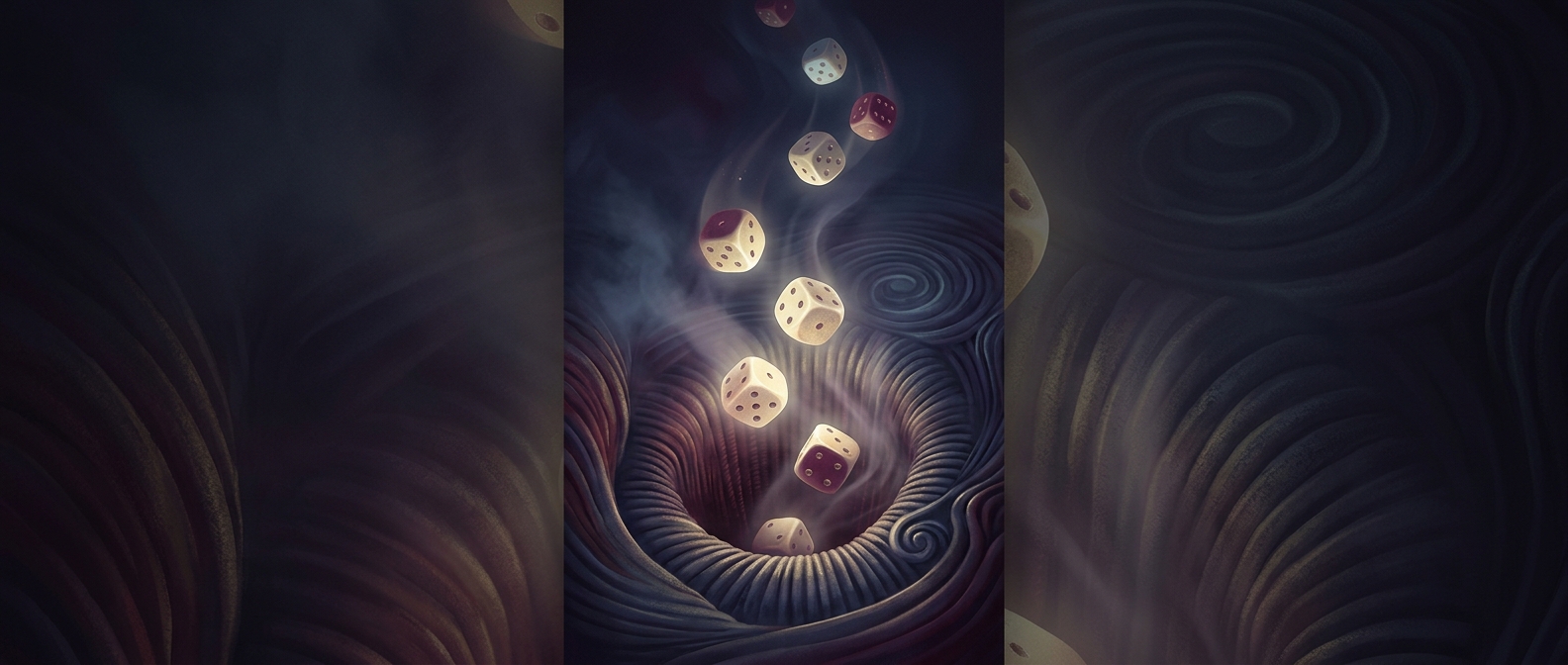
How ridges disrupt a dice roll
A die sliding along a smooth cup wall can keep much of its orientation as the cup moves. That makes its path more orderly than a tumble: it may travel around the cup without repeatedly changing which face points up.
An interior ridge interrupts that glide. When the die meets one, it is nudged away from the wall and can bounce or rotate. Each change in direction gives the die another chance to turn before it lands. The ridges therefore make it harder for a steady swirl of the cup to carry the die along a predictable path.
More motion, not a guarantee
The ridges do not choose a number or ensure an even distribution of outcomes. They alter how the die moves, while the throw, the cup’s motion, and the landing surface also affect the result. Their practical role is to encourage tumbling rather than let the dice simply slide—so a roll depends less on one smooth pass around the inside of the cup.