How a small imbalance could change a game
A die does not need to be dramatically lopsided to favor one result. If its mass is unevenly distributed, the heavier side tends to settle lower, making the opposite face more likely to land on top. The effect is a tilt in the odds, not a guarantee: a loaded die can still produce other results, which helps it pass as ordinary play.
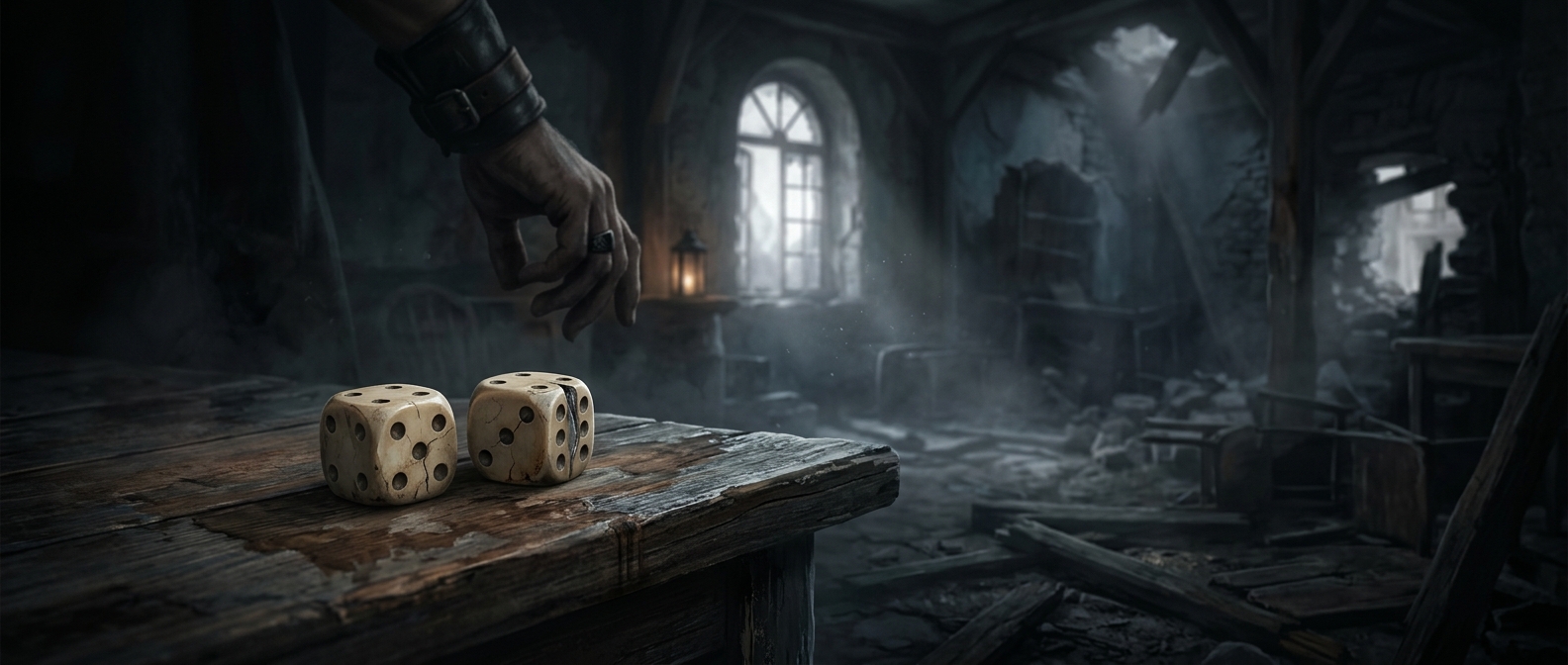
Bone was a practical material for dice, but its natural structure and the way a piece was shaped could also leave uneven weight. A deliberately altered die could exploit that vulnerability. Even a modest advantage mattered in games where a single roll decided who won a drink, a stake, or another round.
What the tavern finds suggest
Weighted bone dice recovered from medieval drinking places bring together two parts of the story: a setting where people gathered to play and objects capable of skewing a throw. They are evidence that some gamblers had reason to manipulate chance—and that a simple trick could be built into an everyday game piece.
The dice do not tell us who altered them or how often anyone was fooled. But they make the temptation tangible: a player could carry an advantage in a pocket-sized object that looked, at a glance, like just another die.