A teaching model that became a puzzle
Ernő Rubik built his cube in 1974 to help architecture students grasp how parts can move in three dimensions. The challenge was mechanical as well as visual: the cube’s small squares had to turn around one another while staying attached, so the object could change shape in appearance without falling apart.
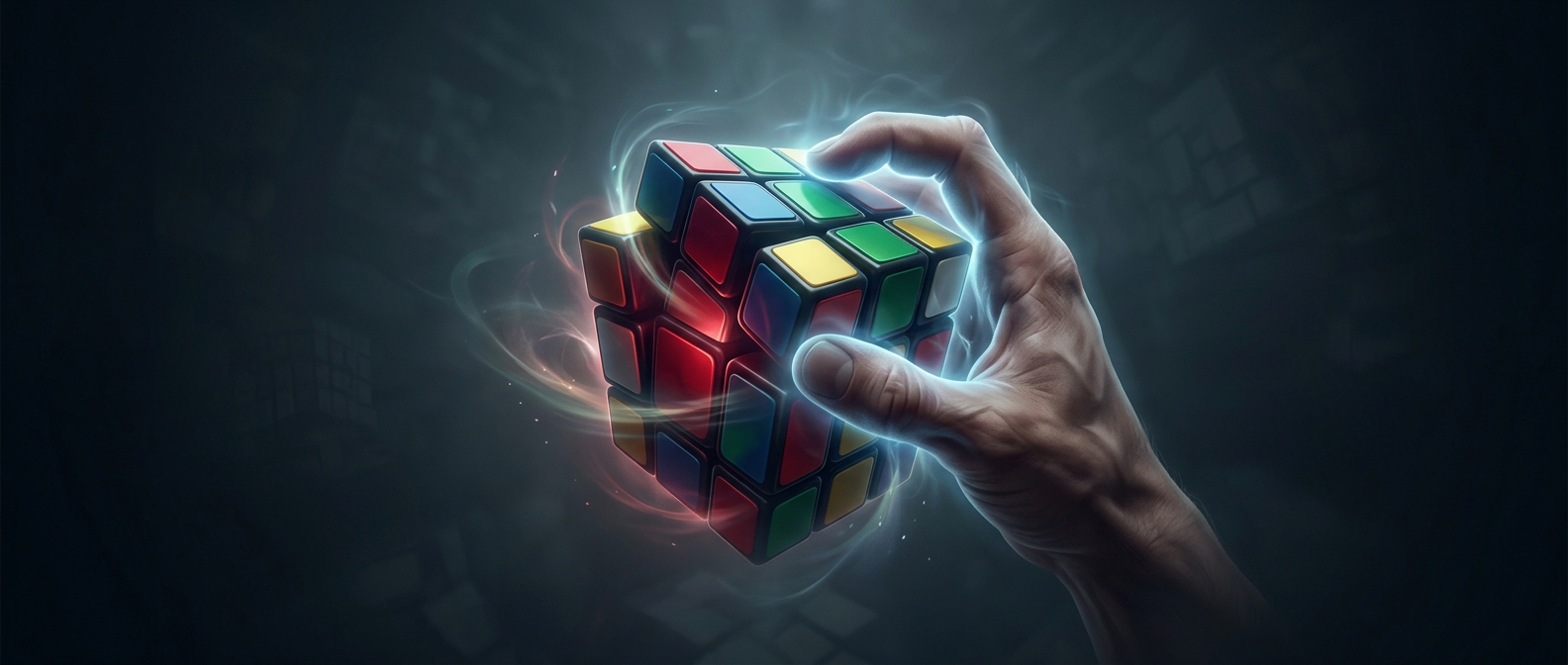
That made it a useful physical model—but also created a puzzle Rubik had not set out to design. The cube’s pieces could rotate in ways that scrambled the colored faces, and restoring those faces required understanding how each turn affected the whole.
Why solving it was not obvious
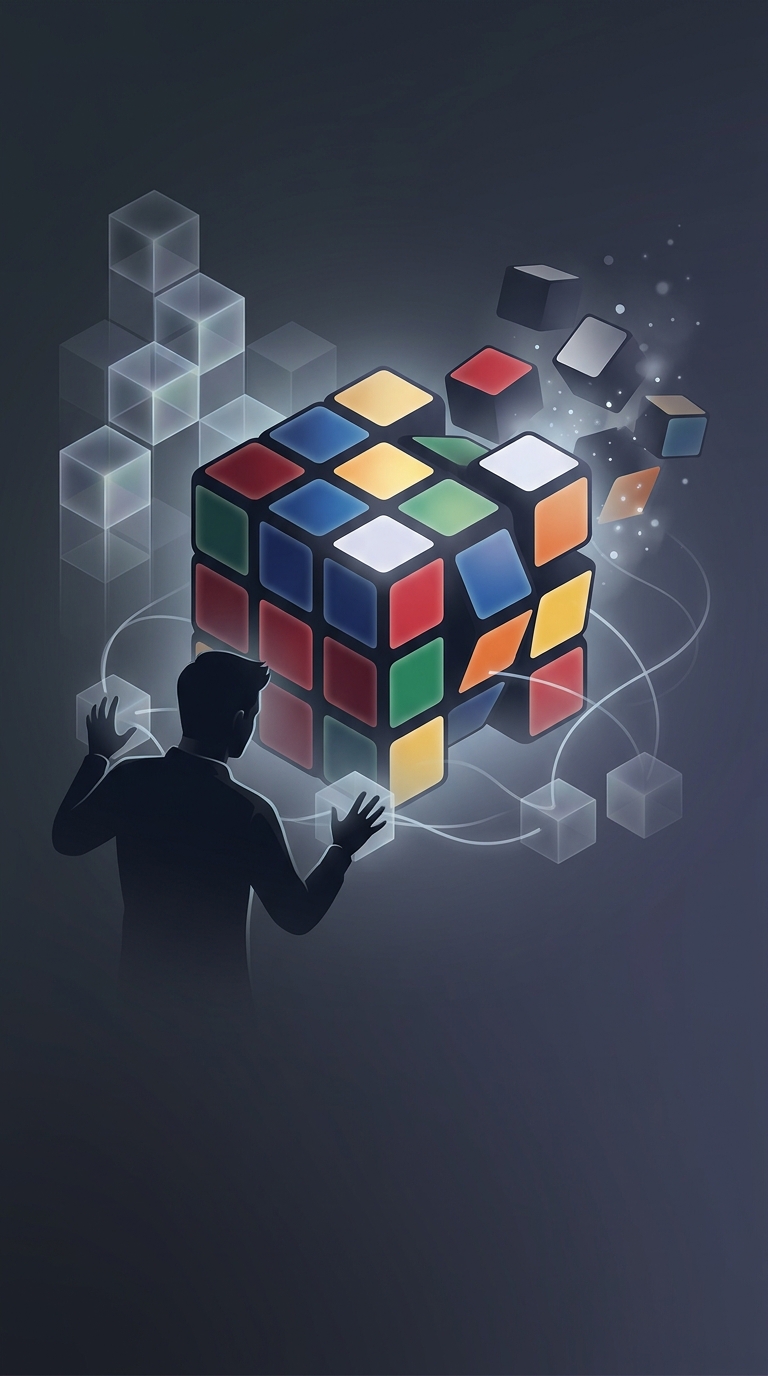
A turn seems local: it moves one face. But it also carries pieces around the cube, changing their positions and orientations. A move that fixes one area can disrupt another. Solving the puzzle therefore means finding a sequence that rearranges pieces while preserving progress already made.
Rubik had no established solving method to follow. When he first scrambled the cube, he had to investigate its behavior through trial and observation. His month-long effort showed that a device with simple, repeatable moves could produce a problem far more intricate than its appearance suggested.
From model to game
The same quality that made the cube useful for teaching—its visible, physical demonstration of spatial relationships—also made it compelling as a puzzle. Each turn offered immediate feedback, but the growing tangle of consequences invited players to search for patterns and reliable methods.
Rubik’s initial fear that he might not be able to restore the cube captures the central tension: the puzzle’s moves are easy to perform, but their combined effects are difficult to control.