Angled edges turn a near-fall into a standing pose
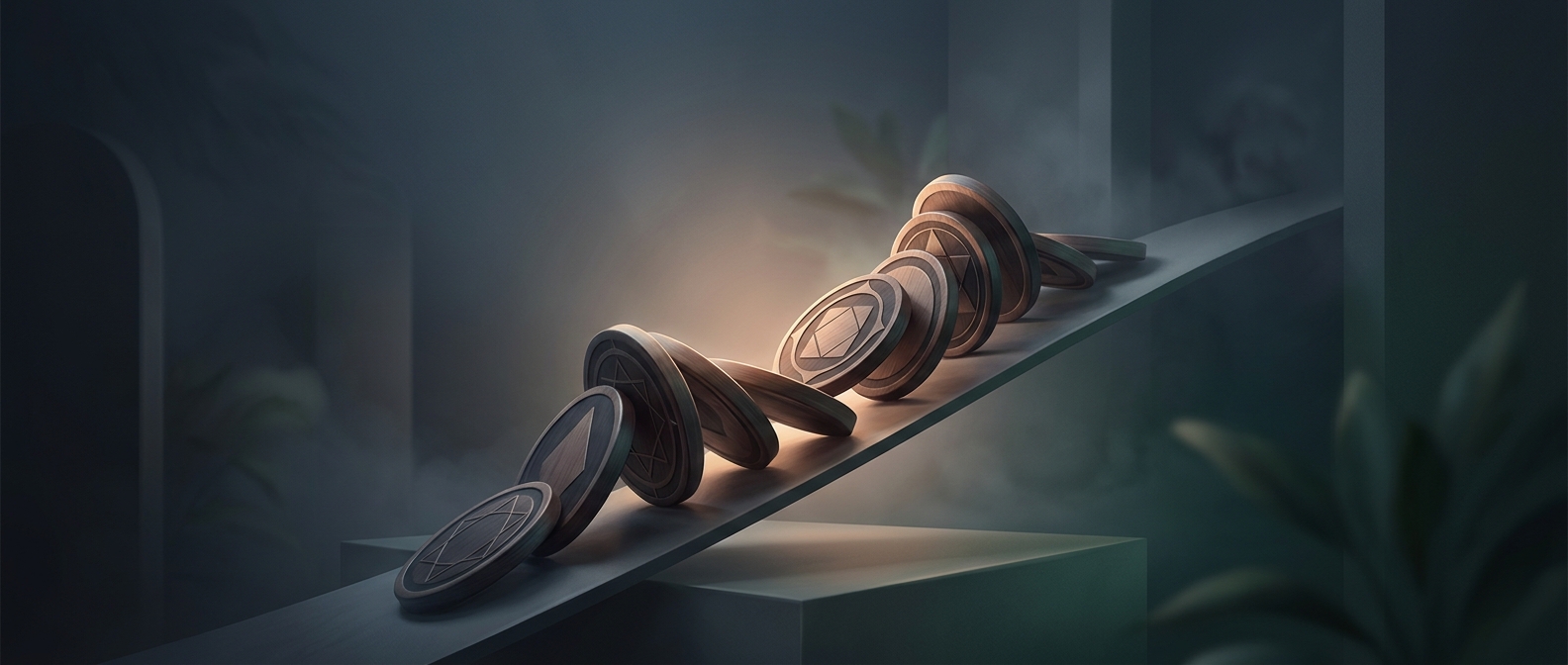
A wooden piece’s shape determines where it can rest—and whether it stays there. Its center of mass is the point where its weight effectively acts. For the piece to balance, the vertical line down from that point must land within the area touching the surface. If the shape would leave that line outside its support, the piece tips toward a face-first fall.
Cutting an edge at an angle changes which part of the piece meets the table. That new contact can create a small, stable resting position even when the piece’s overall shape would not balance upright on a flat edge. The angle is not decoration: it changes the geometry of the support.
A little instability is part of the design
A piece that balances securely would resist being knocked over. An angled edge can instead make the upright position precarious: the piece stands, but its support is limited, and a small push can move its center of mass beyond the contact area. Once that happens, gravity supplies the turning force that carries it down.
The cut therefore sets a practical threshold between standing and falling. A steeper or differently placed contact can alter how easily the piece tips, while the wood’s mass and the piece’s proportions also affect its behavior. The result is a useful game-design tradeoff: a piece can look poised and upright without being firmly planted. A bump becomes the moment that turns its unusual angle into a fall.