How an Orthographic Camera Flattens the View
A game camera has to turn a three-dimensional scene into a two-dimensional image. In perspective rendering, it does so by dividing an object’s apparent size by its distance from the camera: move the object farther away, and it takes up fewer pixels. An orthographic camera skips that depth-based scaling. It projects positions onto the image plane while keeping their size independent of distance.
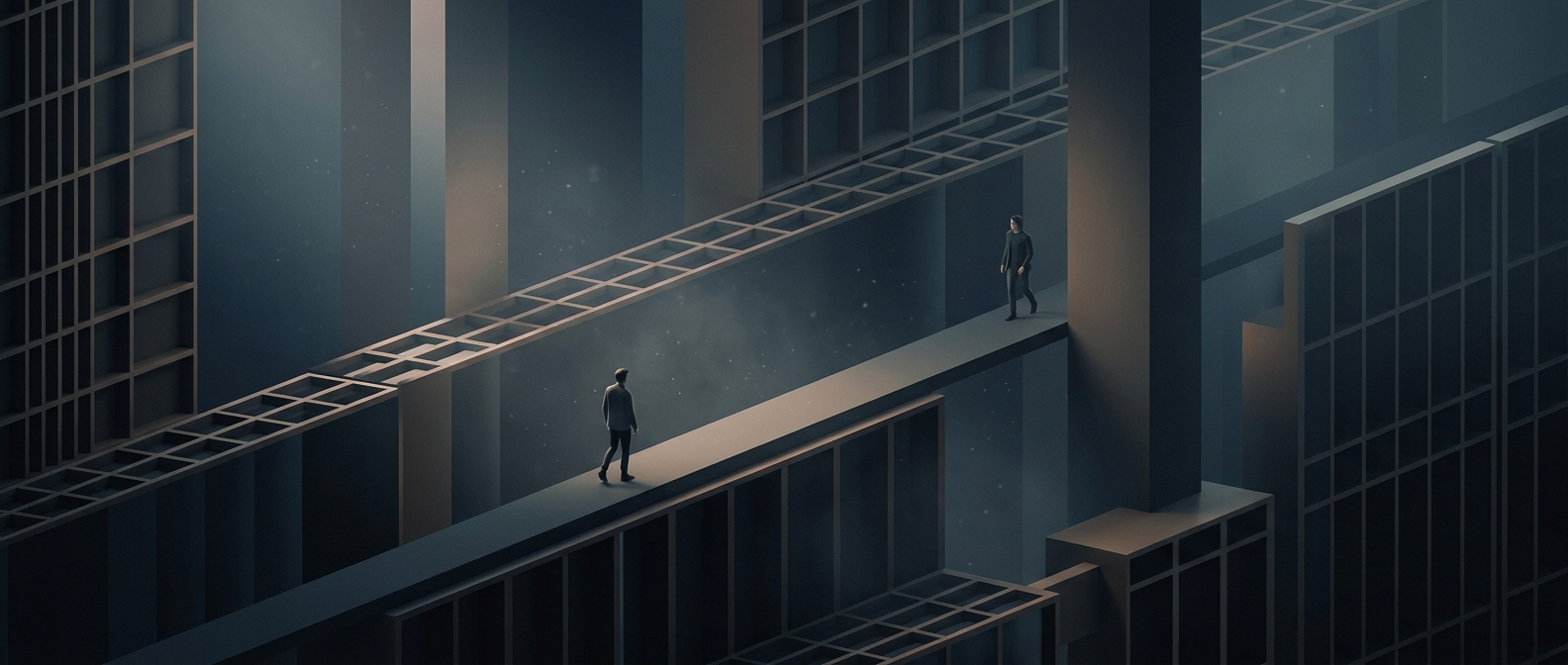
The result changes the visual clues a player gets. Parallel edges do not appear to converge toward a vanishing point, and a road or corridor does not seem to narrow as it recedes. Depth still exists in the game world, but the image gives less of the familiar optical evidence for it.
A Design Choice, Not Just a Camera Setting
That flattening can make gameplay information easier to read. In a strategy game, for example, units on different parts of the map can remain visually comparable instead of distant ones becoming tiny. In a side-view game, the camera can show a clean slice of the action without making objects at the back of the scene look smaller.
The tradeoff is that distance can be harder to judge. Designers may use overlap, shadows, color, or distinct height layers to clarify which objects are in front and how the scene is arranged. Camera movement also feels different: changing an orthographic camera’s zoom scales the whole view together, rather than producing the shifting sense of depth that comes from moving a perspective camera. Orthographic rendering sacrifices a familiar depth cue in exchange for more controlled, consistent screen-space size.