A Smaller View Can Make the Crossing Feel Manageable
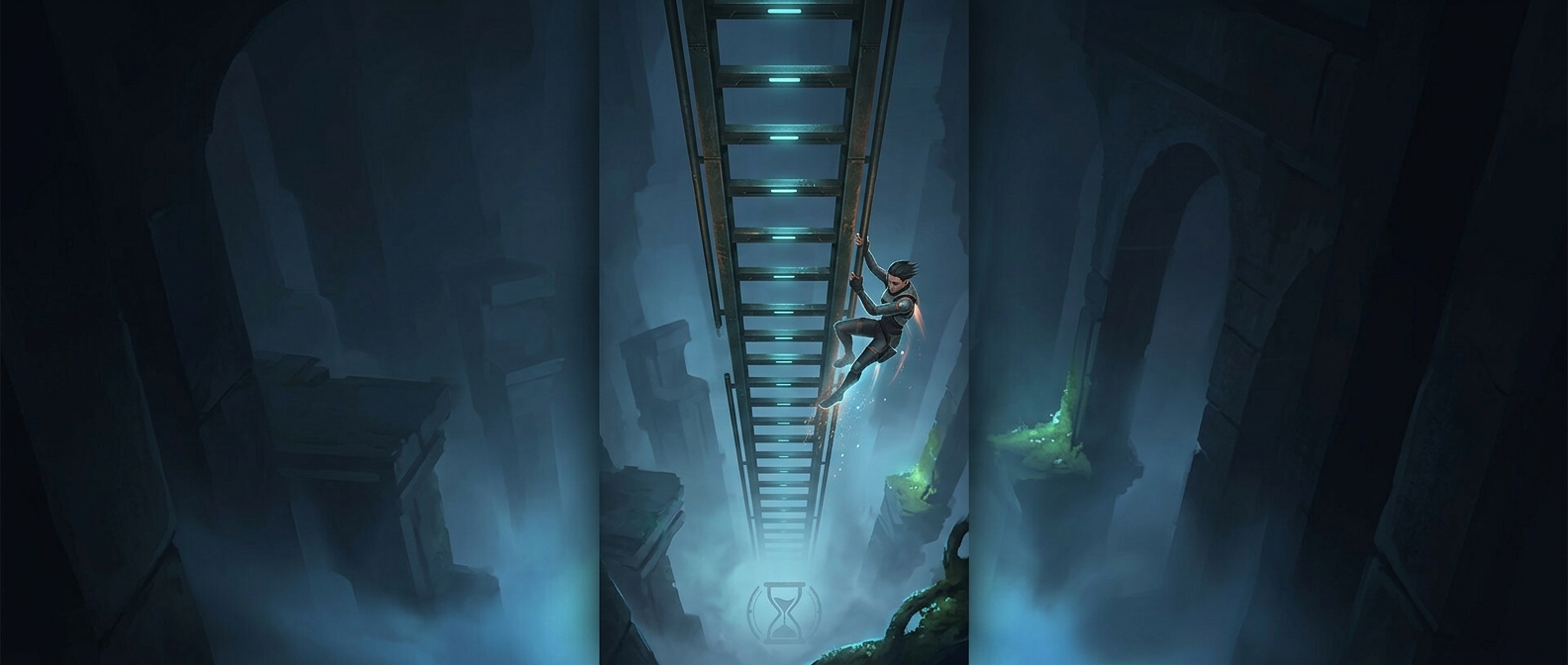
A narrow beam turns the drop into a powerful part of what you see. It can pull attention away from the simple task of placing one foot ahead of the other, making each step feel like a decision with dramatic consequences.
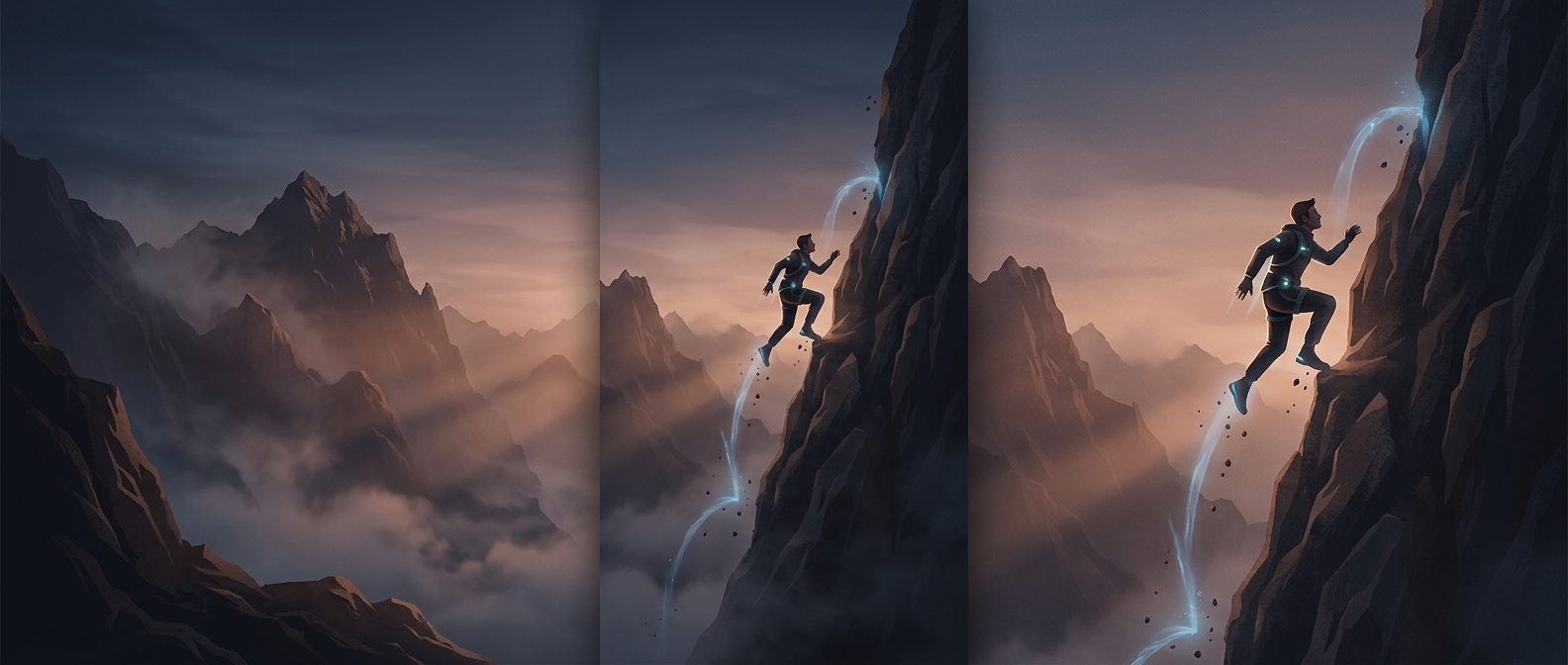
Looking toward your boots changes that visual scene. The beam and your feet fill more of your view, while the distant ground falls away from attention. The height has not changed, but it is less visually dominant. That can ease the alarm that makes a person hesitate or tense up.
Your Feet Also Give You a Moving Reference
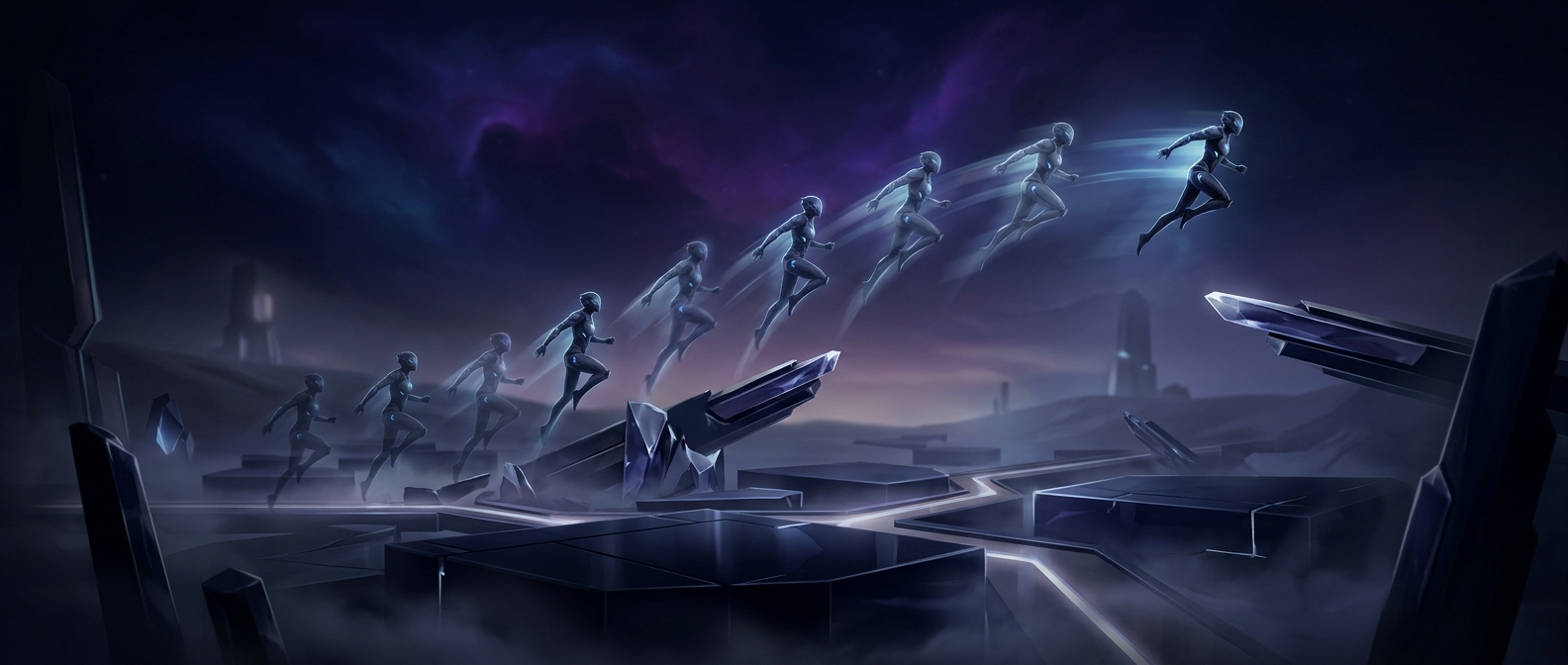
Watching your boots offers immediate information: where your foot is landing, how far it is from the beam’s edge, and whether your body is drifting sideways. As you advance, the beam’s edges slide past your view, providing a close-up cue to your direction of travel. That is more useful for the next step than repeatedly checking the distant drop.
The trick is to look far enough ahead to anticipate where you are going, rather than staring at a single point directly beneath your toes. On a beam, the useful target is the path itself: close enough to judge foot placement, but forward enough to keep the next steps in view.
Why This Works in a Game
A game can use camera framing to create the same shift in attention. A view that emphasizes the character’s feet and the beam makes the route feel concrete and navigable; a view that exposes the drop makes the same crossing feel more threatening. The challenge is not only balancing on a narrow surface—it is deciding what to look at while doing it.
That makes a small change in gaze a meaningful design tool: the player still faces the height, but can focus on the next foothold instead of the fall.