When a Wall Becomes a Staircase
A steep face looks impassable, but a game does not treat it as a solid picture. It represents the character and cliff as collision shapes, then updates their positions in small steps. When those shapes overlap, the physics system has to separate them—often by pushing the character out of the wall.
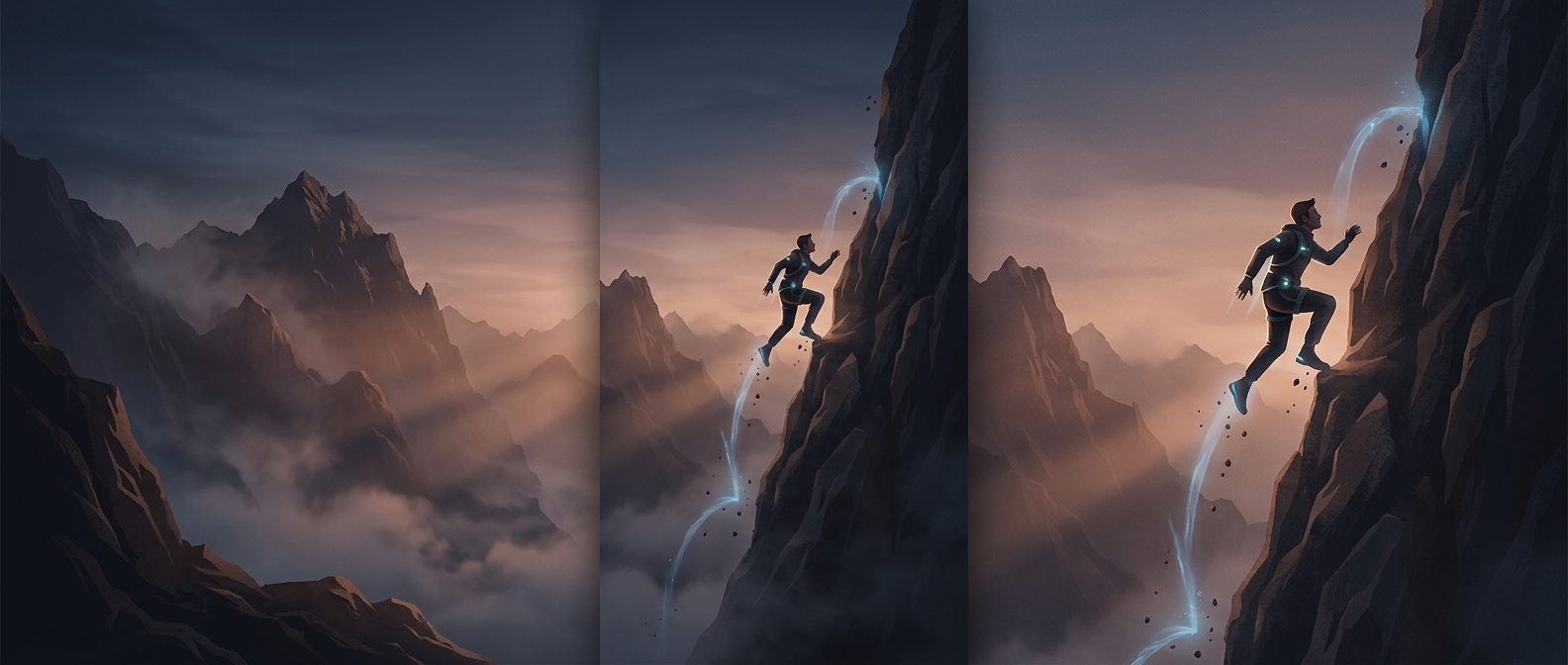
Jumping repeatedly can make that correction work in the player’s favor. Each jump sends the character upward; pressing into the cliff keeps them close enough for the collision system to respond again. If the character catches a tiny ledge, an uneven patch, or a seam in the terrain, the next jump may begin from slightly higher ground. A series of small gains can add up to a climb.
Why the Dirt Road Loses
The trick depends on how that particular game handles jumping, contact, and terrain. Some games allow a fresh jump as soon as the character briefly leaves the ground; others require a clear landing. A near-vertical surface may also contain small collision steps that are invisible in the artwork. Repeated input can exploit those details without any one jump appearing powerful enough to scale the whole wall.
That makes the shortcut less like climbing a real cliff and more like finding a gap between the game’s rules. The winding road is the intended route, built for steady progress; the wall may be faster if its collision geometry gives each jump a foothold. The crucial resource is not extra jump height, but repeated chances to gain a little altitude.