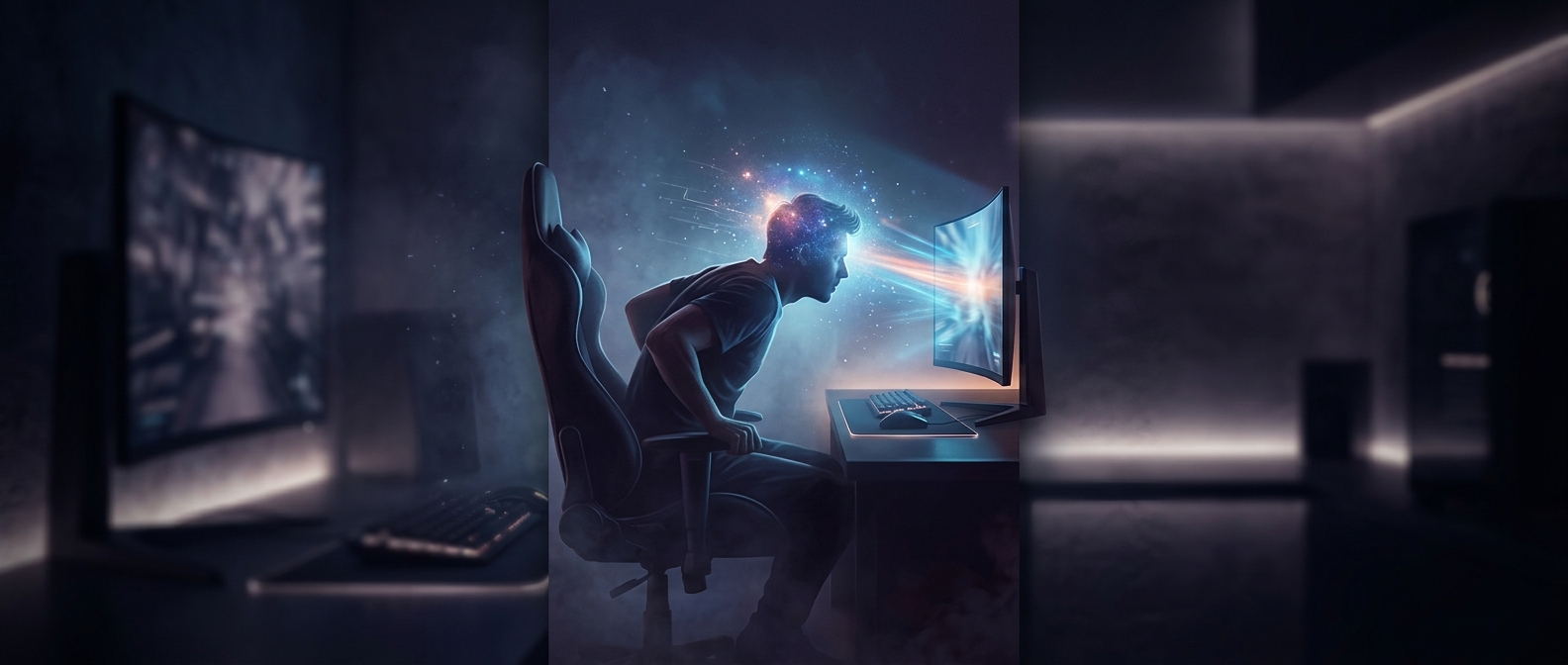
A Small Posture Shift, a Clear Change in the Room
When a close match turns tense, a player may move forward without thinking: elbows near the knees, shoulders angled toward the display, eyes fixed on the next move. The screen has not changed, but the player’s posture makes attention visible. It is a physical way of narrowing focus around a moment that suddenly feels consequential.
That movement also works as a social cue. In a shared room, people read posture quickly. Sitting back can look relaxed; leaning in suggests that the outcome matters and that interruptions should wait. The player does not have to announce that the match has become serious—the change in body language says it for them.
Why the Signal Matters
Games often shift between low-stakes downtime and moments when a single decision can decide a round. The lean marks that transition for spectators and teammates, who may respond by quieting down or paying closer attention. It can also reinforce the player’s own sense of commitment: the body adopts the focused stance associated with taking the next action seriously.
Leaning closer does not guarantee a better play. Its significance is more ordinary and more human: it turns private concentration into something the people nearby can see. In a living room, the match may become serious before anyone says a word.