Why turning a PlayStation over could help it read a disc
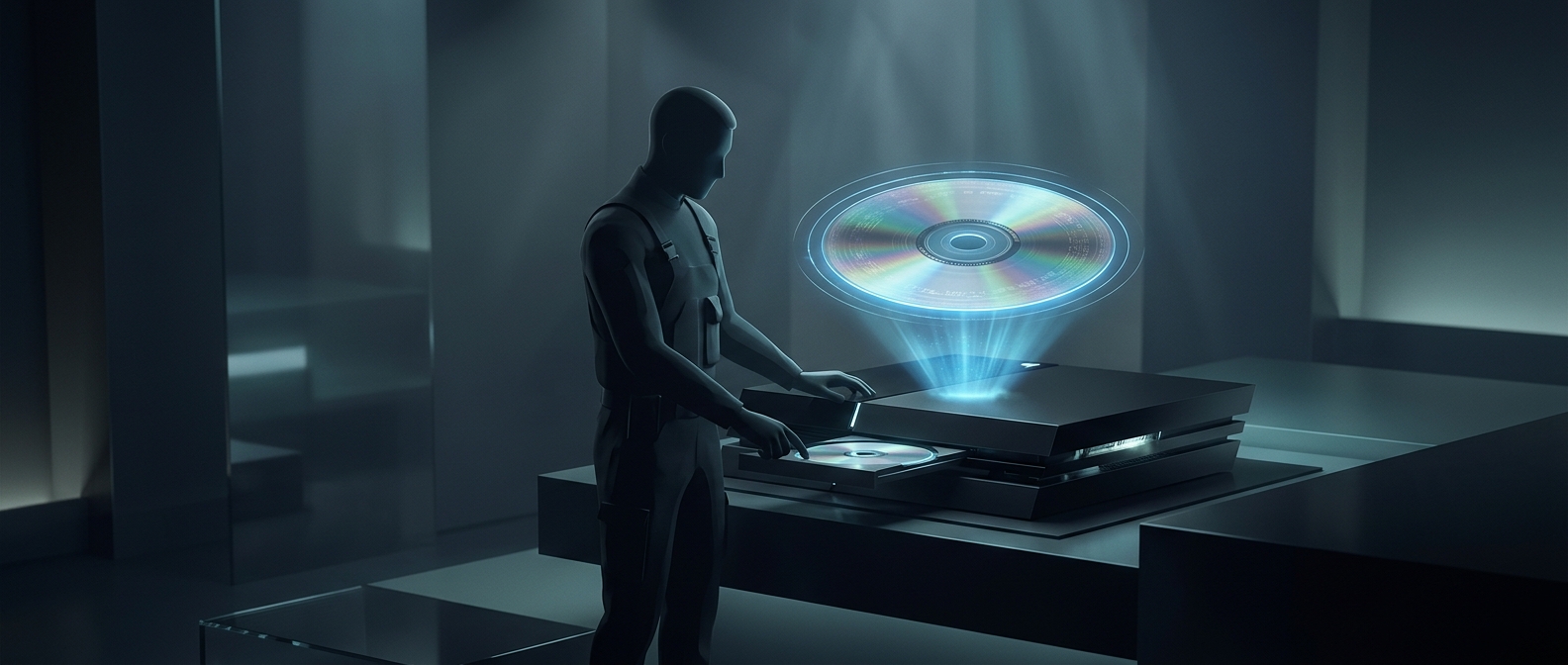
A PlayStation reads a disc by shining a laser through its clear underside and sensing the light reflected back from the disc’s patterned surface. The optical pickup—the small assembly that holds the laser and its sensor—has to stay at just the right distance and angle as it moves across the disc. If the signal becomes too weak or unstable, the console may struggle to load a game.
Heat can change the fit of small mechanical parts. In a worn drive, slight expansion or looseness may leave the pickup less able to follow the disc accurately. The laser itself is not necessarily broken; the reading system may simply be operating at the edge of its tolerance.
Gravity could provide a temporary nudge
Turning the console upside down changed how gravity acted on the disc mechanism and pickup. That small shift could press a loose part or worn assembly into a position where the laser once again got a usable reflection. The console could then read the disc—at least for a while.
It was an improvised mechanical adjustment, not a repair. The underlying wear or heat-related problem remained, so the trick might work inconsistently or stop working altogether. But it explains why a seemingly absurd move could make a game start: sometimes the difference between a failed read and a successful one was only a tiny change in the drive’s position.