Two CPUs, one ambitious 3D machine
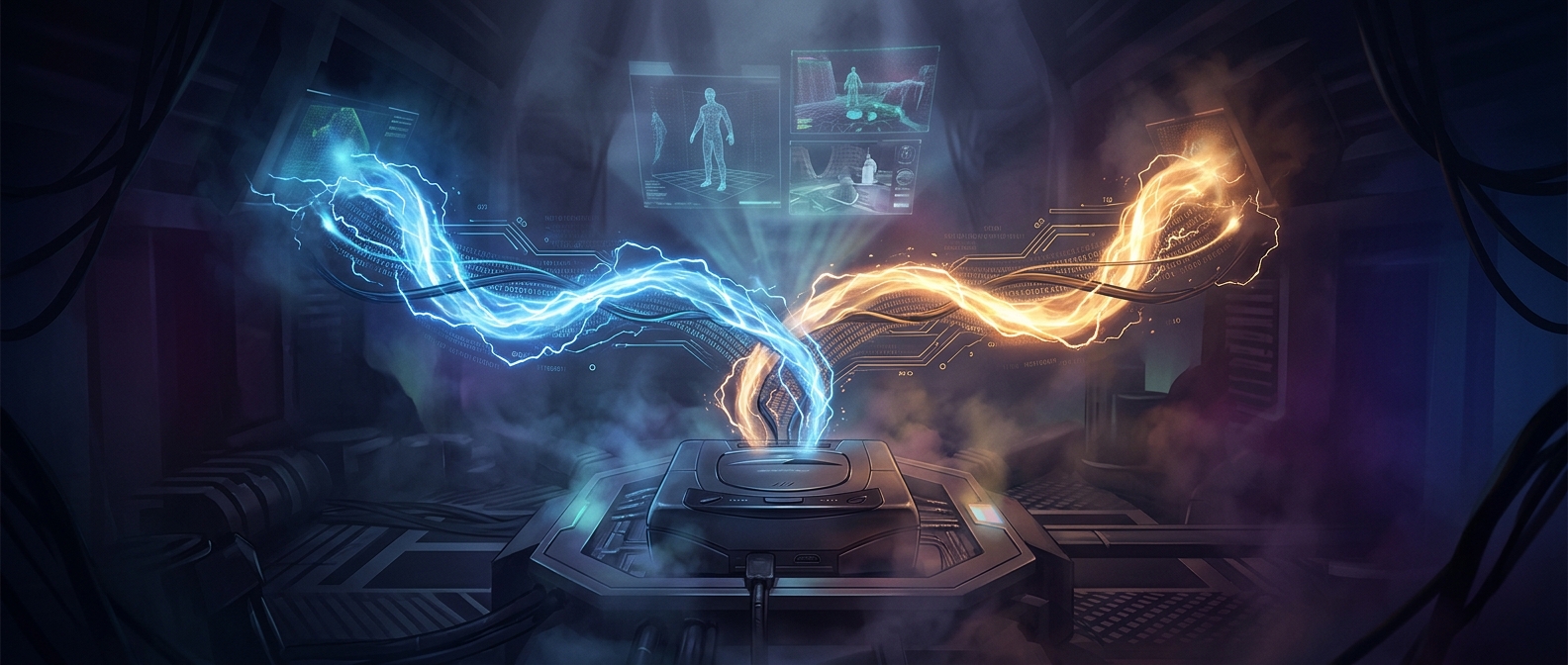
The Sega Saturn used two Hitachi SH-2 processors, general-purpose chips that could run game code. Sega’s aim was to give demanding games more computing muscle: while one processor handled part of a scene or game logic, the other could work on another task. In principle, that parallel work could help the Saturn draw more complex 3D images.
But adding a processor does not automatically make a console faster. The game has to give each chip useful work to do at the same time—and the chips must exchange information without slowing one another down.
The work had to be divided
A game might assign one processor to update characters and game rules, while the other prepared objects or calculations needed for the next frame. The challenge was choosing tasks that could run independently. If one processor needed results that the other had not finished, it had to wait. If both needed the same data or hardware resources, coordinating them could consume time that the extra chip was meant to save.
The Saturn also had dedicated video hardware, so programmers had to decide how the two CPUs and graphics chips should share the job. Getting that division right meant understanding the machine’s architecture and managing timing and communication—not merely writing a game and letting the console sort it out.
More power, more programming burden
That complexity made the Saturn difficult to use efficiently, especially for teams accustomed to simpler development setups. A game that failed to keep both processors productively occupied could leave much of the machine’s theoretical power unused; a well-organized one could benefit from the extra processing capacity.
The second processor was therefore both an opportunity and a cost. Sega built in more potential for 3D work, but developers had to do the hard work of unlocking it. On the Saturn, extra hardware did not guarantee better graphics: it made the programmer’s decisions about splitting and coordinating the work part of the performance equation.