A memory card that could leave the controller
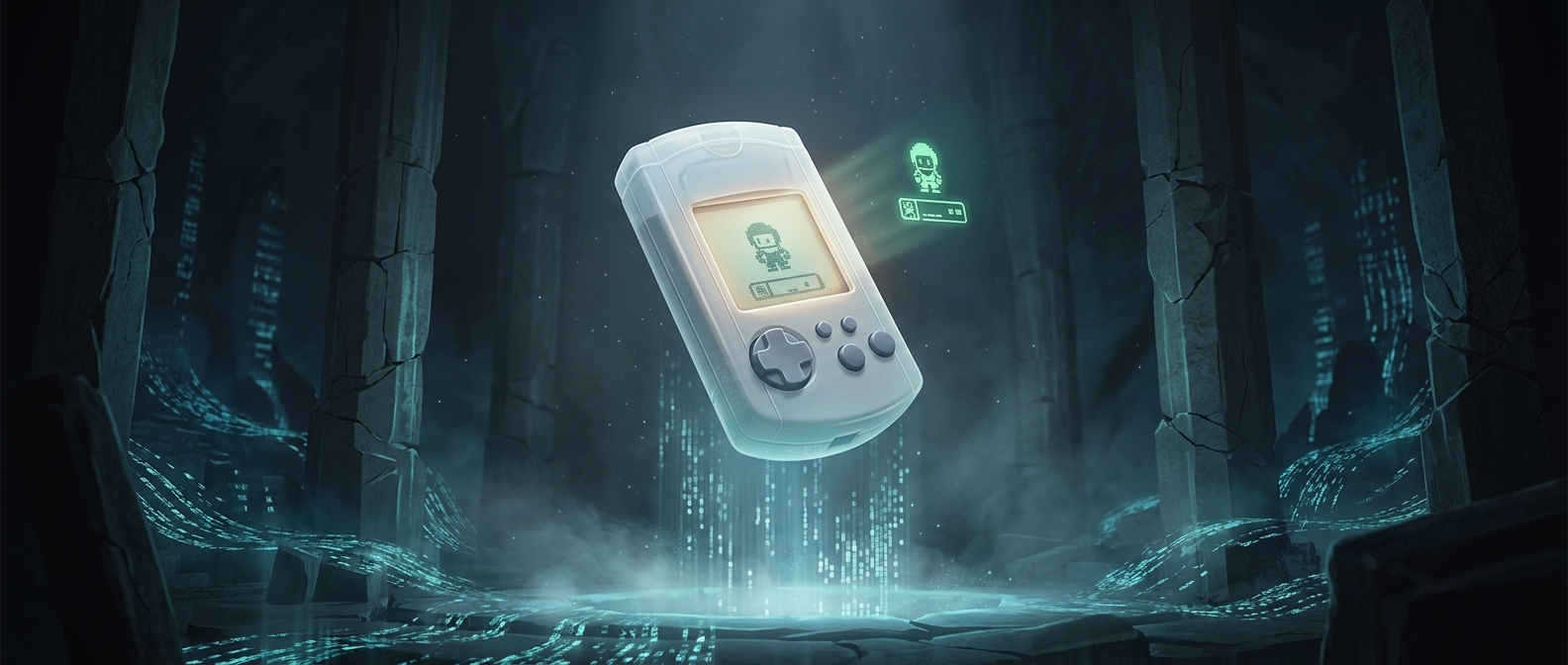
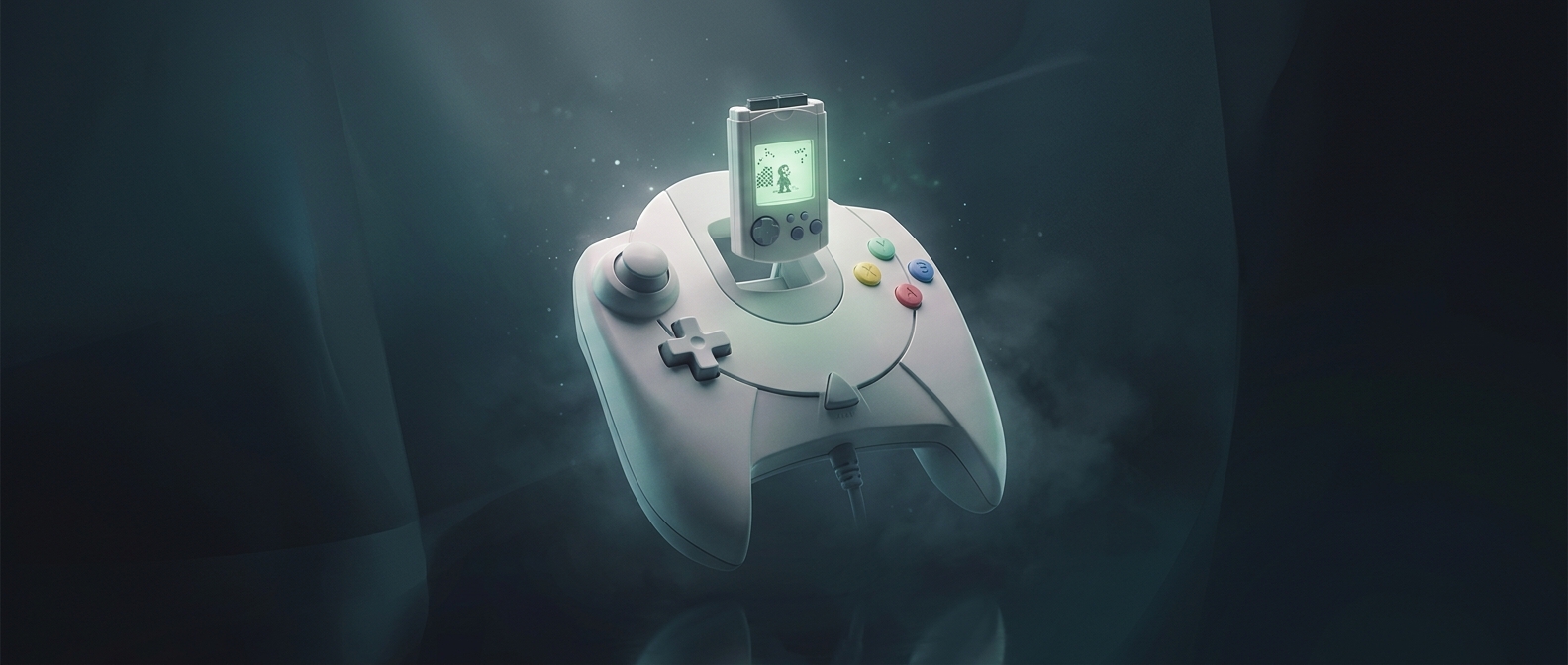
The Visual Memory Unit, or VMU, was more than a place to save Dreamcast games. It combined a memory card with a small monochrome display and a few buttons. Slotted into the Dreamcast controller, its screen faced outward through a window, so a game could put useful information where the player could glance at it without interrupting play.
That made the controller a tiny second display. A football game, for example, could use it for information that would otherwise crowd the television screen; other games could show character or inventory details there. The VMU’s screen was small and simple, so it was suited to icons, numbers, and basic animations—not a second view of the game world.
What happened when it came out
The VMU also had its own processor and controls. A player could transfer a small minigame from a Dreamcast game onto the unit, then play it away from the console. The minigame was necessarily modest: the VMU had to fit the software, display it on a tiny low-resolution screen, and run on its own power.
This dual role shaped the design. As a memory card, the VMU kept saves close at hand; as a portable device, it let game makers extend play beyond the television. But those two jobs competed for limited space and power, and the tiny screen restricted what developers could create. Its most distinctive trick was not replacing a handheld console—it was letting a piece of a Dreamcast game travel in a player’s pocket.