Sega’s Experiments Put the Stick Where a Thumb Could Reach
A controller’s shape is not just styling: it determines where the hands rest and which fingers can reach each control without shifting grip. Sega explored that problem with peripherals such as the Saturn 3D Control Pad and the Dreamcast controller, pairing rounded, hand-filling forms with an analog stick positioned apart from the directional pad.
An analog stick reports how far and in which direction it is tilted, rather than simply registering one of four directions. That makes it useful for steering or moving through three-dimensional spaces, but it also creates a placement problem: the stick needs to sit where a thumb can move it freely while other controls remain reachable.
From Experimental Pads to Familiar Layouts
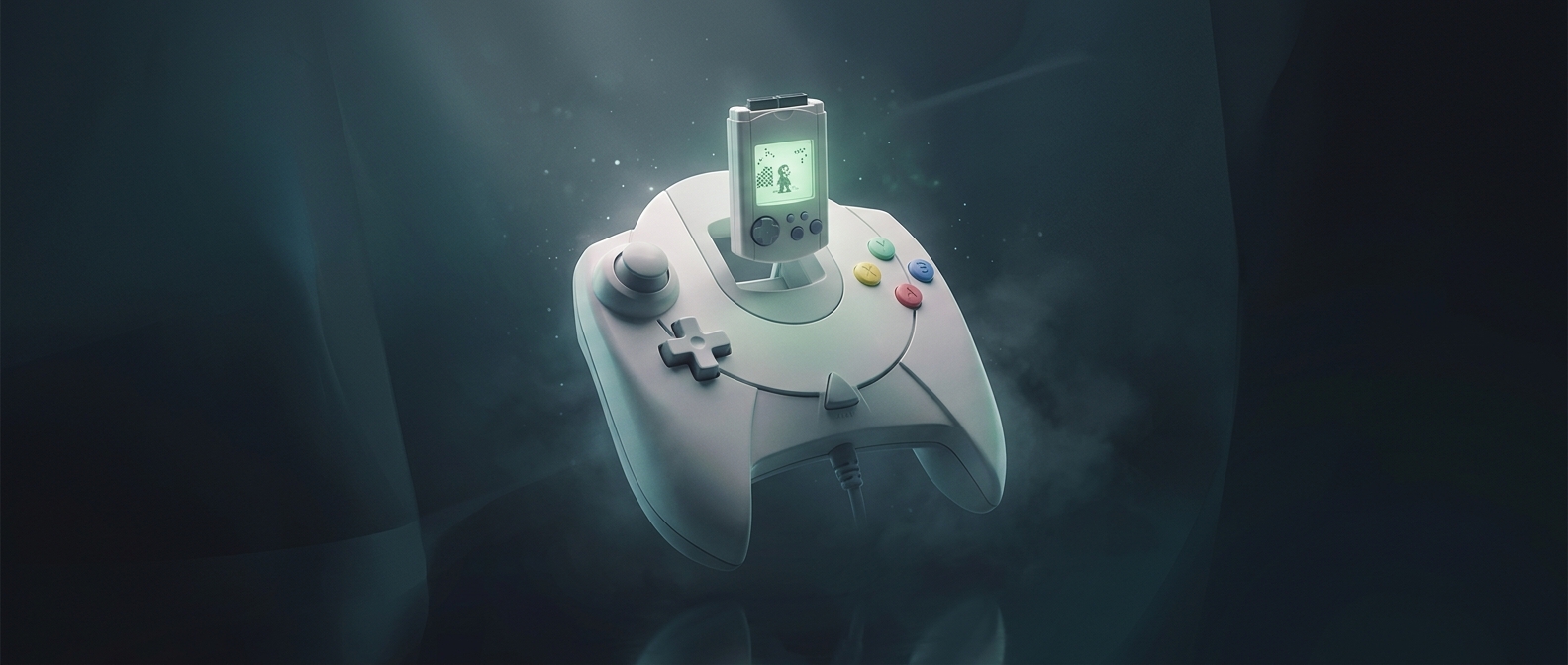
The Dreamcast controller made this tradeoff visible. Its left analog stick sat above the directional pad, while the right hand had face buttons and a trigger. That separated two kinds of input—continuous movement and discrete button presses—across the hands. Later controllers used many variations on the same ergonomic idea: shape the grips to fit the palms, then place controls where thumbs can reach them with minimal repositioning.
The influence is clearest in the broader design vocabulary, not in a single identical blueprint. Some modern controllers use asymmetrical sticks, while others keep them aligned; different layouts suit different games and player preferences. Sega’s experiments helped make the analog stick’s location and the controller’s grip part of the design conversation.
Why the Layout Still Matters
A small shift in stick position changes how a player holds the controller and how easily a thumb can move between controls. Sega’s legacy is therefore less a one-for-one copy than a practical precedent: controllers could be redesigned around the motions games demanded, rather than treating the old directional-pad arrangement as fixed.