Why a D-pad struggled in a 3D world
The original PlayStation controller was built around a D-pad: a cross-shaped set of buttons that sends movement in a handful of fixed directions. That works well when a character moves along a flat path, but 3D games ask for finer control. A player may need to steer diagonally, adjust direction gradually, or move while managing a separate action.
Sony’s Dual Analog controller added two thumbsticks. Their continuous range of motion let a game translate how far and in which direction a stick tilted into character movement or another control.
How Ape Escape made the sticks matter
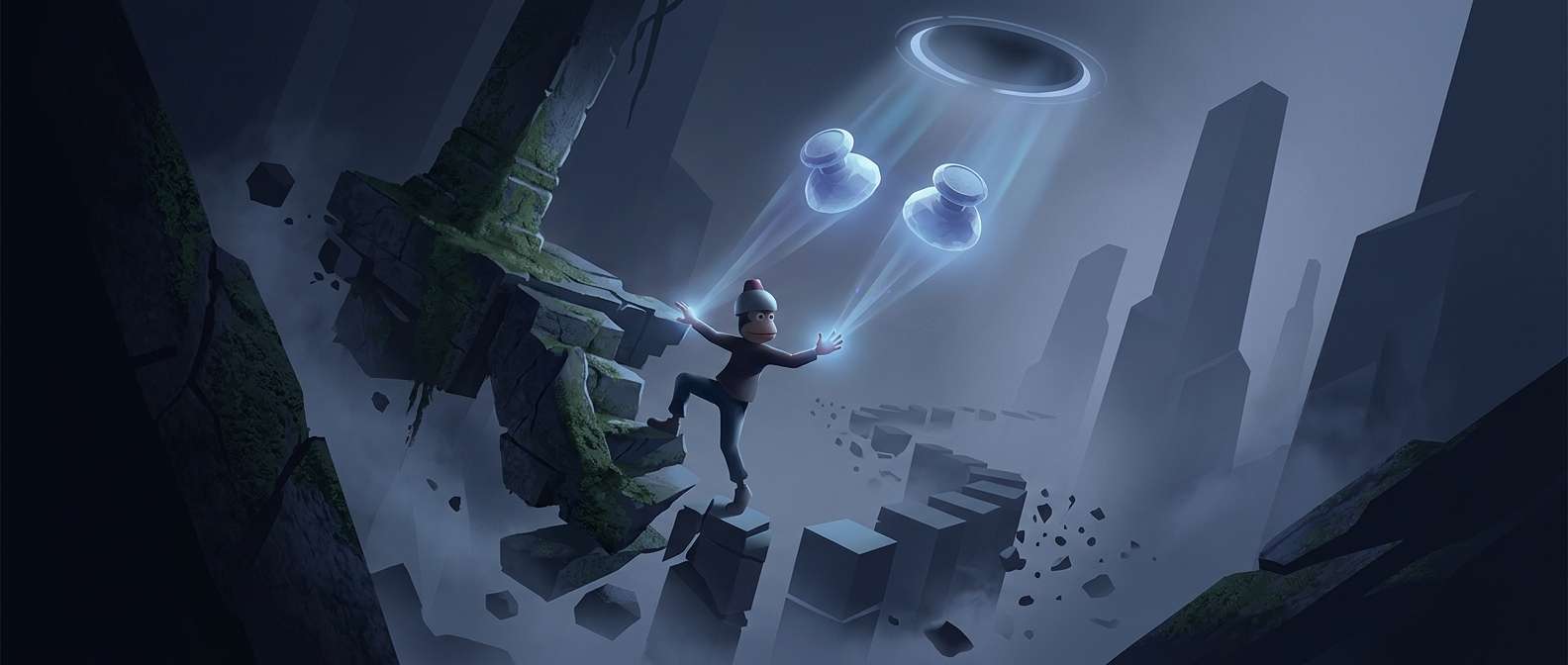
In Ape Escape, one stick steers the player character, while the other operates the gadgets used to catch monkeys. That division makes the controller’s purpose tangible: one hand can keep the character moving as the other aims or uses equipment. With only a D-pad and buttons, those simultaneous, finely aimed actions would have been awkward to reproduce.
The game was designed to require analog control, rather than merely offering it as an option. That made the new controller more than a convenience for this particular adventure: it let designers build challenges around smooth movement and independent gadget control.
A new kind of PlayStation control
The Dual Analog arrived before Ape Escape, but the game became its clearest showcase by making the sticks essential. The shift was not simply from buttons to joysticks; it gave game designers a way to assign two different jobs to the player’s thumbs at once. In Ape Escape, that meant chasing a target and lining up the tool to catch it without stopping to switch controls.