The PS2’s network connection was an add-on, not a built-in feature
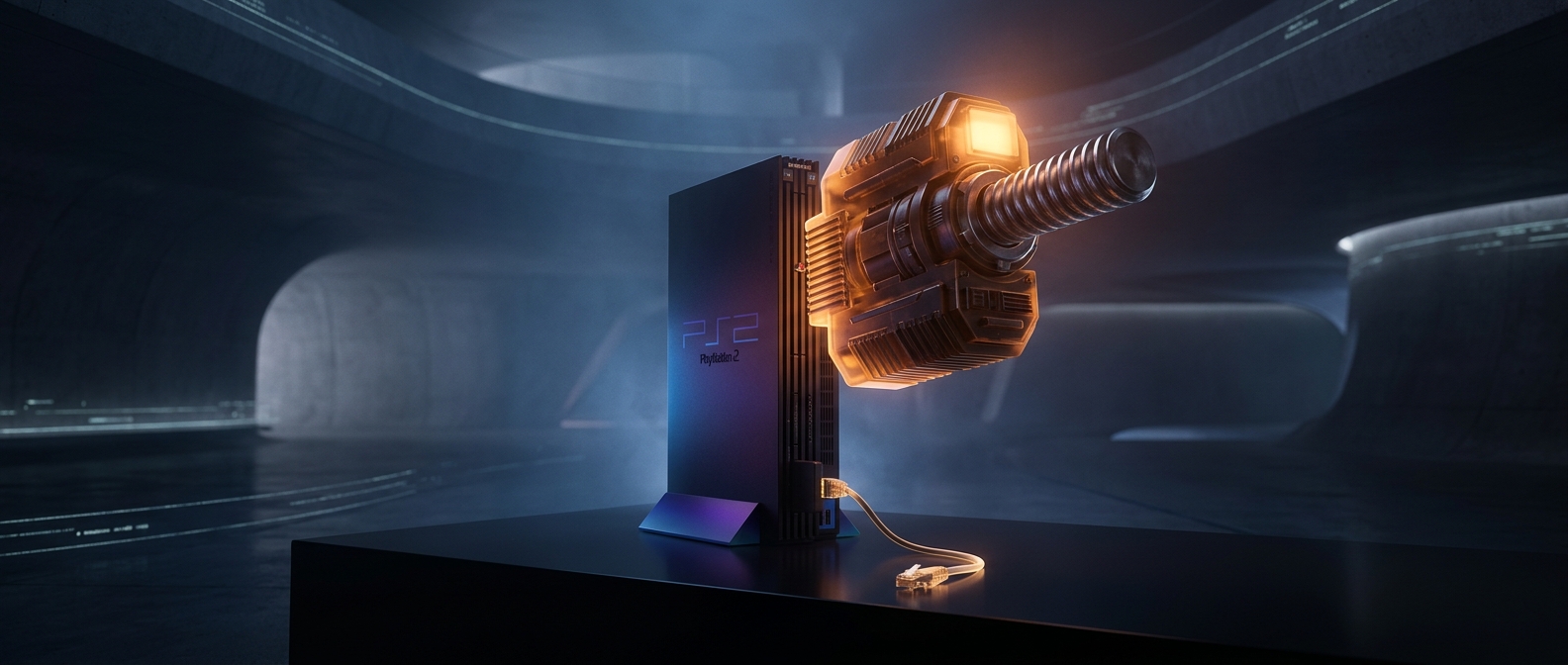
The original PlayStation 2 was designed first as a console for games played from discs. To get it online, owners had to add hardware: the Network Adapter fitted into the console’s rear expansion bay and provided the connection interface that the base machine lacked.
That modular approach let Sony offer network access without putting the same networking hardware inside every console. It also meant that “going online” involved more than switching on a setting: players needed the adapter, a compatible connection, and a game designed to use it.
Why it had to be fastened in place
The adapter was a substantial piece of hardware, so it attached directly to the console rather than hanging from a small cable. A pair of captive screws held it against the expansion bay; their slots were shaped so a coin could turn them when a screwdriver was not handy. Once fitted, the adapter’s ports gave players a place to connect their internet equipment.
Connection options depended on the adapter and market. Some setups supported broadband Ethernet, while dial-up access was also available in certain versions. The distinction mattered: Ethernet connected through a home network device, whereas dial-up used a telephone line and modem.
The tradeoff of making online play optional
An add-on kept the console’s basic hardware simpler, but it made online gaming a separate purchase and setup task. Players could own a PS2 without ever using its network features; those who wanted to play online had to fit the adapter and connect it to the kind of service their setup supported.
That chunky attachment is a reminder that console networking was still an upgrade path, not an invisible feature built into every machine. For a PS2 owner, the expansion bay could turn a disc-playing console into an online one—but only after the hardware was bolted on.