The camera follows the game’s control rig, not a real head
In many first-person shooters, the viewpoint sits lower than a person’s eyes—sometimes near the upper torso. That does not mean the game is literally rendering the character’s vision from their chest. The camera is a movable viewpoint attached to the player’s control rig, and its position is chosen to make movement and combat work reliably.
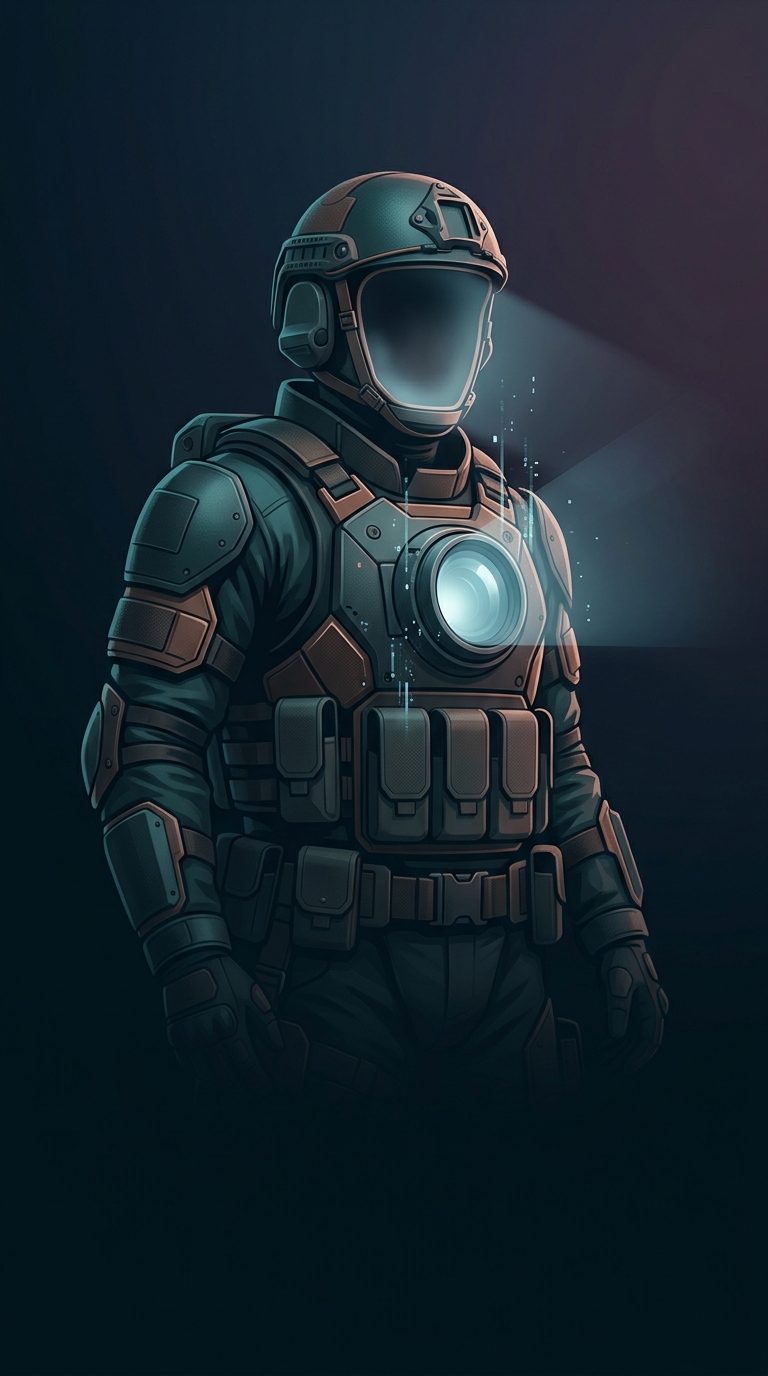
The visible body is often a separate model. A game may hide the character’s head in first-person view to prevent the camera from seeing the inside of the face, while drawing the arms and weapon in a separate “viewmodel” placed for clear aiming. So the camera, body, and gun need not line up like parts of a real person.
Why put the viewpoint lower?
A lower camera can help keep the viewpoint inside the player’s collision shape—the invisible boundary used to stop the character passing through walls and floors. If the camera sits above that boundary, it may slip through a ceiling or around a corner even while the character’s body remains blocked. That can let players see or shoot from a position their character has not actually reached.
Developers also tune the camera for readable movement and stable aiming. The player needs a clear view while jumping, crouching, and turning; the weapon must remain visible without filling the screen. Those goals can favor a camera position that is convenient for the game rather than anatomically exact.
A useful compromise, not a universal rule
There is no single camera placement shared by nearly every shooter. Some games put the viewpoint close to eye level, and many adjust it during crouching or other animations. But when a viewpoint feels unusually low, it is often the result of a practical compromise: keep the camera aligned with the character’s movement and collision, while letting the first-person arms and weapon be staged separately for the player’s view.