Why the Far Edge Changes a Checker
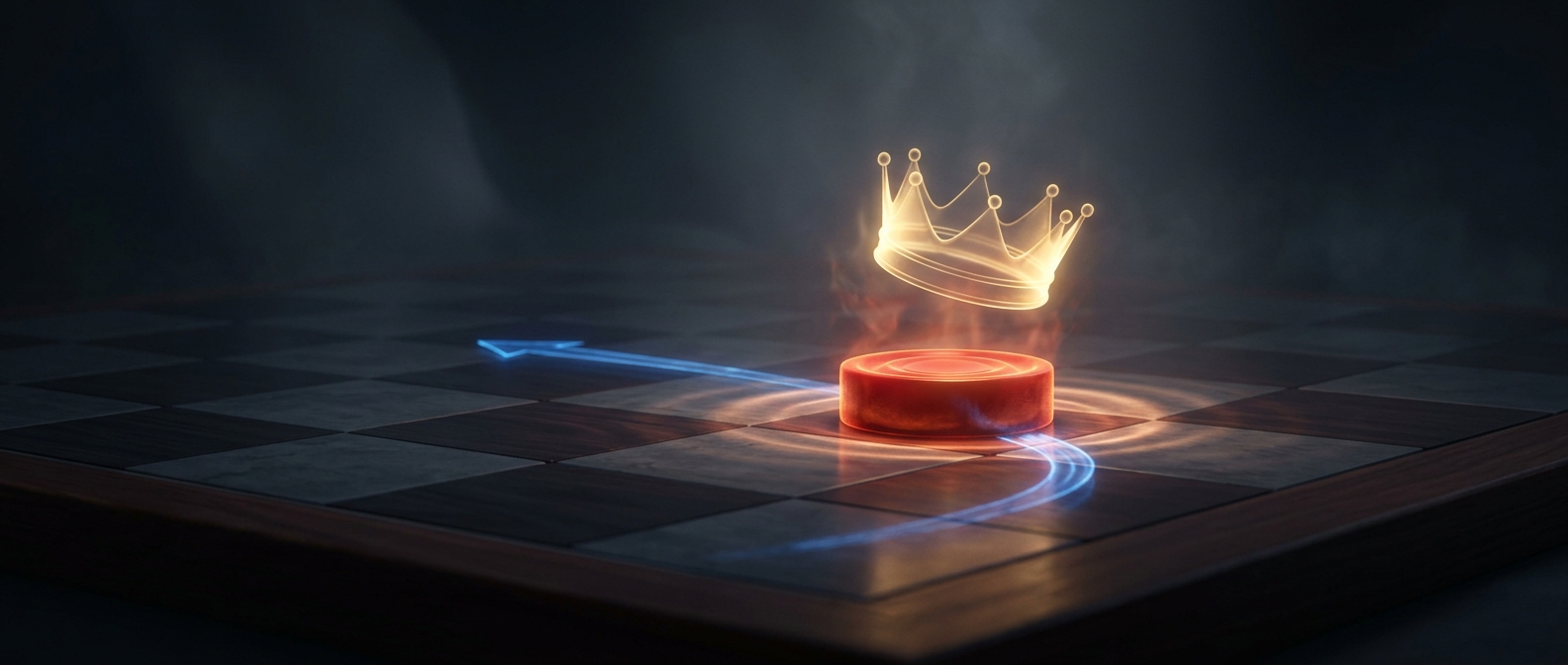
In standard American checkers, an ordinary piece is restricted to moving diagonally forward, toward the opponent’s side of the board. When it reaches the farthest row, it is crowned and becomes a king. The new status changes its movement in a precise way: a king can travel one diagonal square in either direction, but it does not suddenly gain a longer stride.
A New Way to Handle Threats
That backward step matters because checkers is a game of positioning. A man near an opponent’s pieces may have to keep advancing, even when moving forward leaves it exposed. A king can instead withdraw, shift back to a safer square, or maneuver around a threat without giving up its ability to move toward the opponent later.
The flexibility also changes how opponents approach a crowned piece. Blocking its forward route may not contain it; the king can turn back along another diagonal. Yet it remains limited to the same one-square moves as other pieces, so it still has to navigate occupied squares and avoid being captured. Crowning expands the routes available—it does not make a piece invulnerable.
Why Promotion Is a Turning Point
Reaching the far row therefore rewards a player with more than progress across the board. It removes the one-way constraint that governs ordinary checkers and makes the piece useful in situations where advancing would be dangerous. A small change in movement can reshape the board: after crowning, a checker can retreat from trouble and still remain an active threat.