How a Long Puzzle Becomes a Sphere
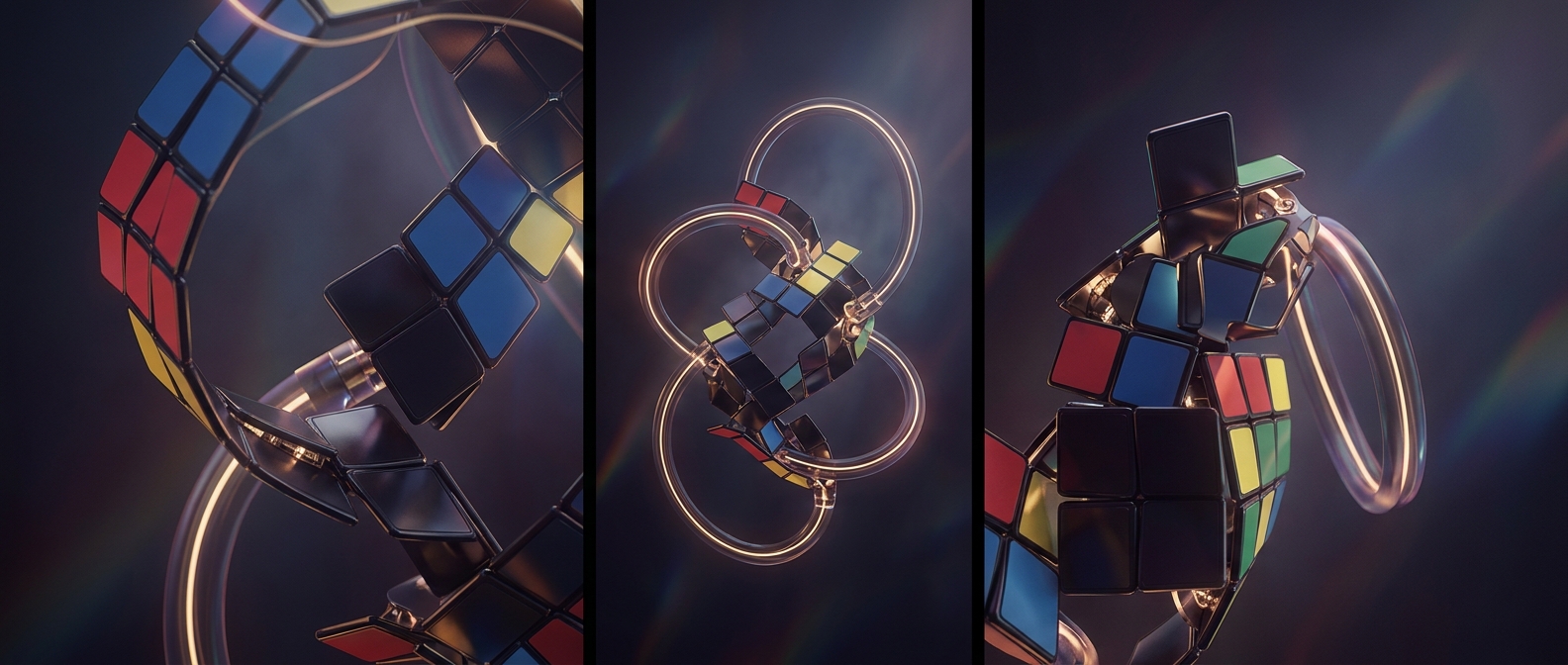
The transformation comes from moving the prisms, not adding or removing pieces. Each of the 24 solid pieces is linked to its neighbors so that twisting one part changes how the rest are oriented. In the extended arrangement, the pieces line up into a narrow, stick-like form; as the sections turn, they pack around a compact center.
The interlocking connections are what make the change a puzzle rather than a simple rearrangement. They keep the pieces together while limiting which turns are possible, so the solver has to find a sequence of movements that brings the sections into alignment.
The Shape Is the Design Challenge
A sphere is a demanding target for pieces shaped like prisms, which have flat faces and straight edges. To make the finished form read as a sphere, the prisms must meet in a balanced arrangement: gaps and protrusions need to be minimized, and the outer surface must look rounded from different angles. The result is a sphere-like solid built from many flat-sided parts.
That contrast is the satisfying part of the design: the same linked pieces that form a long, easy-to-grip bar can fold into a compact object with no obvious beginning or end. The puzzle’s payoff is not just reaching the sphere, but discovering how a chain of constrained twists can make a very different shape.