Why the Megaminx has twelve turning faces
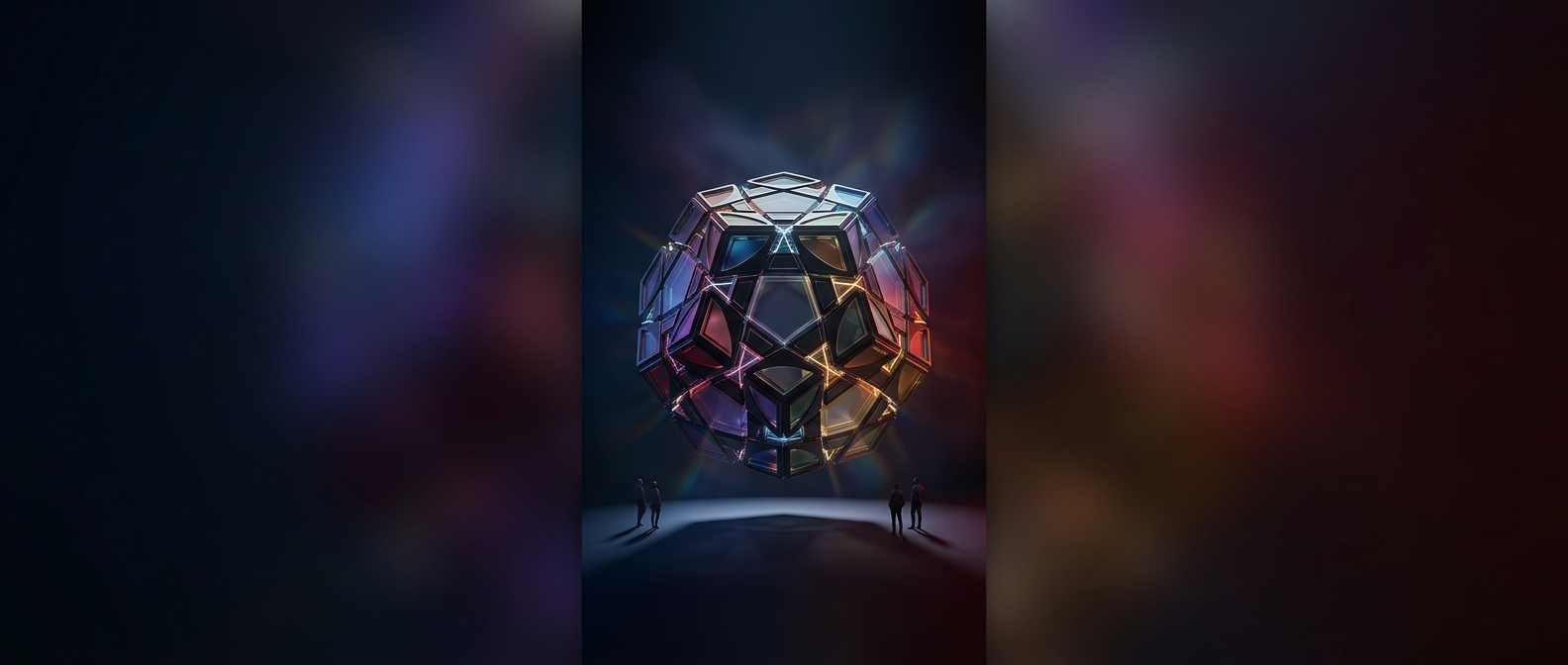
A Megaminx takes the familiar idea of a twistable-layer puzzle and builds it around a dodecahedron, a solid with 12 pentagonal faces. Each face can turn around its own central axis. That lets a solver choose any face to rotate, but the faces are not mechanically isolated: a turn carries pieces along the face’s edge and changes how neighboring faces look.
What moves when a face turns
The puzzle’s 50 movable pieces are its 30 edge pieces and 20 corner pieces. The 12 centers mark the faces and stay in place relative to the internal structure. Turning one face shifts five edges and five corners around its perimeter; those pieces also belong to adjoining faces, so the turn scrambles several areas at once.
That arrangement is the key to solving it. A piece must be put in the right location and matched to the surrounding colors, while moves on one face can disturb work elsewhere. The puzzle’s faces can turn separately, but their pieces remain linked through the same network of edges and corners.
A five-sided twist changes the feel
On a cube, each face has four neighboring sides around it. On the Megaminx, each pentagonal face has five. A solver therefore manages longer rings of pieces and more neighboring faces as the puzzle is rearranged. The result is a striking combination: twelve distinct turning choices, all working through a shared set of 50 pieces. One turn may begin on a single pentagon, but its effects travel across the dodecahedron.