Why a Mahjong Discard Is More Than a Mismatch
In mahjong, a tile that does not help your own hand may still matter because every discard becomes public information. The aim is usually to assemble a complete hand from groups of matching or sequential tiles, but players draw from a shared supply and cannot see one another’s concealed tiles. Each turn therefore asks two questions at once: which tile best advances your hand, and what might that choice reveal or give away?
Build a Hand Without Closing Off Options
A strong hand is not always the one that looks closest to finished. A tile that can connect to several others keeps more possibilities alive; a tile that fits only one narrow plan may leave a player stranded if the needed pieces never appear. Players weigh these alternatives as the visible discards change what remains plausible. They also watch which tiles opponents take, since claiming a discard can hint at the kind of group they are assembling.
That public trail is incomplete by design. An opponent’s hand stays hidden, so a player must infer its shape from a few choices while remembering that those choices may have more than one explanation. The game rewards flexible planning, but also careful reading of uncertainty.
The Same Tile Can Be Progress—or Risk
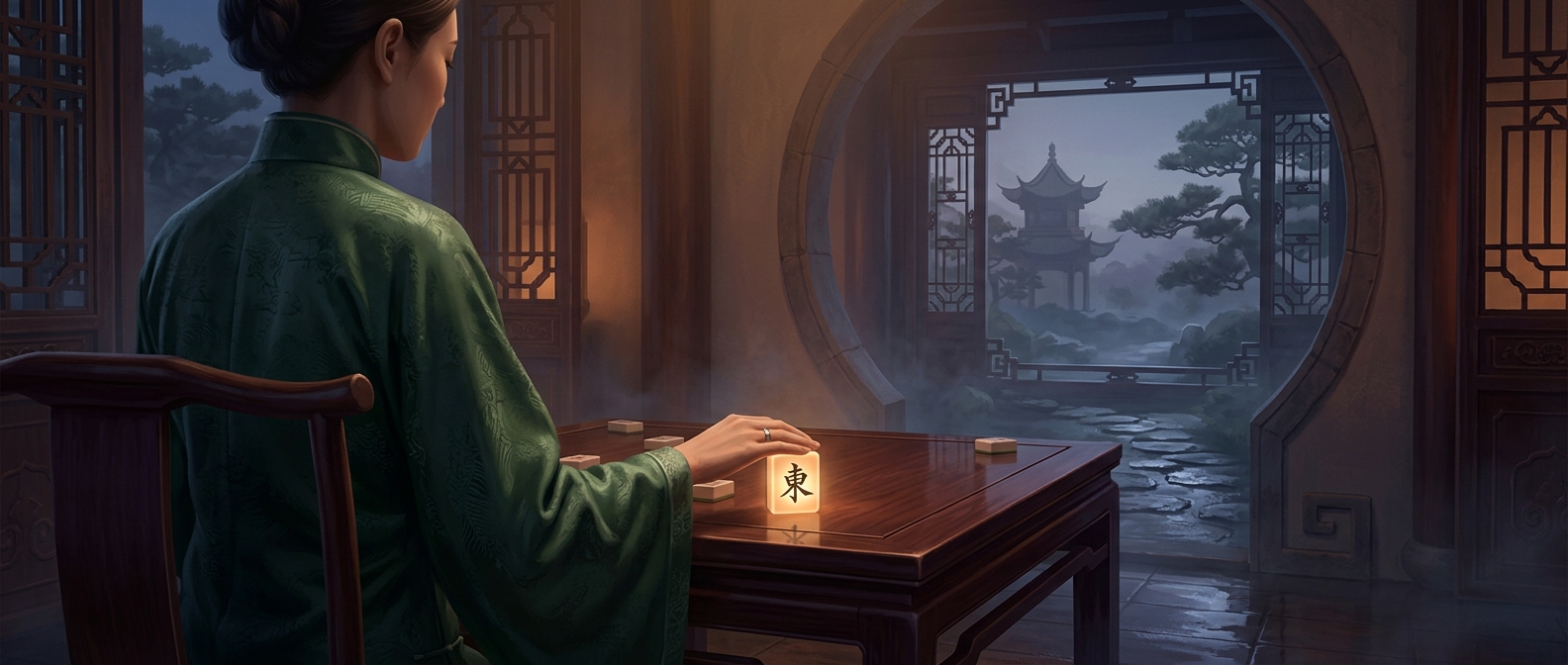
Discarding a tile can speed up a hand, yet it may also help an opponent complete theirs. As a result, players sometimes choose a less useful tile that seems less likely to be wanted, trading a little progress for protection. The carved pieces make the game tactile, but the deeper contest happens in the gap between what each player knows and what they can only guess: every discard changes both the hand in front of you and the possibilities around the table.