Mahjong’s walls are built to be taken apart
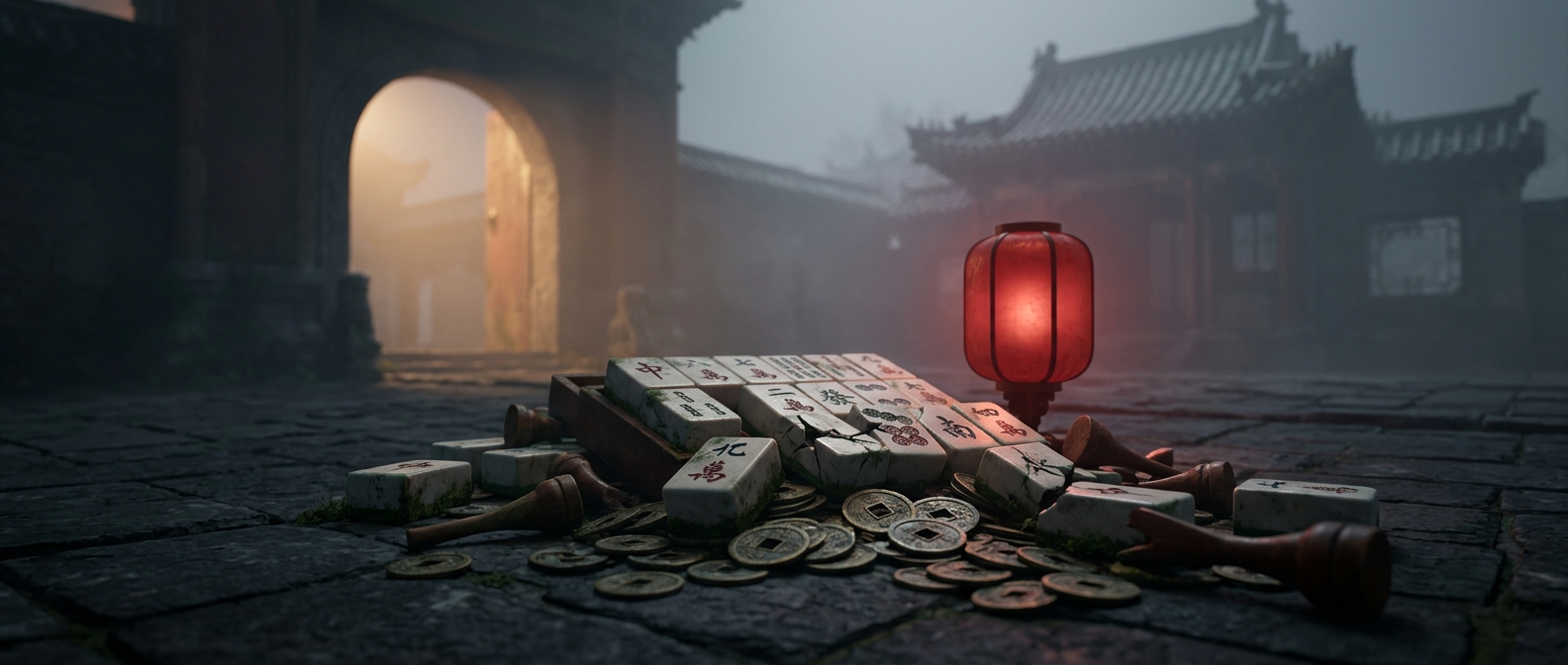
Before a hand begins, players shuffle the tiles face down and arrange them into walls—long, orderly rows that form the supply for the game. The wall is not just a display: players draw tiles from it as the hand unfolds, so the neat stack is gradually broken down by play.
That repeated change—from a loose clatter during the shuffle to a squared-up wall, then back to scattered tiles—gives mahjong much of its physical rhythm. The pieces are thick enough to pick up and turn easily, and their clicks make each move audible around the table. The tiles are both the game’s equipment and its tactile centerpiece.
The ritual works even when the rules don’t
A new player may not yet know which combinations make a winning hand, but can still take part in the basic cycle: shuffle, build the wall, draw, discard, and reset. The table’s sounds and movements make the activity legible before its strategy is. Each hand ends with the tiles gathered and mixed again, ready for another wall—and another round of clacking pieces.