A Small Fall Becomes a Moving Wave
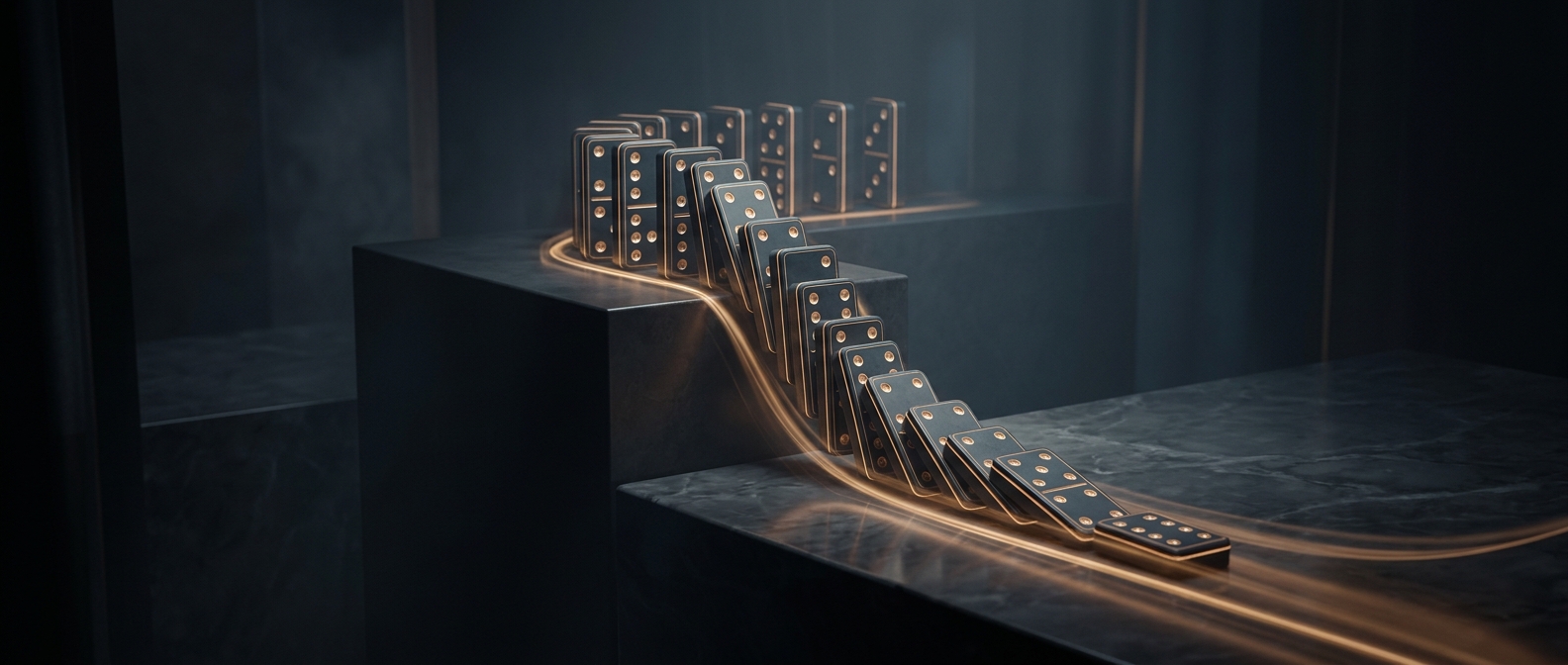
A standing domino holds a little gravitational energy: its weight is supported above the surface, and a slight push lets it tip. As it falls, it strikes the next tile and transfers enough motion to start that one tipping too. The result is a wave of impacts, with each tile acting as both the end of one event and the trigger for the next.
That simple mechanism turns arranging the pieces into the main challenge. Each domino must be close enough to reach its neighbor as it falls, but the line also needs room for the tiles to rotate. If the spacing is wrong, the chain may stop; if a tile is nudged before the intended start, the whole sequence can go early.
Designing the Route
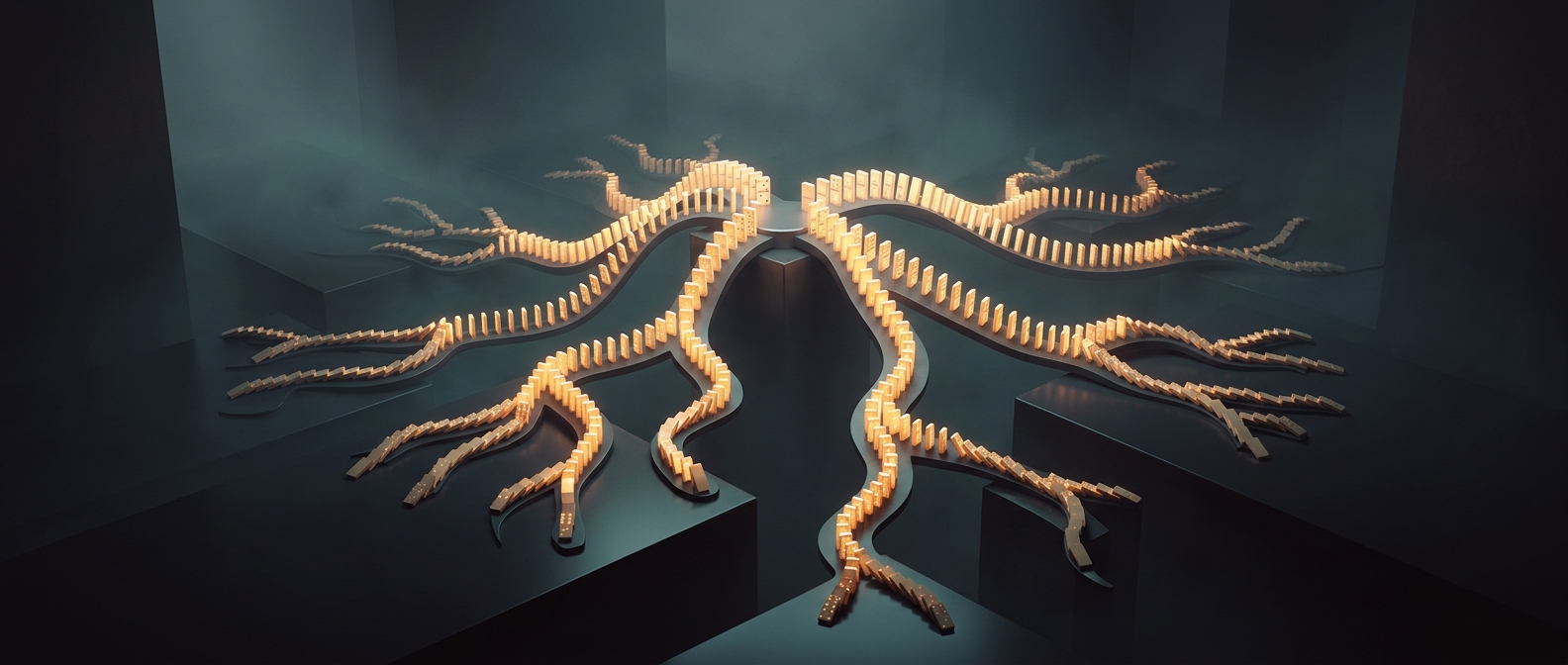
Straight rows are forgiving, but curves and tight turns demand more care. The tiles have to be angled so each falling piece meets the next in a useful direction. Builders can also vary the route or arrange branching patterns, but every added turn or transition creates another place where the motion might fail.
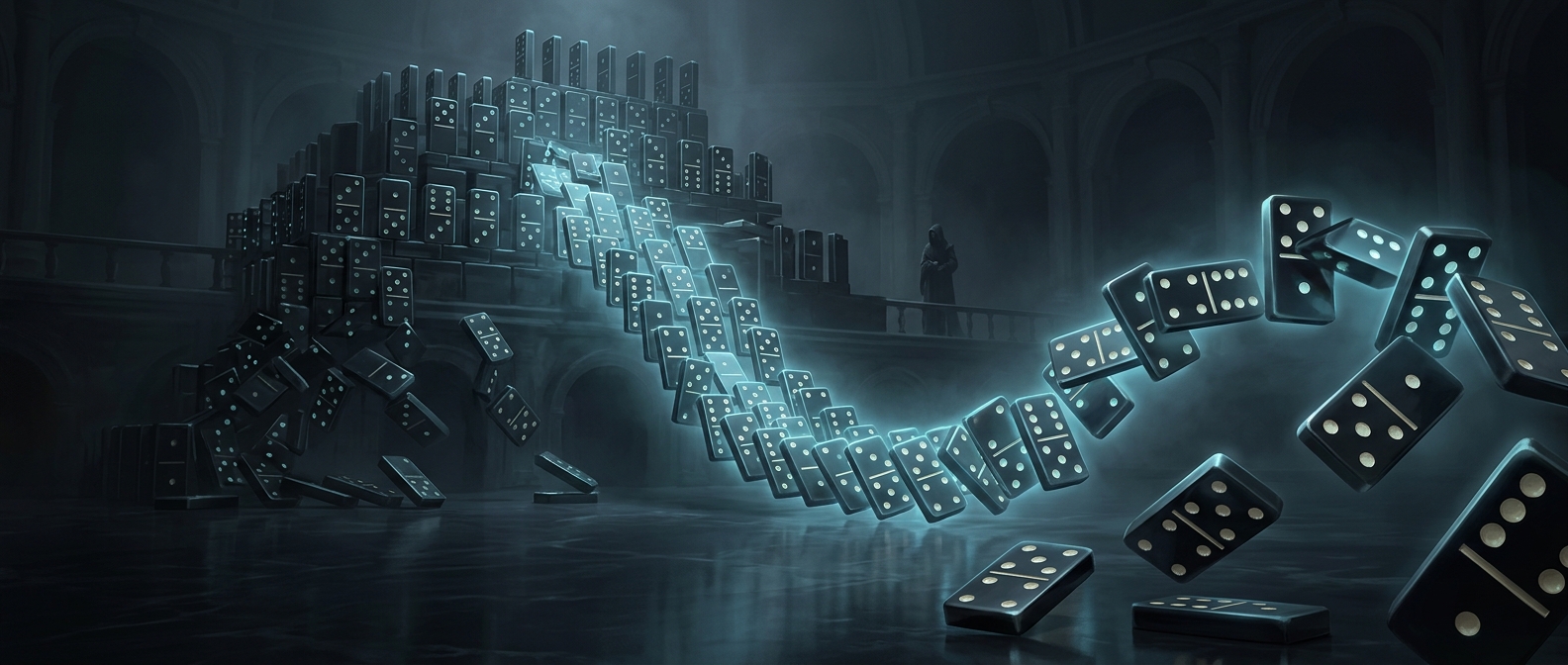
That risk is part of the appeal. The builder plans a sequence that looks stable while standing still, then relies on a single push to set it in motion. A successful run makes careful spacing and alignment visible all at once: the pattern that took patience to build disappears in a few seconds, one clack at a time.