A missing Scrabble set suggested a different kind of game
In 1979, journalists Chris Haney and Scott Abbott sat down to play Scrabble and discovered that pieces were missing. Rather than abandon the evening, they turned the setback into a new game idea: one built around answering questions instead of arranging letters into words.
That change shifted the challenge from spelling and word choice to what players could remember. A trivia game could also draw on many kinds of knowledge, giving people with different interests a chance to contribute.
Turning questions into a board-game goal
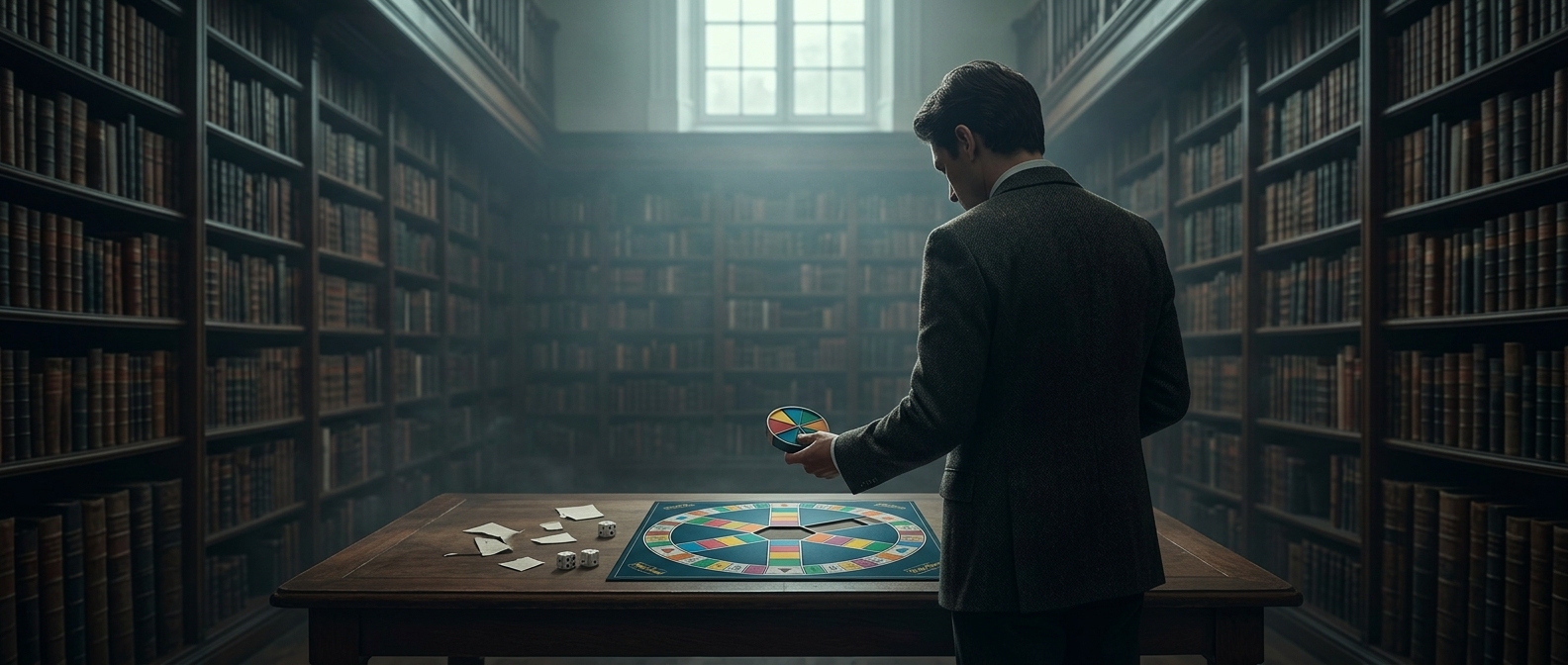
The lasting design was more than a stack of quiz questions. In Trivial Pursuit, players move around a board, answer questions in different categories, and collect colored wedges as they succeed. The wedges make knowledge feel like visible progress: a correct answer does not just keep a turn going; it fills in part of the route to winning.
That structure also gives the game its social rhythm. Players can debate answers, show off a familiar subject, or be stumped by one they rarely encounter. The original Scrabble problem had been a shortage of pieces; the replacement idea made the questions themselves the pieces of play—each one a small test that could move the whole group forward.