A challenge has to survive contact with reality
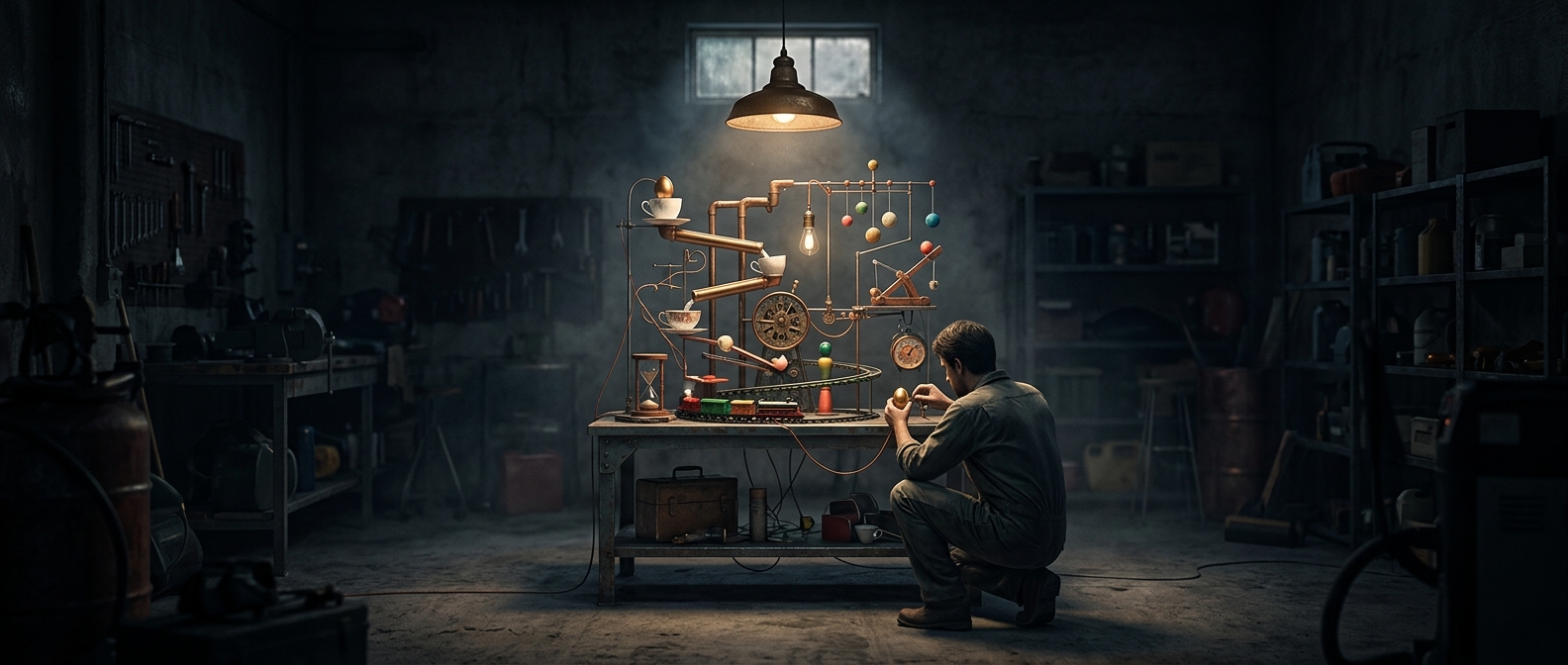
A task that sounds funny on paper can fail in practice. It might be impossible with the objects provided, take so long that filming becomes impractical, or leave contestants unsure what the instructions mean. Trying it out in a garage exposes those problems before they reach the comedians.
The test also reveals something a written description cannot: what the challenge actually feels like. A task may be simple to understand but awkward, frustrating, or physically uncomfortable to do. That matters for a comedy competition, where the struggle—not just the final answer—can become the entertainment.
Testing protects the useful uncertainty
The goal is not necessarily to make every task easy or to predict exactly how someone will solve it. A good challenge needs enough clarity that contestants can begin, while leaving room for different approaches and unexpected choices. A trial run helps show whether the wording and setup create that balance—or accidentally make success depend on a hidden assumption.
The garage test is therefore less like rehearsing a performance than checking a small experiment: provide the conditions, follow the instructions, and see what happens. The result is a task more likely to work on camera while still allowing the comedians’ own decisions to shape the outcome.