Why a cut octopus arm can still move
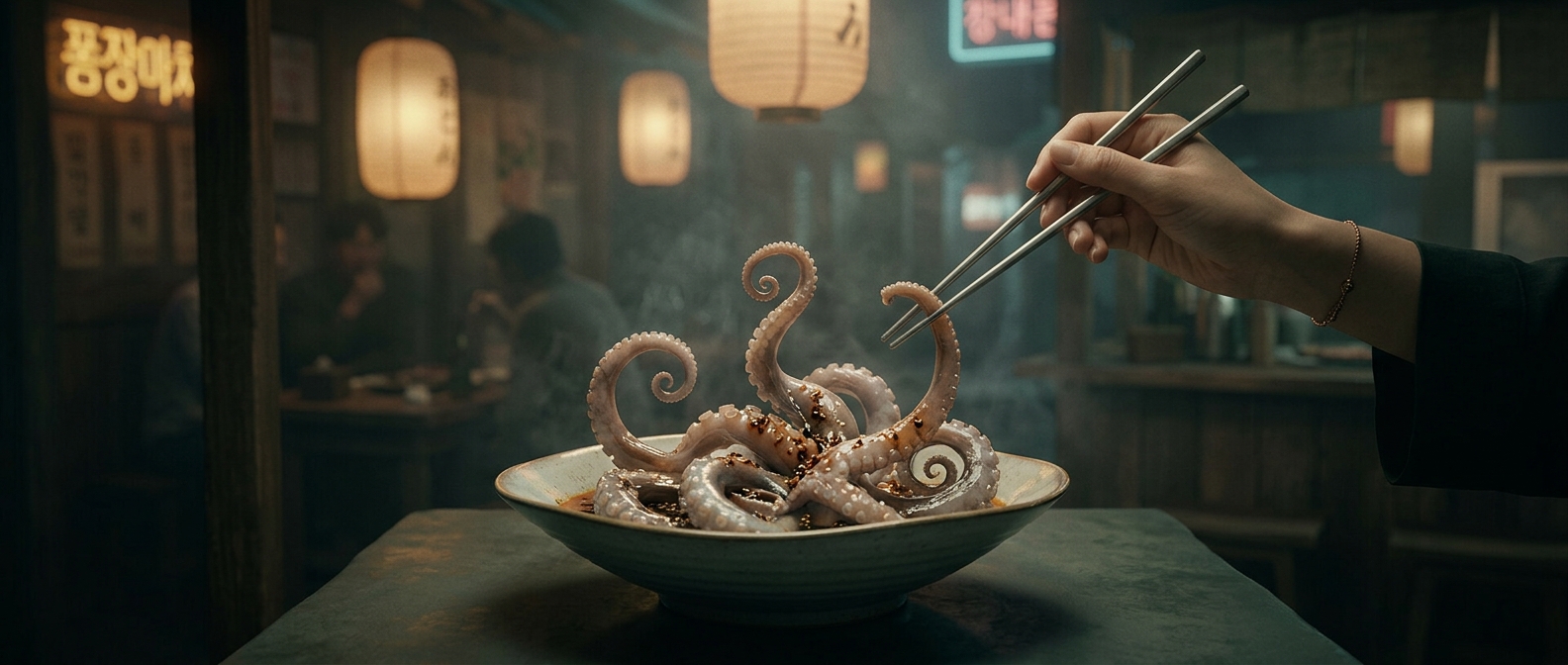
In Korea, sannakji is served as small pieces of freshly cut octopus. The motion can look purposeful, but it does not mean the animal is choosing to move after cutting. An octopus has nerve cells distributed through its arms as well as a central brain. For a time after separation, those local nerve circuits can still respond to touch and trigger muscle contractions.
That helps explain why the pieces may curl or twitch on the plate: cutting disconnects an arm from the brain, but it does not instantly switch off every nerve and muscle in it.
How the suction cups grip
Each suction cup works through muscles that alter its shape and create a seal against a surface. If a cup is stimulated while the tissue remains responsive, it can tighten its grip. A piece may therefore cling to a plate, chopsticks, or the inside of the mouth—not because it is attacking, but because the same gripping machinery that helped the octopus hold surfaces can remain active briefly.
Why the movement matters at the table
The risk is practical: a slippery piece that grips can be difficult to dislodge if it is swallowed without being chewed thoroughly, potentially obstructing the airway. Careful preparation and small, well-chewed bites matter more here than the dish's dramatic appearance suggests. The memorable part of sannakji is not just that it moves; it is that the octopus's finely controlled gripping system can outlast the connection to the brain that once directed it.