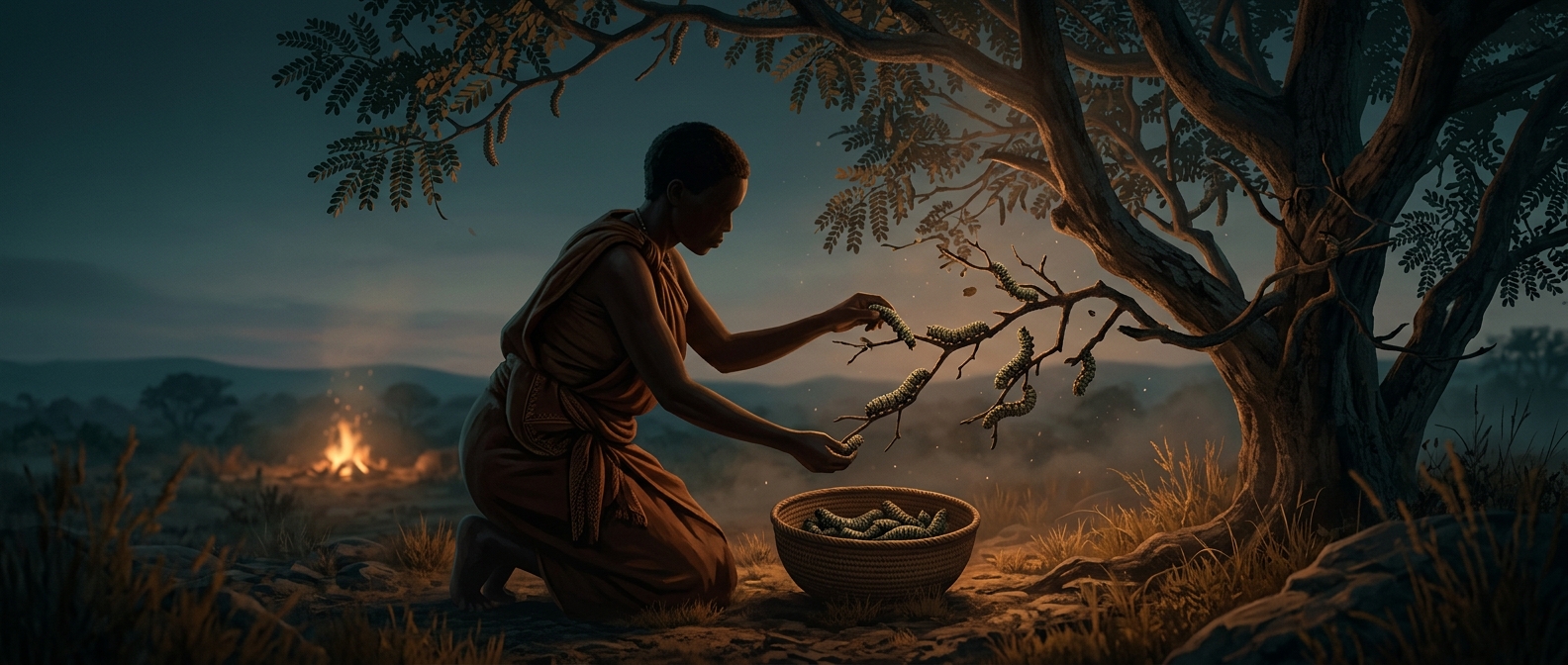
How a soft caterpillar becomes a crisp snack
The key change happens between harvest and frying. Sun-drying removes much of a caterpillar’s water, making it smaller and less perishable; frying then heats the remaining moisture rapidly, helping create a brittle exterior. That sequence turns a soft-bodied larva into something with a crunch more like a fried snack than a fresh insect.
The flavor description—salty, with a hint of burnt leaves—also points to the ingredient’s origin. Caterpillars feed on plants, and their taste can reflect that diet, while drying and frying add roasted, toasted notes. The result is not simply a novelty with an unusual shape: it is a way to make a tree-dwelling food portable and ready to eat.
A food tied to its surroundings
For a traveler, the striking detail is how directly the snack connects the meal to the landscape: the caterpillars are gathered from trees, then preserved and cooked rather than shipped as a packaged product. In places where they are eaten, their availability and preparation can depend on local conditions, so the same snack may not be encountered everywhere or year-round.
The practical lesson is that crunch is made, not inherent. Drying removes water; hot oil finishes the transformation. What begins as a soft larva ends as a shelf-friendlier bite whose plant-linked flavor remains part of the experience.