The ankh made life something a god could give
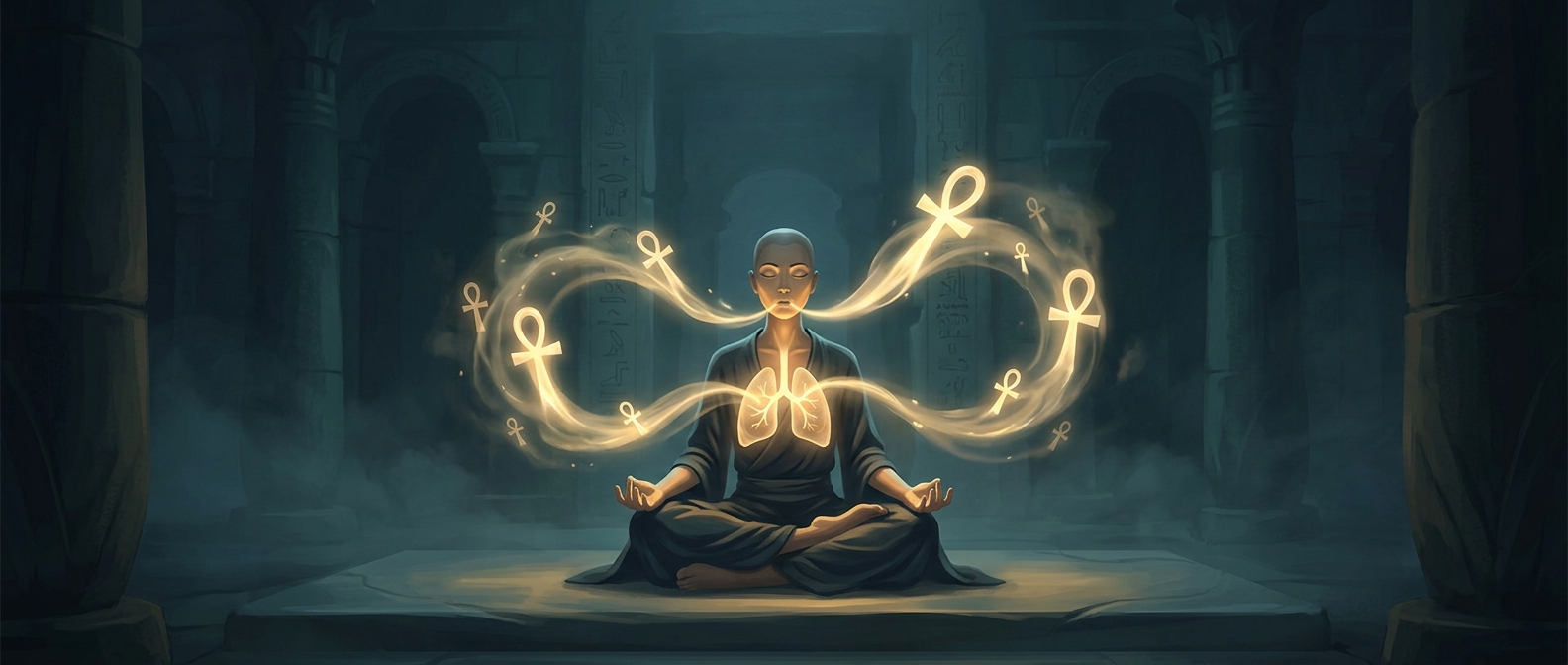
In ancient Egyptian imagery, the ankh was more than a sign for life in the abstract. Gods are often shown holding it to a ruler’s nose, a gesture that presents life as breath: something received and sustained, not merely possessed. The image makes the symbol’s meaning physical. The ankh could stand for life, while the act of bringing it to the nose evokes the breath that keeps a living body alive.
A symbol placed at the point of breathing
The nose matters because breath is an immediate sign of being alive. In scenes of divine protection or favor, the ankh at the ruler’s face turns that idea into a visible exchange between god and human. It does not depict ordinary air; it conveys life as a divine gift, expressed through the familiar act of breathing.
That context also helps explain why the ankh’s loop-and-cross form could carry more than one layer of meaning. Its shape could suggest continuity and a meeting point, but its role in images of breath gives the symbol a direct bodily sense. The ankh linked the broad idea of life to its simplest evidence: a living person drawing breath.