A fake preview became a real promise
In Grindhouse (2007), the joke was part of the moviegoing experience. The double feature by Robert Rodriguez and Quentin Tarantino was framed as a rough-edged revival of exploitation cinema, and it included deliberately fictional trailers for movies that did not exist. One was Machete, a brisk parody of ultra-violent action previews; another was Thanksgiving, a slasher-film spoof by Eli Roth.
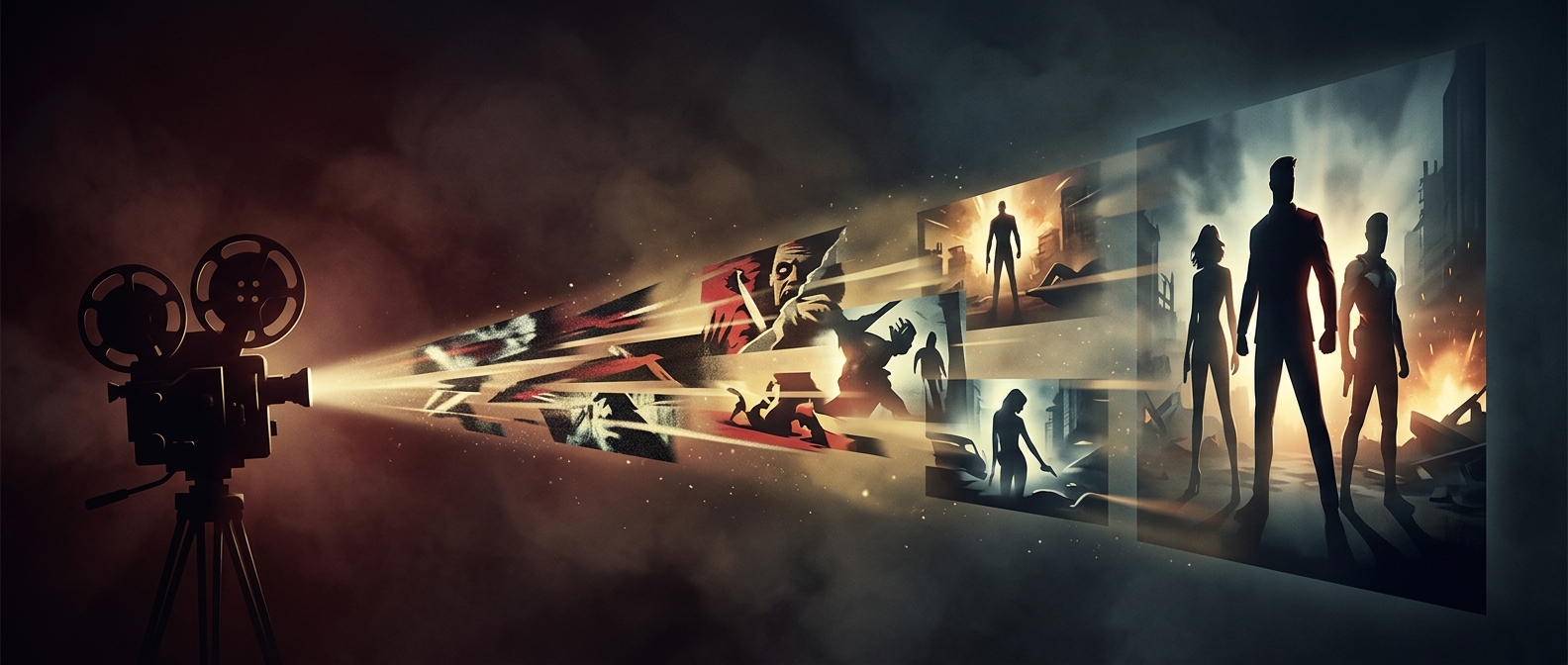
The trailers worked because they were more than random sketches. Each compressed a recognizable genre into a handful of images, shocks, and familiar movie-poster promises. That made the idea instantly legible—and gave audiences something to imagine beyond the joke. Enthusiasm for the concepts helped keep them alive after Grindhouse ended.
The hard part was making the joke last
A trailer can suggest a whole world without having to explain it. A feature film must supply the connective tissue: characters with reasons to act, conflicts that can develop, and enough changes in pace to sustain a story. The filmmakers could preserve the original concepts’ exaggerated genre pleasures, but they had to build more than an imitation of a preview.
Machete became a feature in 2010, turning its mock action-hero premise into a full-length story. Roth’s Thanksgiving took longer to reach theaters; the feature-length slasher arrived in 2023, expanding the trailer’s holiday-horror setup into a complete film. In both cases, the short spoof served as a vivid seed, not a finished blueprint.
That distinction is what makes the leap memorable: audiences did not simply ask to see a longer version of a gag. Their response helped show that the gag contained a movie-sized idea—and the filmmakers then had to make that idea hold together beyond the next punchline.