A monster movie tucked inside the monster movie
Cloverfield’s handheld-camera style does more than make the attack feel immediate: it gives the filmmakers a way to hide details in the visual noise. As the camera jolts, turns, and loses its subject, the image becomes hard to inspect in real time. A viewer watching at normal speed may miss a frame that becomes obvious only when paused or replayed.
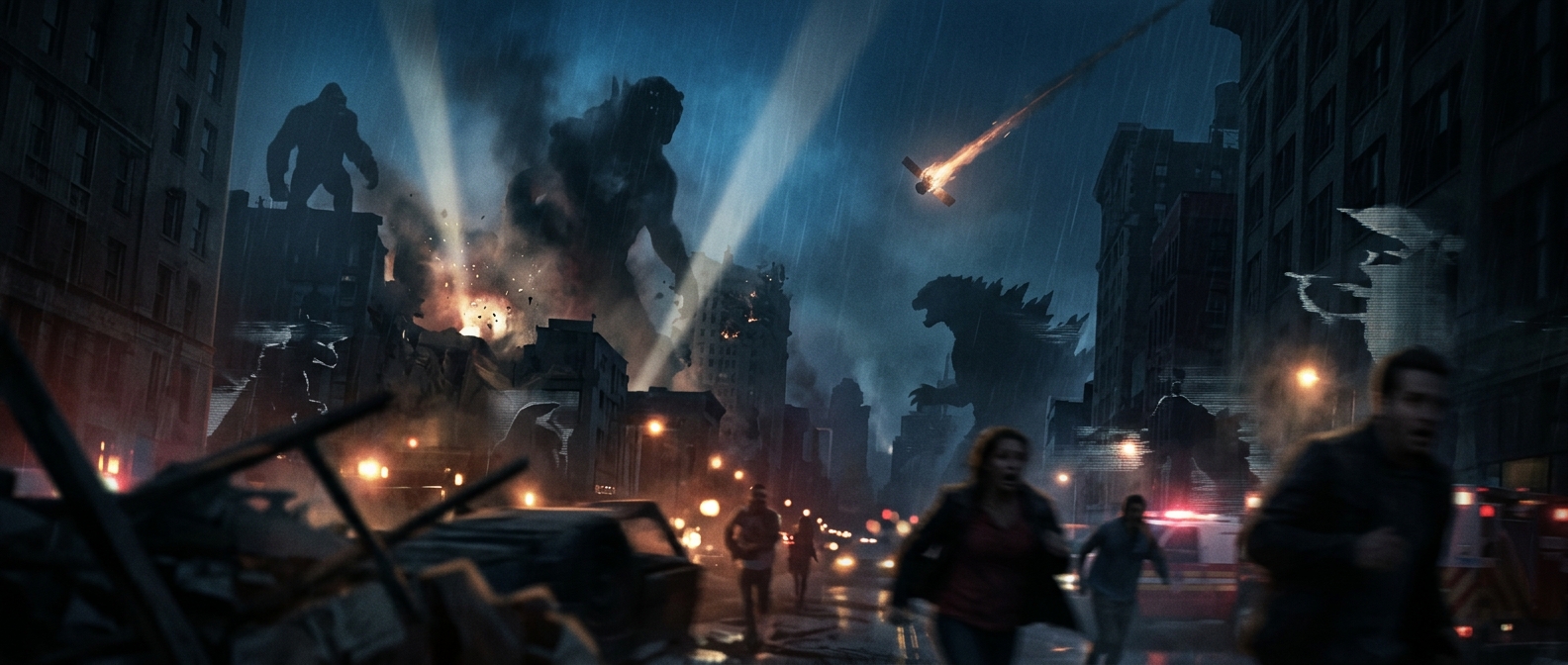
That makes the brief appearances of King Kong and the Rhedosaurus—an enormous creature from the 1953 film The Beast from 20,000 Fathoms—feel like discoveries rather than ordinary background references. They connect the film’s new threat to a longer history of movie monsters without interrupting the frantic action to explain the connection.
The background can carry the plot, too
The same visual clutter gives a tiny object falling into the ocean a different job. It is easy to overlook amid the movement, but it points toward the invasion’s arrival and makes the attack feel like the consequence of something already set in motion. The film does not pause to identify the object or spell out its significance; the clue is left for attentive viewers to piece together.
That restraint suits the camera’s point of view. The characters are trying to survive, not investigate, so the footage records fragments rather than a neat explanation. The shakiness is both a style and a hiding place: it lets the movie conceal clues in plain sight while keeping the audience as uncertain as the people holding the camera.