A family promotion met a much darker Batman
A film tie-in is more than a set of toys: it links a company’s name to a movie and invites customers—often children and parents—to take that connection home. That makes the tone of the film part of the promotion, whether or not the toys themselves reproduce its most troubling scenes.
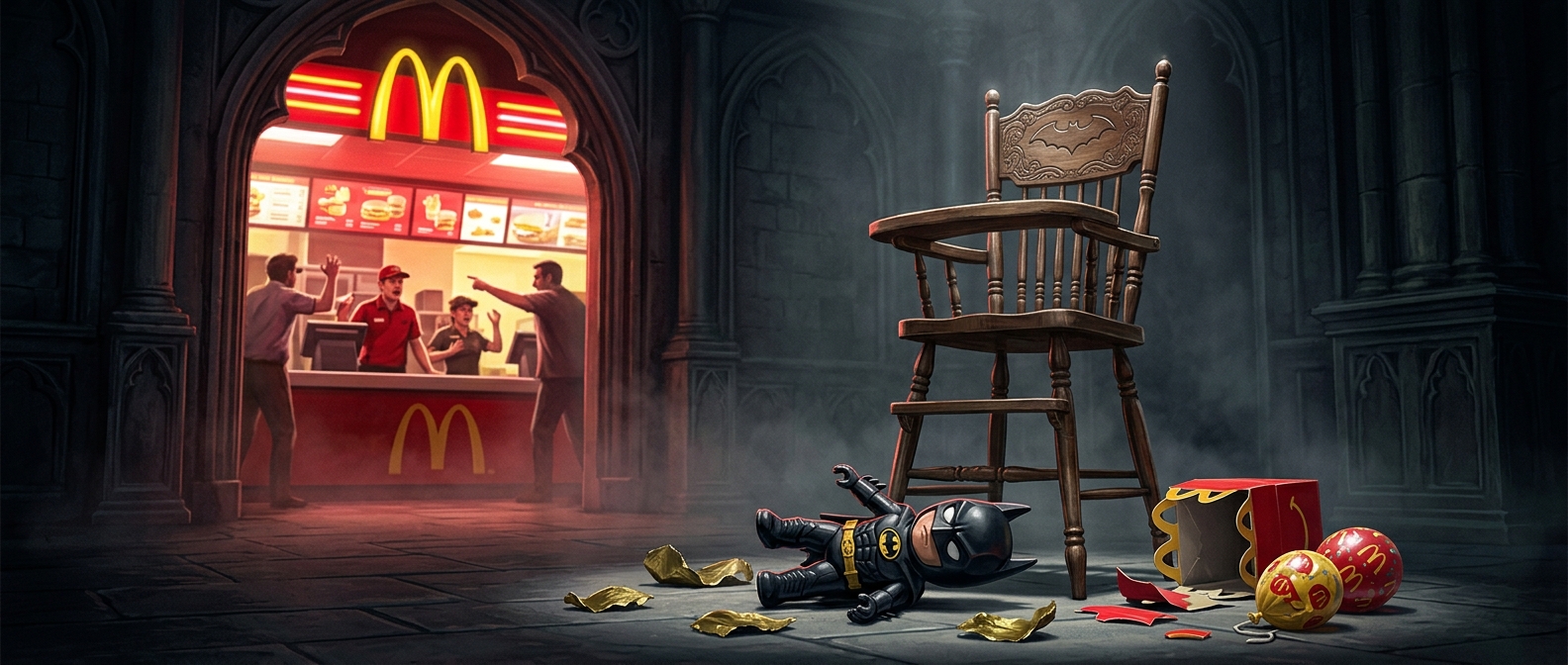
With Batman Returns, the mismatch became hard to ignore. The movie included disturbing material, including a character biting off someone’s nose and a villain in dominatrix-style clothing. Parents objected to that content being associated with McDonald’s children’s promotion. The concern was not simply whether a Batman toy was appealing; it was whether the restaurant should be using its family-oriented setting to sell a tie-in to this particular film.
The risk extended beyond the movie
A film studio can present a dark story to audiences who choose to see it. A restaurant promotion reaches people in a different context: children may encounter the toys at a meal, while parents are deciding what is appropriate for them. Once objections attached the movie’s imagery to the promotion, continuing the tie-in risked making McDonald’s answer for a tone it did not control.
Canceling the toy line was therefore a response to a problem of fit and trust, not a judgment that Batman characters could never be marketed to children. The episode shows a basic constraint of entertainment merchandising: a popular character does not guarantee that every story featuring that character suits every promotional partner.