Selling the Punches in Fight Club
In 1999, Fight Club was an awkward film to summarize in a television spot. It had Brad Pitt throwing punches, but it was not a straightforward action movie: its violence was wrapped in a story about alienation, masculinity, consumer culture, and a movement that grows beyond its founders’ control. A quick ad could show the fighting far more easily than explain what the film was doing with it.
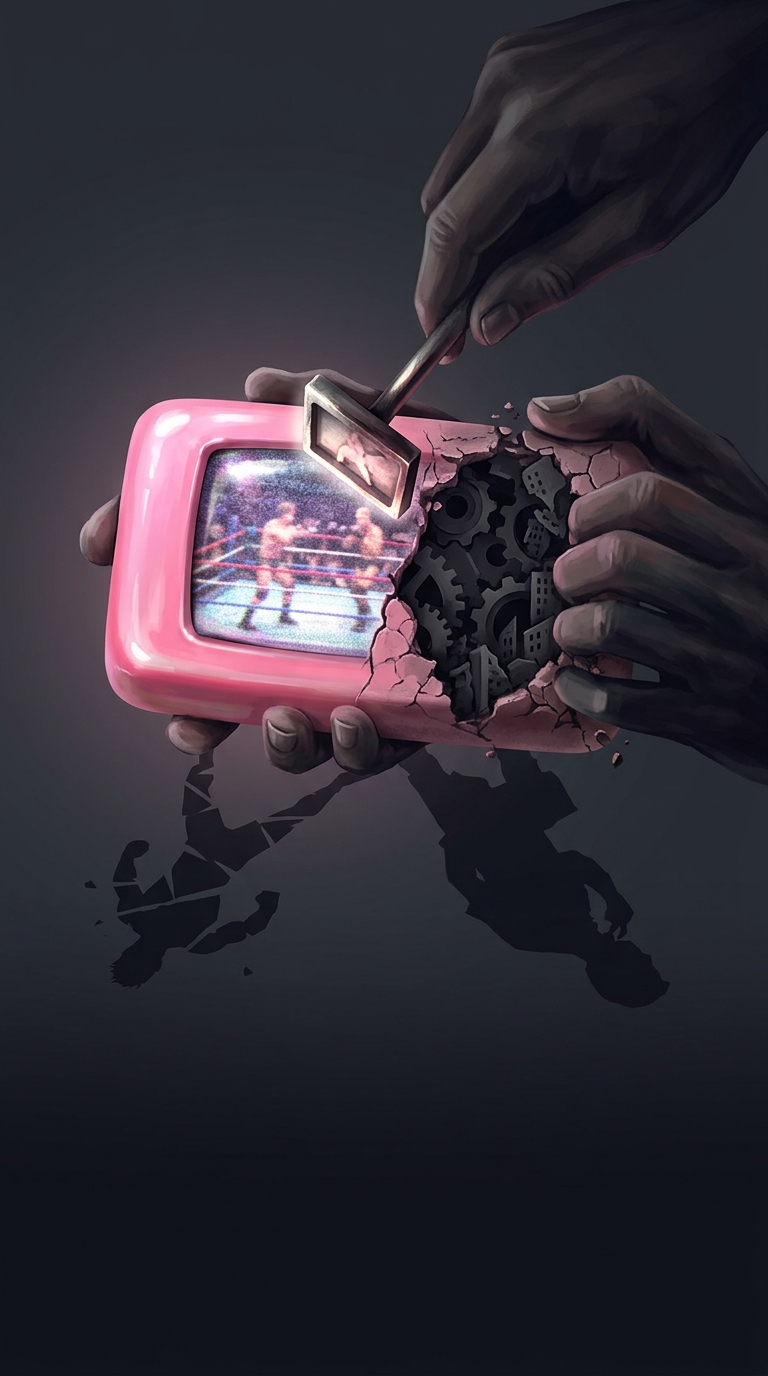
Fox leaned into the part that needed the least explanation. Commercial breaks during professional wrestling put the trailer in front of viewers already accustomed to staged combat and larger-than-life male performers. Pitching the film as a brawl also gave teenage boys a simple reason to watch, even if that promise left out much of its satire and psychological unease.
The Cost of a Clear Hook
That choice illustrates a basic marketing tradeoff: a campaign can make a complicated work easy to recognize, but the easiest selling point may not capture its purpose. The ads turned the film’s most immediately legible images—Pitt, fists, and aggression—into the product. The movie, meanwhile, keeps asking what those images mean and what happens when people mistake violence for a solution.
The strategy was not simply a failure to notice that the film had ideas. It was a way to sell an unconventional film through familiar entertainment cues. But it also created a gap between the audience invited by the ads and the experience the film delivered. The irony is hard to miss: a movie questioning how culture packages rebellion was itself packaged as a punch-up.