How a lost net keeps fishing
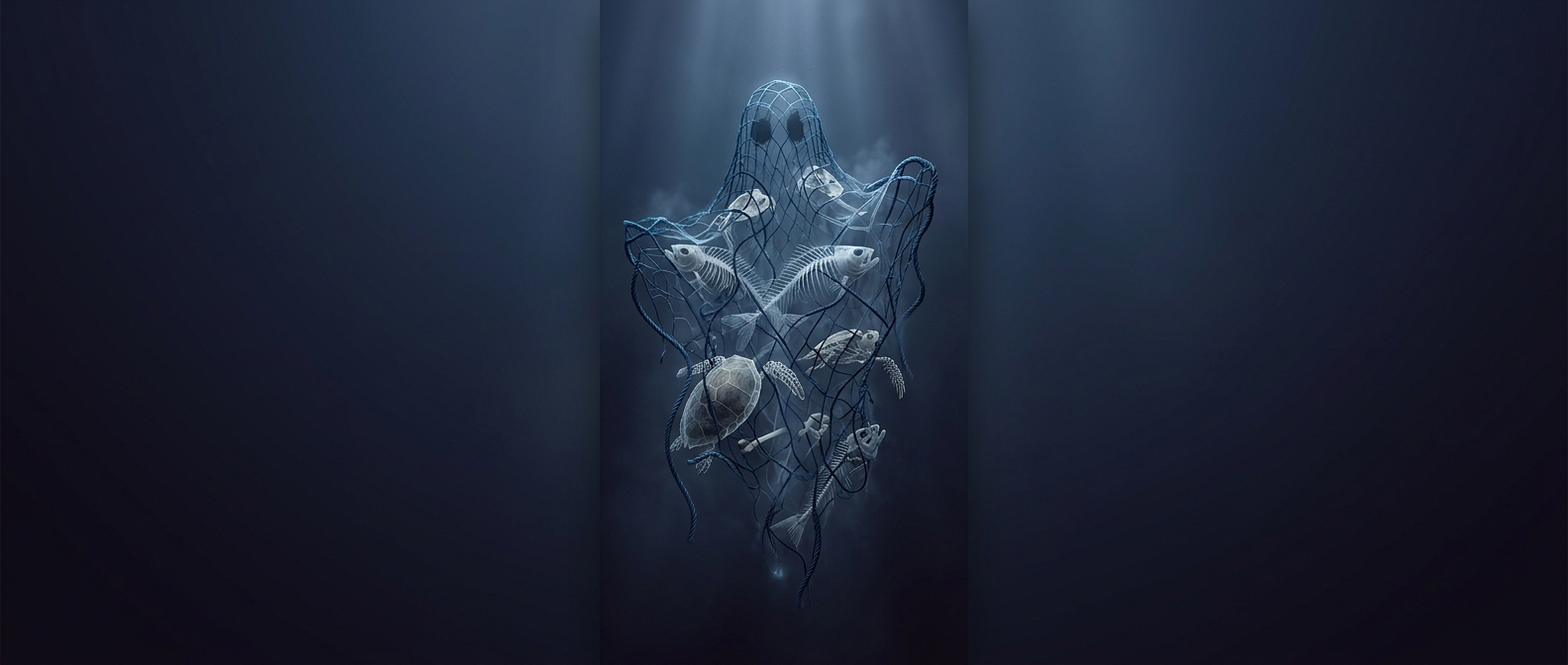
A net does not need a boat or a person pulling it to catch animals. Once it drifts or settles on the seabed, currents can spread its mesh across rocks, reefs, or wreckage. Fish and other animals may swim into it and become tangled; trapped animals can then attract scavengers, which may also get caught. This continuing, unattended capture is called ghost fishing.
The net’s shape is part of the problem. Flexible mesh can snag on underwater features and keep presenting openings that animals encounter. Even when a net is damaged, pieces may remain capable of entangling wildlife. Plastic can weather into smaller fragments, but that is not the same as quickly vanishing: the material can persist in the marine environment long after its useful life as fishing gear has ended.
Why nets go missing—and why that matters
Gear can be lost when it snags underwater, is damaged in rough conditions, or becomes difficult to retrieve. Replacing it costs money, but leaving it behind can impose costs beyond the vessel: animals are killed without producing a catch for anyone, and debris can continue to pose hazards to wildlife and other marine users.
That creates a practical challenge for fisheries and cleanup efforts. Preventing losses, making gear easier to locate, and retrieving abandoned equipment can limit the period in which it keeps fishing. The unsettling part is the mismatch in timescales: a working net may be used for a limited time, while a lost one can remain an active trap for years or decades.